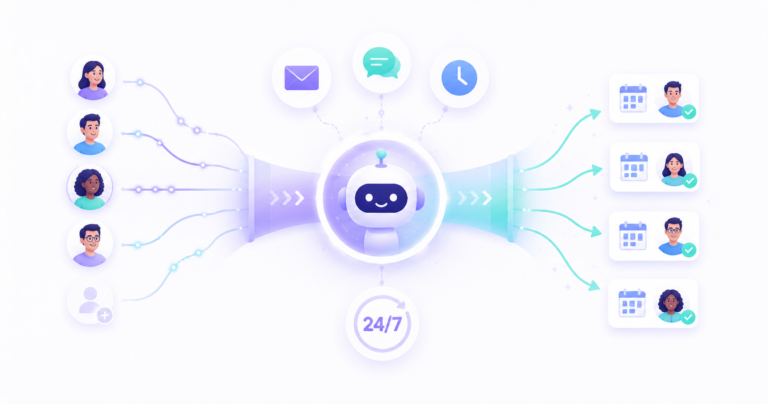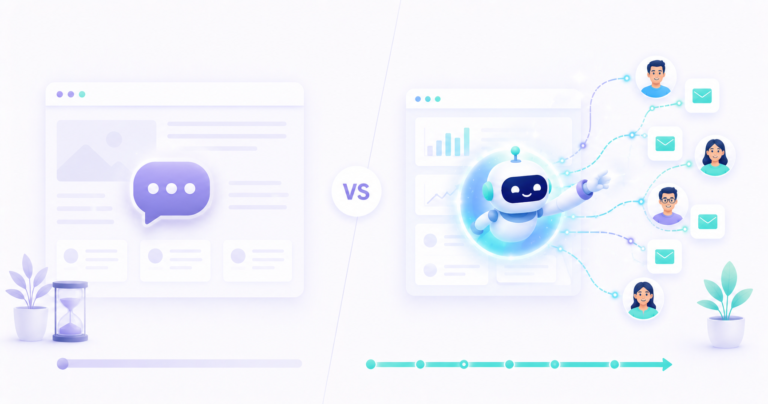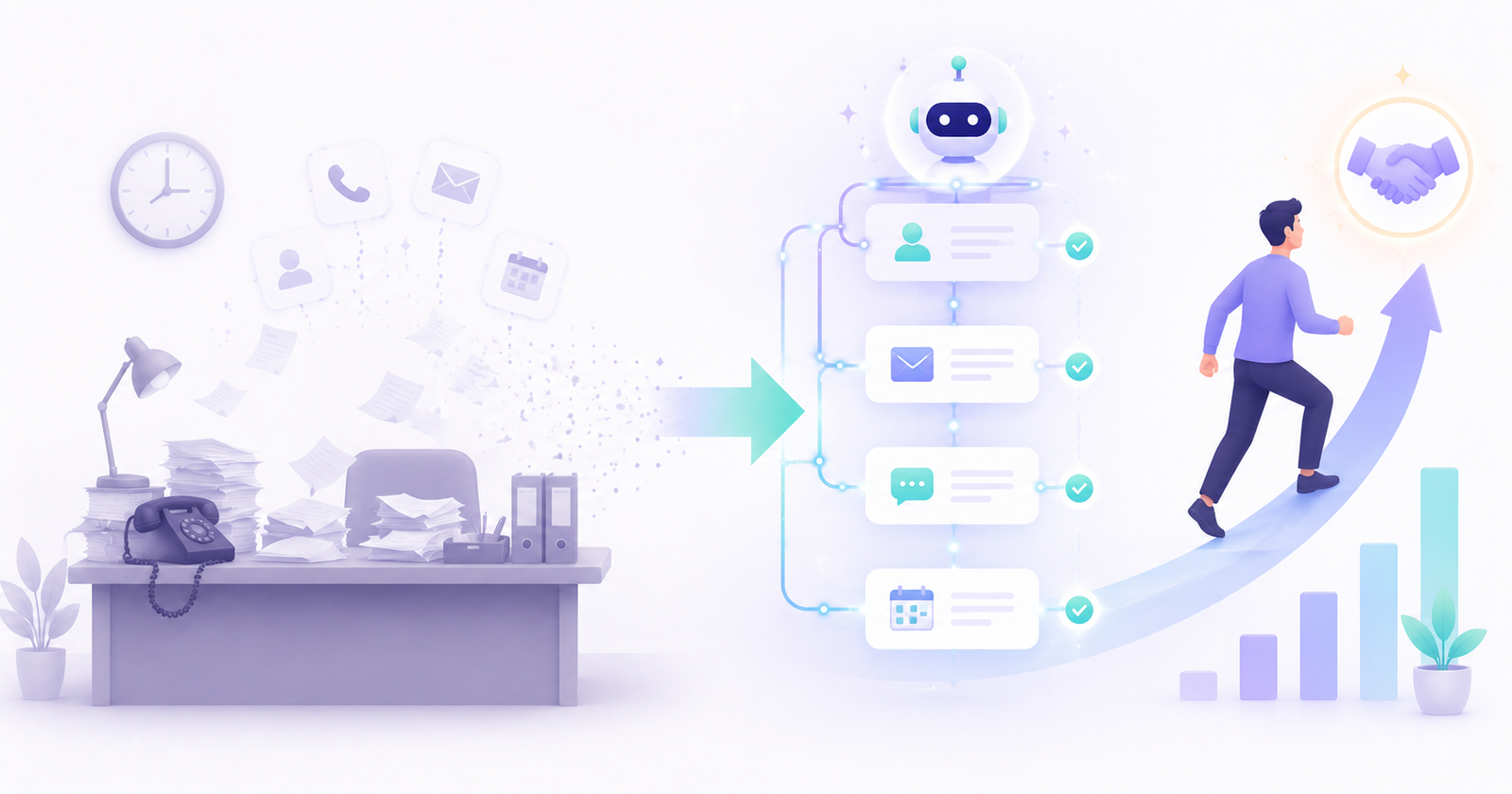
For two decades, the sales development representative was the engine room of B2B growth. Hire a row of junior reps, hand them a list and a phone, and have them dig for leads so the closers could close. That model is breaking down fast. AI sales agents now do the core of the SDR job faster, cheaper, and around the clock, and the shift is happening in 2026, not some distant future. This piece looks honestly at what AI is actually replacing, what it is not, and what it means for sales teams and the people in them.
If you want the full background on what these systems are first, start with our pillar guide on what an AI sales agent is. Here, we are focused on one question: is AI really replacing the SDR, and if so, what comes next?
What a Traditional SDR Actually Did
To see what is being replaced, you have to be clear about the job. The traditional SDR role was never really about judgment or relationships. It was about volume and repetition: the unglamorous groundwork that fed the sales pipeline.
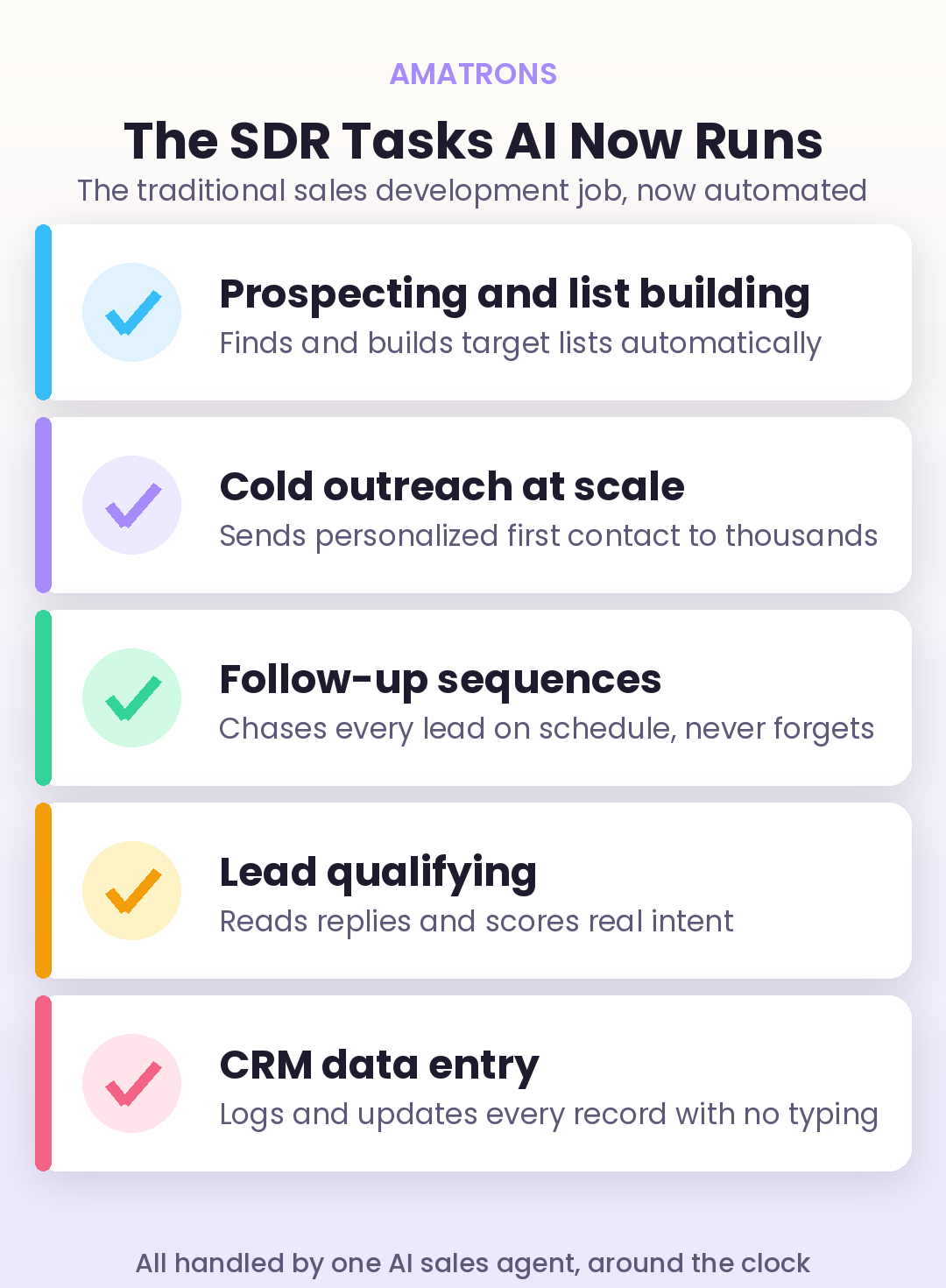
Strip the role down and it was five repetitive tasks: building prospect lists, sending cold outreach, chasing follow-ups, doing first-pass qualifying, and updating the CRM. Every one of those is rule-based, high-volume, and predictable. And every one of those is exactly what an AI sales agent now does, at a scale no human could match. That is the uncomfortable truth at the center of this shift: the traditional SDR role was built almost entirely out of work that is now automatable.
Why AI Is Outpacing the Human SDR
This is not a small efficiency gain. On the specific tasks that defined the role, the gap between an AI agent and a human SDR is enormous, and the numbers make it plain.
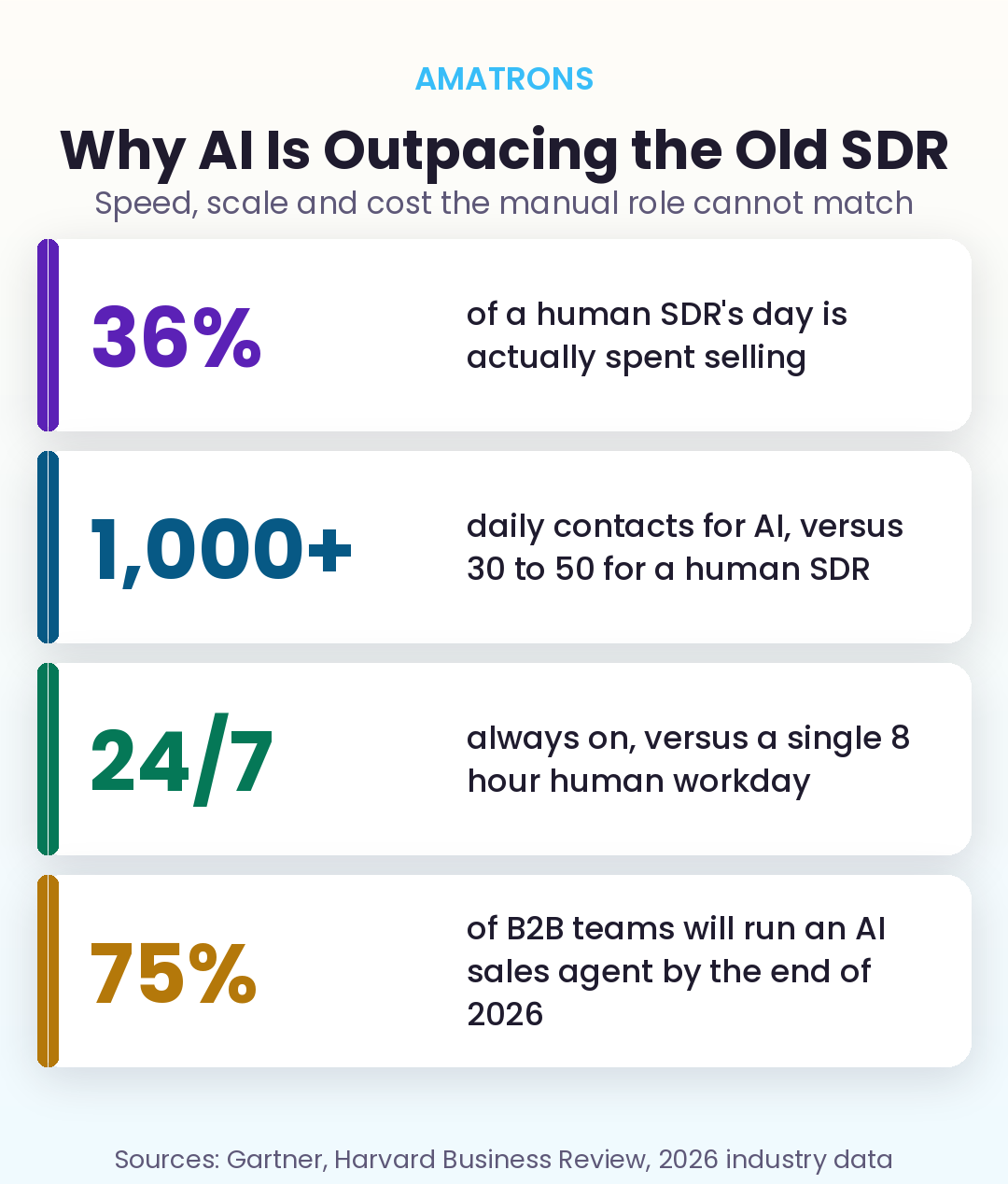
A human SDR spends under 36% of the day actually selling, with the rest lost to admin and research. An AI agent carries no such tax. It handles over a thousand contacts a day where a person manages thirty to fifty, it works 24 hours a day instead of eight, and it runs at a fraction of a salaried rep’s cost. When one side of a comparison is that far ahead on speed, volume, availability, and price for the same set of repetitive tasks, the outcome is not really in doubt. This is the same engine that powers all serious business process automation, now pointed at sales development.
What Is Being Replaced, and What Is Not
Here is where the honest distinction matters, because “AI is replacing SDRs” is both true and badly misunderstood. What is being replaced is the repetitive function, not the human capacity for judgment and connection.
AI agents are genuinely better at prospecting, outreach, follow-up, and first-pass qualifying. But they remain weak exactly where it counts most for revenue: closing complex deals, building real trust, reading a room, and handling a delicate negotiation. Head-to-head, human reps still convert qualified conversations into closed revenue at notably higher rates. So the businesses getting this right are not firing their sales teams. They are letting AI swallow the repetitive top of the funnel and moving their people up to the work only humans do well.
The New Shape of the Sales Team
Put those two ideas together and a new structure emerges. It is leaner at the bottom and more valuable at the top.
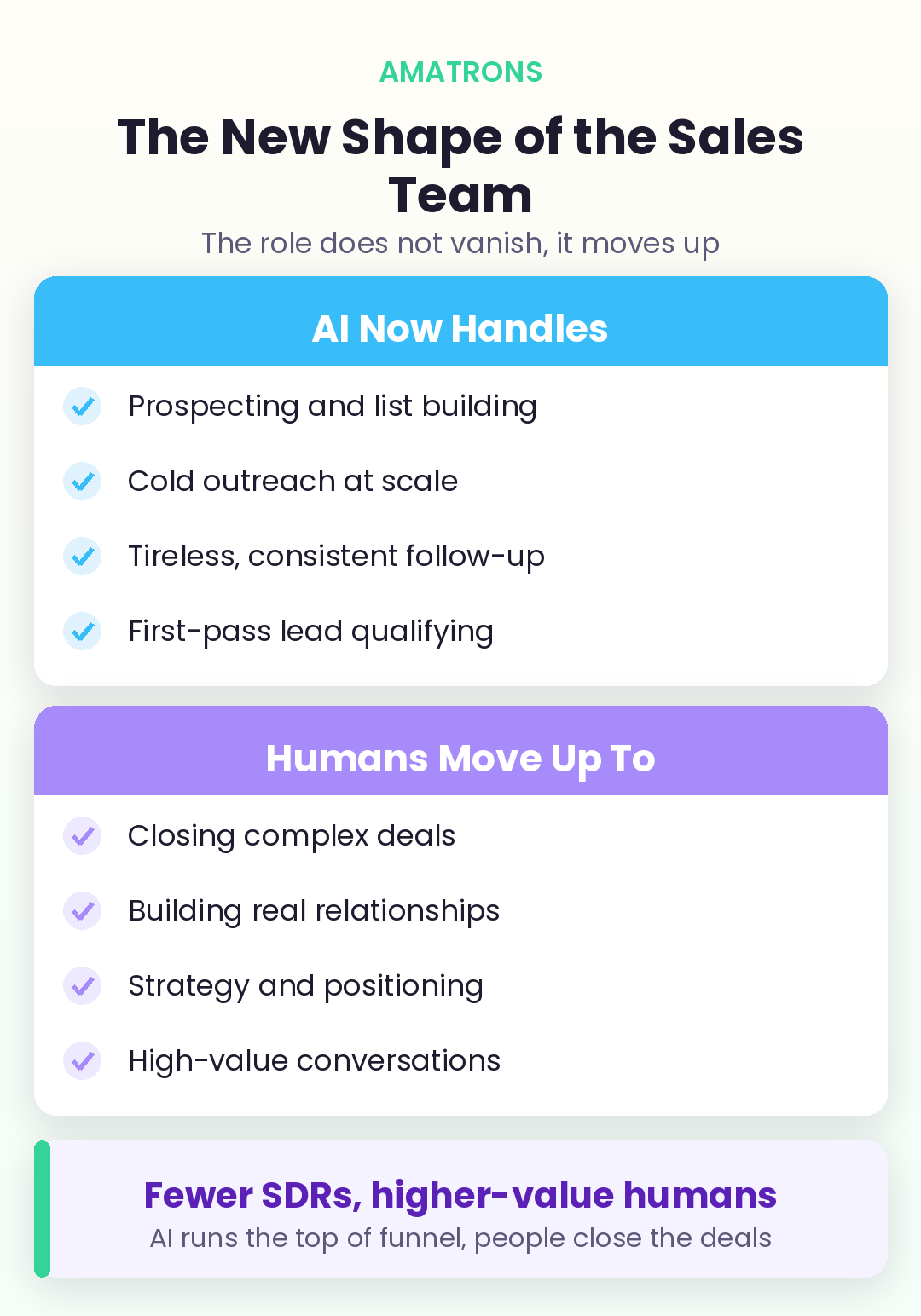
In the new model, the AI agent owns prospecting, outreach, follow-up, and first-pass qualifying. The humans who used to do that work move up to closing deals, building relationships, shaping strategy, and handling the high-value conversations that actually win business. The result is fewer pure SDR seats but more productive, higher-value human roles, and a pipeline that never sleeps. For a business, that means more output from a smaller, sharper team.
What This Means for Businesses
If you run a business that sells, this shift is an opportunity before it is a threat, and the window favors movers. Consider what it changes.
- Lower cost to fill the pipeline. The most expensive, repetitive part of sales development drops to a fraction of its old cost when an AI agent runs it.
- Speed becomes a weapon. While competitors take hours to respond to a lead, your agent replies in seconds, and that speed wins deals before anyone else shows up.
- Growth without proportional hiring. You can scale outreach massively without scaling headcount, which changes the entire economics of growth for a small team.
- Your humans do better work. Freed from the grind, your salespeople spend their time closing and building relationships, which is where they were always most valuable.
The businesses that recognise this early get a real edge, the same pattern we covered in how AI is changing small business. The ones that wait will find themselves competing against rivals who respond faster and reach more prospects with a leaner team.
What This Means for SDRs Themselves
It would be dishonest to pretend this is painless for the people in the role. The entry-level, purely manual SDR seat is shrinking, and that is real. But the smart response is not panic, it is repositioning.
The SDRs who thrive will be the ones who move toward the work AI cannot do: closing, strategy, relationship building, and managing the AI systems themselves. Someone has to set the targeting, craft the message, review the agent’s output, and step into the human conversations the AI books. The role is not disappearing so much as climbing. The reps who learn to direct an AI agent rather than compete with it will be more valuable than ever, not less.
How the Role Got Automated So Fast
A fair question is why this happened almost overnight. SDRs existed for decades without much threat from software. The answer is that two things finally arrived at once: AI that can actually write and reason like a person, and tools that let it act across email, CRMs, and calendars without a developer wiring it together. Before 2023, automation could send a templated blast but could not research a prospect, understand a reply, or adapt its message. Now it can.
That combination flipped the economics. The moment software could do the reading, writing, and deciding that made the SDR role “human work,” the repetitive parts of the job had no protection left. This is part of the broader wave that McKinsey’s research tracks across every function, and sales development simply happened to be unusually exposed, because so much of it was repetitive by design.
The Honest Objections to This Shift
This is an editorial, so let us take the strongest counterarguments seriously rather than wave them away. There are three worth answering.
“AI outreach is just spam.”
It can be, and badly built agents absolutely are. But a well-built one researches each prospect and writes genuinely relevant messages, earning several times the reply rate of generic blasts. The spam problem is a setup problem, not proof the approach fails. Done right, AI outreach is more personalised than the rushed templates most overworked SDRs were already sending.
“Our buyers want to talk to a human.”
They do, at the right moment. But that moment is the conversation and the close, not the first cold touch or the fifth follow-up email. AI handles the early, repetitive contact; the human steps in exactly when the buyer actually wants one. Nothing about this removes the human from the part of the sale that needs them.
“This will gut entry-level sales jobs.”
This is the most honest concern, and it is partly true. The purely manual entry seat is shrinking. But new, higher-value roles are opening around directing and managing these systems, and the data on AI-adopting businesses shows they tend to grow and hire more overall, not less. The work changes shape rather than simply vanishing.
What the Smartest Sales Teams Are Doing Now
The teams pulling ahead are not debating whether this is happening. They are already restructuring around it, and the playbook is consistent.
They put an AI agent on the entire repetitive top of the funnel, so prospecting and follow-up run continuously without a person touching them. They shrink or stop hiring for the pure manual SDR seat, and instead invest in fewer, stronger closers. They measure ruthlessly, watching reply and meeting rates and tuning the agent like a product rather than setting it and forgetting it. And they reinvest the money saved on repetitive headcount into the human work that actually moves revenue. The result is a smaller team producing more pipeline, which is exactly the kind of return we break down in our guide to the ROI of AI automation. Research from Salesforce’s State of Sales points the same way: the highest-performing teams are the ones leaning hardest into AI for the repetitive work.
How to Make the Transition
If you are a business owner deciding how to act on this, the move is not to rip out your team overnight. It is to layer in the AI where it wins and redeploy your people where they win.
1. Automate the Repetitive Layer First
Put an AI sales agent on prospecting, outreach, and follow-up. That captures the biggest, fastest cost and speed gains with the least disruption to your team.
2. Move Your People Up
Shift the humans who were doing that work toward closing, relationships, and reviewing the agent’s output. Keep them on the conversations that need a person.
3. Keep a Human in the Loop
The agent runs volume and speed, but a person should oversee the targeting, the message, and the handoff. That hybrid setup consistently beats both pure-AI and pure-human approaches.
If you would rather have that system designed and deployed for you, that is exactly what our AI sales agent service handles, end to end.
Where This Is Heading Next
The direction of travel is clear, and it is worth being honest about the pace. AI agents are getting better at exactly the things they are currently weakest at. The personalisation is sharpening, the multi-channel reach across email, social, and messaging is widening, and the handoff to humans is getting smoother. The repetitive layer of sales is not going to become less automated over time; it is going to become more so.
Within a couple of years, the standalone job title “SDR” may quietly fade in many companies, absorbed into a smaller group of people who manage AI agents and a larger focus on closing. That is not a prediction of doom, it is a description of a shift already underway. The businesses that treat it as inevitable and restructure early will spend the next few years with a structural cost and speed advantage over the ones still running sales development the old way. The technology question has largely been answered. What remains is an organisational choice: rebuild the engine now, on your terms, or be forced to later, on someone else’s.
Frequently Asked Questions
Is AI really replacing SDRs?
Will AI sales agents make human salespeople obsolete?
Why are AI agents better than SDRs at prospecting?
What happens to SDRs whose tasks get automated?
Should my business replace its SDR team with AI?
The Bottom Line
So, is AI replacing SDRs? The repetitive job that defined the role for twenty years, yes, that is being automated, and quickly. But the people are not being written out of sales, they are being moved up to the work that actually closes revenue. The businesses winning in 2026 are the ones treating this as a restructuring opportunity: AI on the volume, humans on the value. If your sales development still runs on manual prospecting and slow follow-up, that is the gap a competitor is about to exploit. The smart time to rebuild that engine is before they do, and if you want it built for you, that is exactly what our AI sales agent service is for.