Ask ten business owners the difference between an AI sales agent and a chatbot, and most will say they are roughly the same thing. They are not, and the confusion is costing people money. Buy a chatbot expecting it to fill your pipeline and you will be disappointed. Skip an AI sales agent because you think your chatbot already does the job and you leave real revenue on the table. This guide settles the AI sales agent vs chatbot question clearly: what each one is, how they differ, and which your business actually needs.
If you want the full background on the sales side first, our pillar guide on what an AI sales agent is covers it in depth. Here, the focus is the comparison.
What Is a Chatbot?
A chatbot is software that answers questions through a chat window, usually on your website. A visitor types something, the bot responds. Modern AI chatbots are genuinely good at this: they understand natural language, pull answers from your content, and handle common questions instantly at any hour.
That makes a chatbot excellent for customer support and helping site visitors, which is exactly the job a dedicated AI support bot is built for: deflecting repetitive questions, guiding visitors, and freeing your team from answering the same things over and over.
What Is an AI Sales Agent?
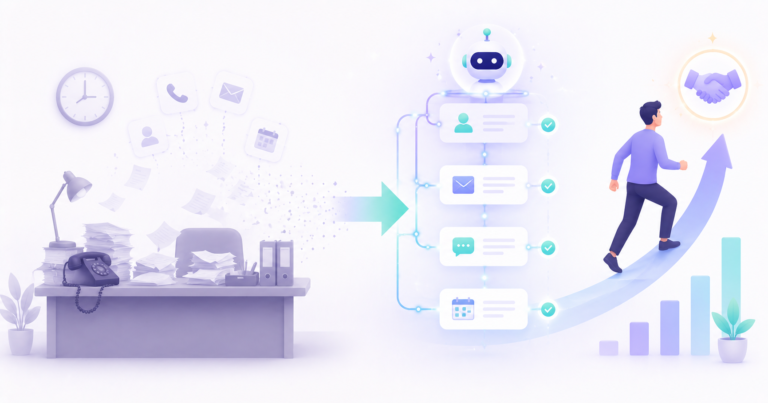
An AI sales agent is a different animal. Instead of waiting for people to come to it, it goes out and finds them. It identifies prospects, reaches out with personalised messages, follows up over time, qualifies the interested ones, and books meetings, all on its own.
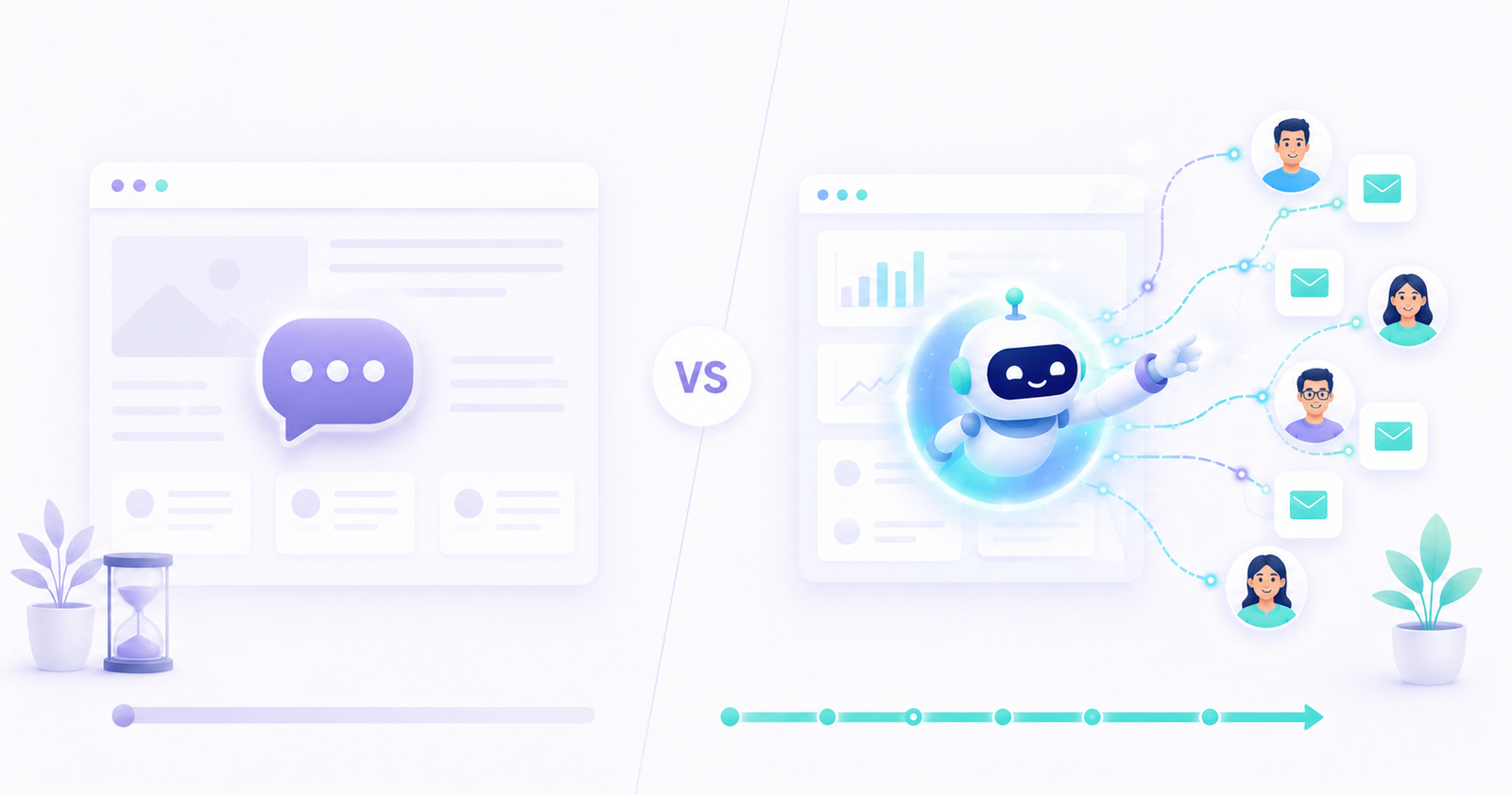
That difference, reactive versus proactive, is the heart of the whole comparison. One responds to demand that already exists. The other goes out and creates new demand.
The Core Difference: Reactive vs Proactive
Before the detailed breakdown, this is the single distinction to hold onto. Everything else flows from it.
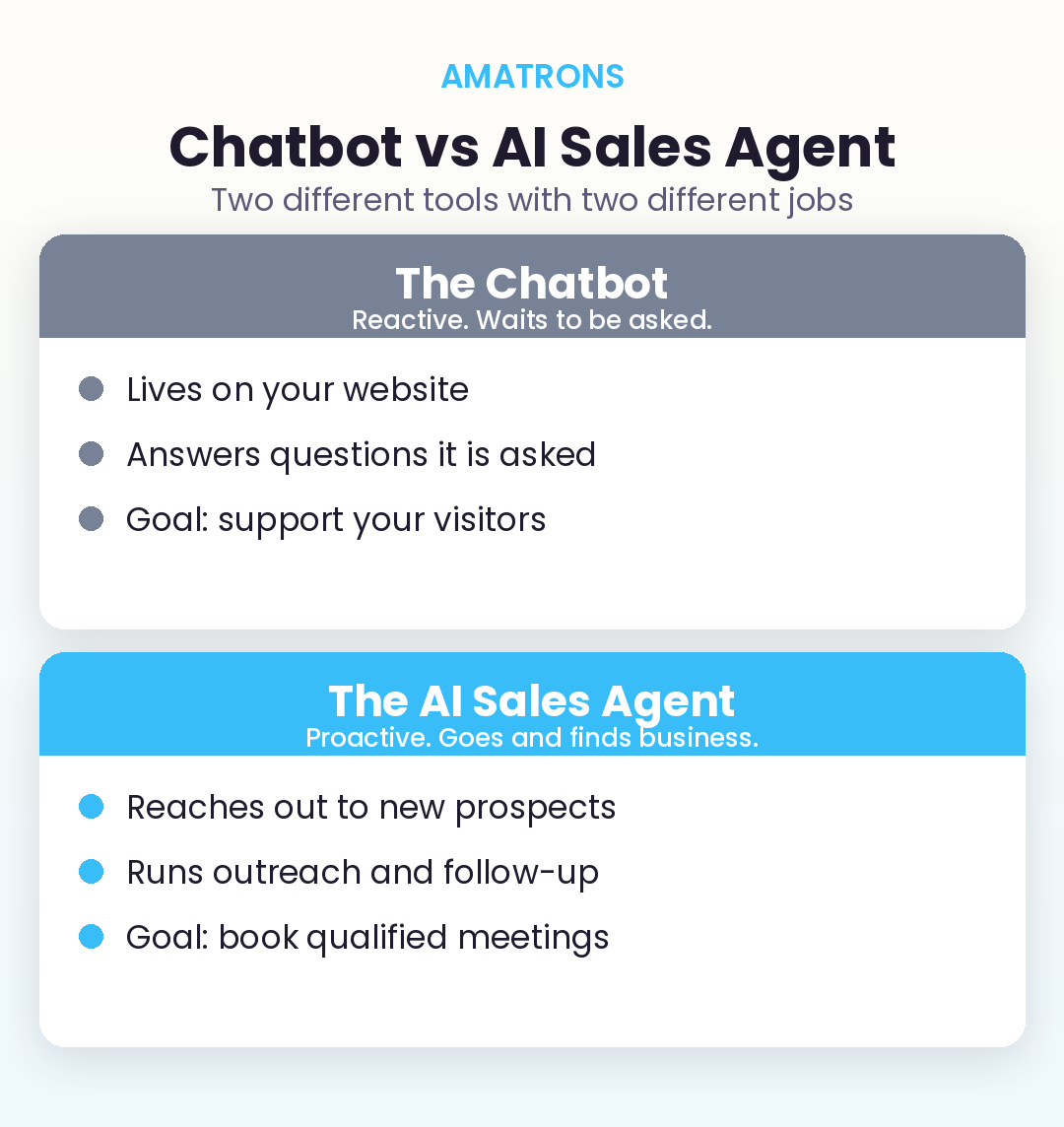
A chatbot lives on your website, answers what it is asked, and exists to support your visitors. An AI sales agent reaches out to new prospects, runs outreach and follow-up, and exists to book qualified meetings. Same underlying AI technology, completely different jobs. Confusing the two is like confusing a receptionist with a salesperson. Both are valuable, but you would never expect one to do the other’s work.
5 Key Differences Between an AI Sales Agent and a Chatbot
Put them side by side across the things that matter, and the gap is clear.
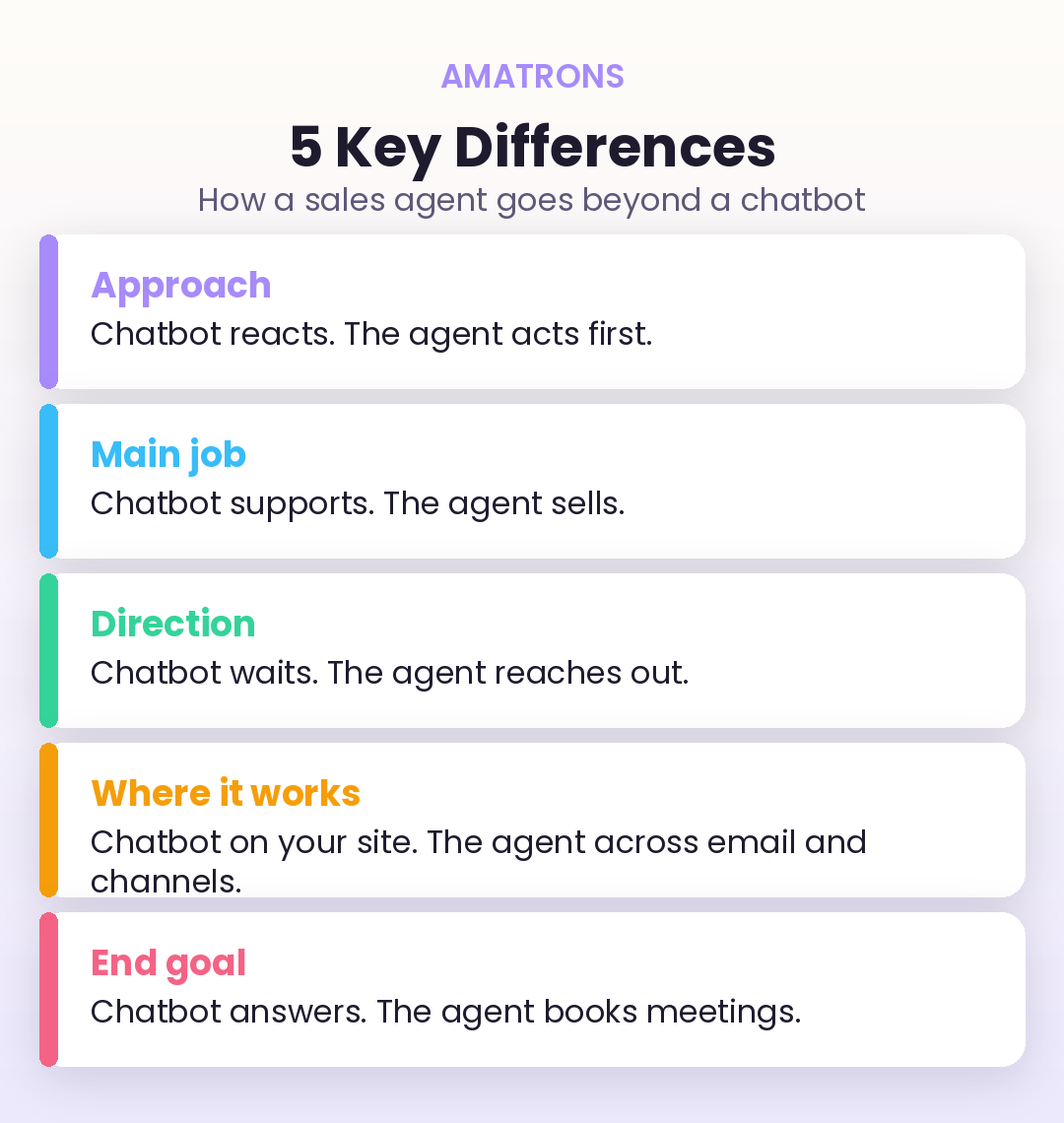
On approach, a chatbot reacts while the agent acts first. On job, a chatbot supports while the agent sells. On direction, a chatbot waits while the agent reaches out. On where they work, a chatbot sits on your site while the agent operates across email and other channels. And on end goal, a chatbot answers questions while the agent books meetings. None of this makes a chatbot worse. It makes it different. The mistake is expecting one tool to deliver the other’s outcome.
Where the Confusion Comes From
If they are so different, why does everyone mix them up? Two reasons, and both are fair.
First, they share the same engine. Both are powered by the same kind of AI language models, so under the hood they can look similar. Second, the lines are genuinely blurring at the edges. A modern chatbot can capture a lead, and an AI sales agent can hold a conversation. Some tools now market themselves as both. But sharing technology does not make them the same tool, any more than a car and a truck are the same because both have engines. The job each is built to do is what separates them, and that has not blurred at all.
Which Do You Need?
This is the question that actually matters for your business. The honest answer depends entirely on the problem you are trying to solve.
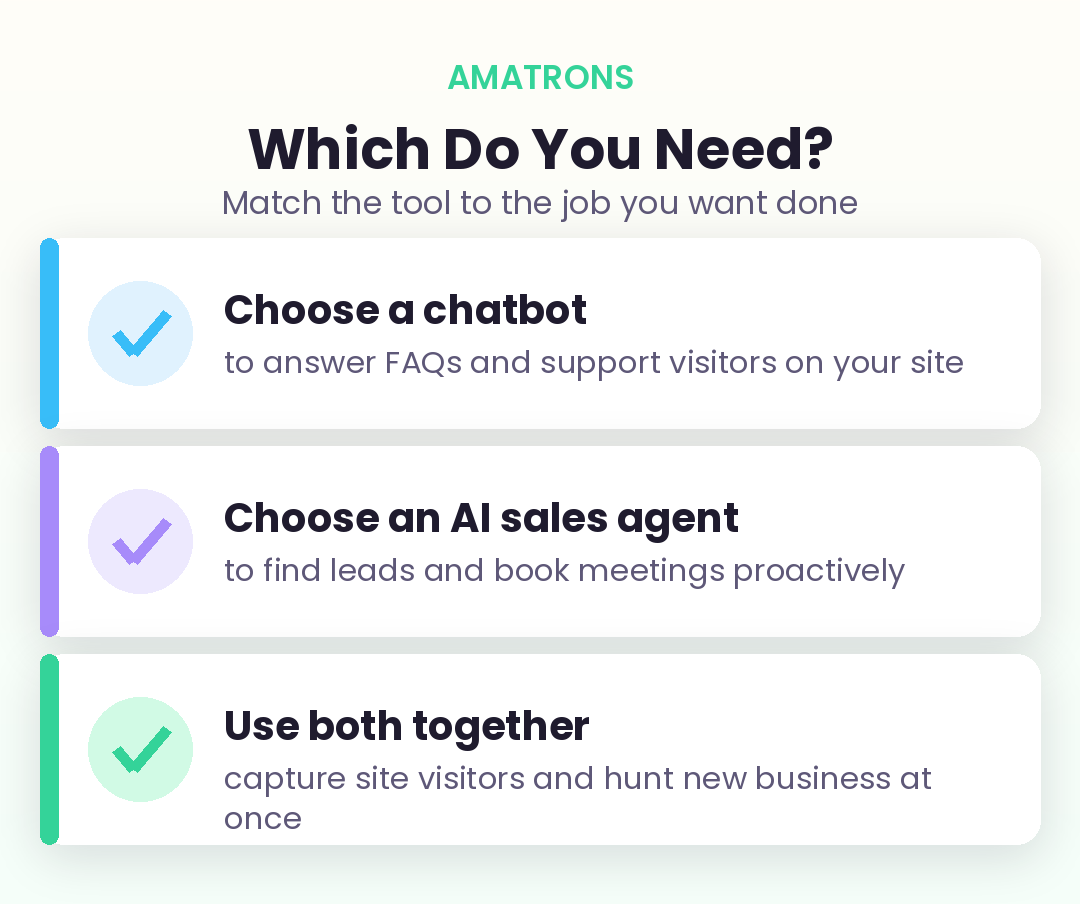
Choose a chatbot if your problem is support: you are drowning in repetitive questions, your team wastes hours on the same queries, and you want visitors to get instant answers. Choose an AI sales agent if your problem is growth: you need more leads and booked meetings, your follow-up is slow or inconsistent, and you want to reach prospects who are not finding you on their own. And if both of those are true, you use both, because they solve different problems and do not compete.
Can You Use Both Together?
Yes, and for a lot of businesses that is the smartest setup. They are not rivals fighting for the same job. They cover two different ends of the customer journey.
Picture it working together. The chatbot sits on your website and instantly helps every visitor who lands there, answering questions and capturing interest. Meanwhile, the AI sales agent works the other direction entirely, going out to find and engage prospects who have never visited your site. One captures the demand arriving at your door; the other creates new demand from the outside. Run together, they cover both inbound and outbound without adding headcount. This is the same compounding logic behind all good AI automation: each system handles a different slice of the work, and together they cover far more than either could alone.
A Real Example of Both Working Together
To make the pairing concrete, picture a small consulting firm using both. On the website, the chatbot greets every visitor, answers questions about services and pricing, and captures the details of anyone who shows interest, day or night. That handles the people who already found the firm.
At the same time, the AI sales agent is working the opposite direction. It identifies consulting prospects who match the firm’s ideal client, reaches out with a tailored message referencing their situation, follows up if they go quiet, and books the interested ones straight into a calendar. Those people never visited the website; the agent went and found them. Put together, the firm captures inbound interest and generates outbound pipeline at the same time, with no extra staff. This is the kind of compounding setup that Salesforce’s State of Sales research links to the highest-performing teams, and it is exactly why the smartest businesses stop seeing this as an either-or choice. For the outbound side specifically, our piece on how AI sales agents are replacing traditional SDRs shows how far that engine now reaches.
Common Mistakes When Choosing
Most of the disappointment people feel with these tools traces back to one of a few avoidable mistakes. Watch for these.
- Buying a chatbot expecting sales growth. A chatbot supports the people already on your site. If your problem is not enough leads, a chatbot will not fix it, and you will feel let down by a tool that did its actual job fine.
- Ignoring a chatbot because you have an agent. The reverse mistake. An AI sales agent does not help the confused visitor on your pricing page at midnight. That is the chatbot’s job, and skipping it leaves easy wins on the table.
- Treating either as set-and-forget. A chatbot needs good content to answer from; an agent needs sharp targeting and a strong message. Neglect the setup and both underperform.
- Letting a vendor blur the line. Some tools claim to be both and end up mediocre at each. Be clear about the primary job you need done, and judge the tool on that.
A Quick Word on Doing It Right
Whichever you choose, the result depends on the setup, not just the tool. A chatbot trained on thin or outdated content gives frustrating answers and annoys the visitors it was meant to help. An AI sales agent with vague targeting and generic messages becomes spam that damages your reputation. The technology is mature; the strategy behind it is what separates a tool that quietly earns its keep from one that quietly does harm. Research from McKinsey consistently finds that the businesses winning with AI are the ones that treat it as a system to be set up properly, not a switch to flip.
What About Cost?
Price often decides the question, so here is the honest shape of it. A chatbot is generally the cheaper, simpler starting point. Basic AI chatbots run from low monthly fees, and because they only need good content to answer from, they are quick to get live. An AI sales agent is a bigger investment, since it involves targeting, message strategy, and proper sending setup, but it is also the one aimed directly at revenue rather than support.
The smarter way to think about it is not which is cheaper, but which problem is costing you more. If repetitive questions are burning your team’s hours, the chatbot pays for itself in time saved. If slow follow-up and a thin pipeline are costing you deals, the agent pays for itself in booked meetings. Spend where the bleeding is. Both, done right, return far more than they cost, which is the whole point of pointing AI at the work in the first place.
Frequently Asked Questions
What is the main difference between an AI sales agent and a chatbot?
Is an AI sales agent just a smarter chatbot?
Which one do I need for my business?
Can a chatbot generate sales like an AI sales agent?
Do AI sales agents and chatbots use the same technology?
The Bottom Line
The AI sales agent vs chatbot debate is really a misunderstanding, because they were never competing for the same job. A chatbot is your reactive support layer, brilliant at answering the people who come to you. An AI sales agent is your proactive growth engine, built to go find the people who have not. Pick the one that matches your real problem, support or growth, and if you need both, run them together. Just remember that either one is only as good as the strategy behind it. If you want help deciding which fits your business and getting it set up to actually perform, that is exactly what our AI sales agent service is built for.