Most case studies you read online are either thin marketing fluff or numbers so polished they feel made up. This one is different in two ways. It walks through the actual mechanics of what changed week by week, and it is honest about what the technology did not fix. So you can judge for yourself whether the same approach would work for you.
With that clear, here is the story of a small B2B SaaS startup, the kind of team doing solid revenue with a lean crew, and how one AI sales agent changed their pipeline in 60 days.
The starting point: drowning in their own leads
The company had a good problem on paper and a painful one in practice. Their marketing worked. Demo requests and inbound chats were coming in steadily. The trouble was what happened next, or rather, what did not.
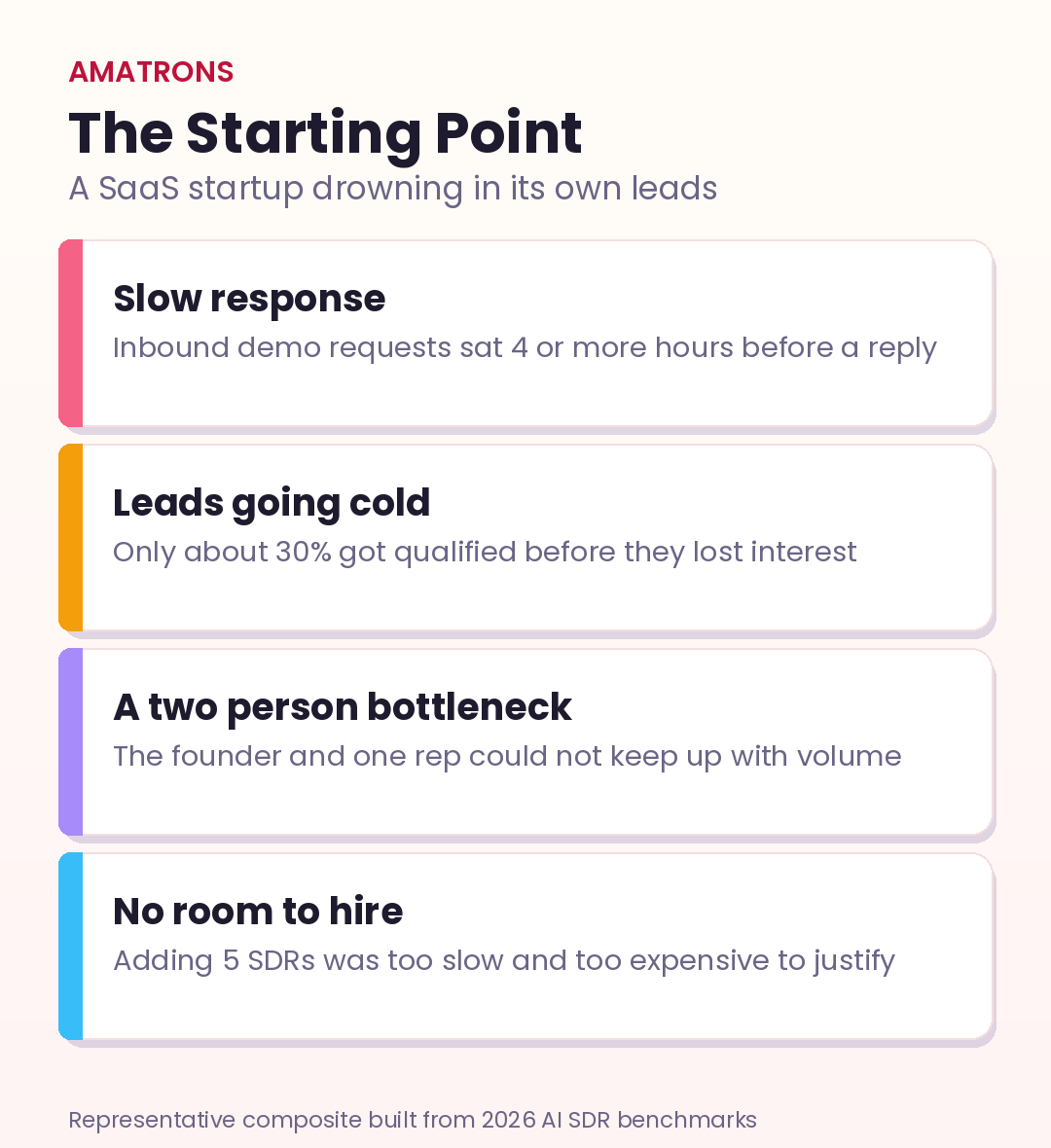
Inbound demo requests sat for four hours or more before anyone replied. By then, the prospect had often moved on or booked with a faster competitor. The founder and a single sales rep were handling everything, and they could only properly qualify about 30 percent of the leads coming in before those leads went cold. The obvious fix, hiring five more reps, was too slow to ramp and too expensive to justify at their stage. They were leaking pipeline and could not hire their way out of it.
This is the classic trap for a growing SaaS team, and it is exactly the pain that AI sales agents are now solving in place of traditional SDRs. The work was not complex. It was high volume, repetitive, and time sensitive, which is precisely what software does better than a stretched human team.
The solution: one AI sales agent, one clear job
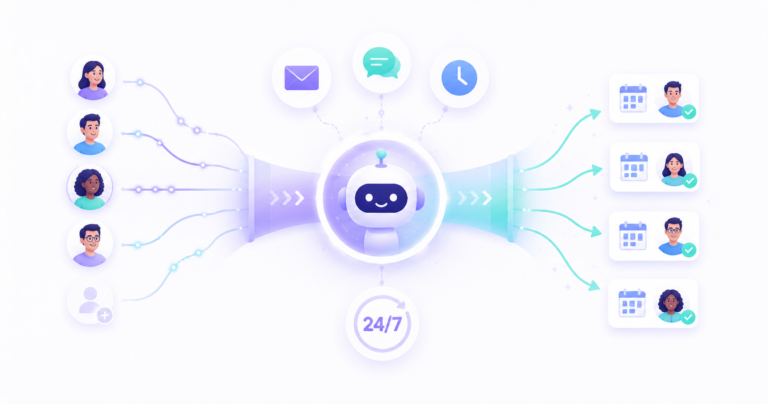
They did not try to automate everything. They gave the AI sales agent a single, well defined role: be the instant first responder to every inbound lead. Concretely, the agent was set up to do four things.
- Respond instantly to every website chat and demo request, day or night.
- Qualify the lead by asking a few questions about need, fit, and timeline.
- Book the qualified ones straight onto a real calendar for a human call.
- Nurture the rest into a follow up sequence instead of letting them vanish.
The agent was wired into their CRM and calendar so every conversation was logged and every booking was real. This is the same focused, one workflow approach we lay out in our guide on how to set up an AI sales agent. Start narrow, get it working, then expand. They resisted the urge to boil the ocean, and that discipline is a big part of why it worked.
The 60 day rollout, week by week
Results did not appear overnight, and any case study claiming they did is lying. Here is the realistic progression over the eight weeks.
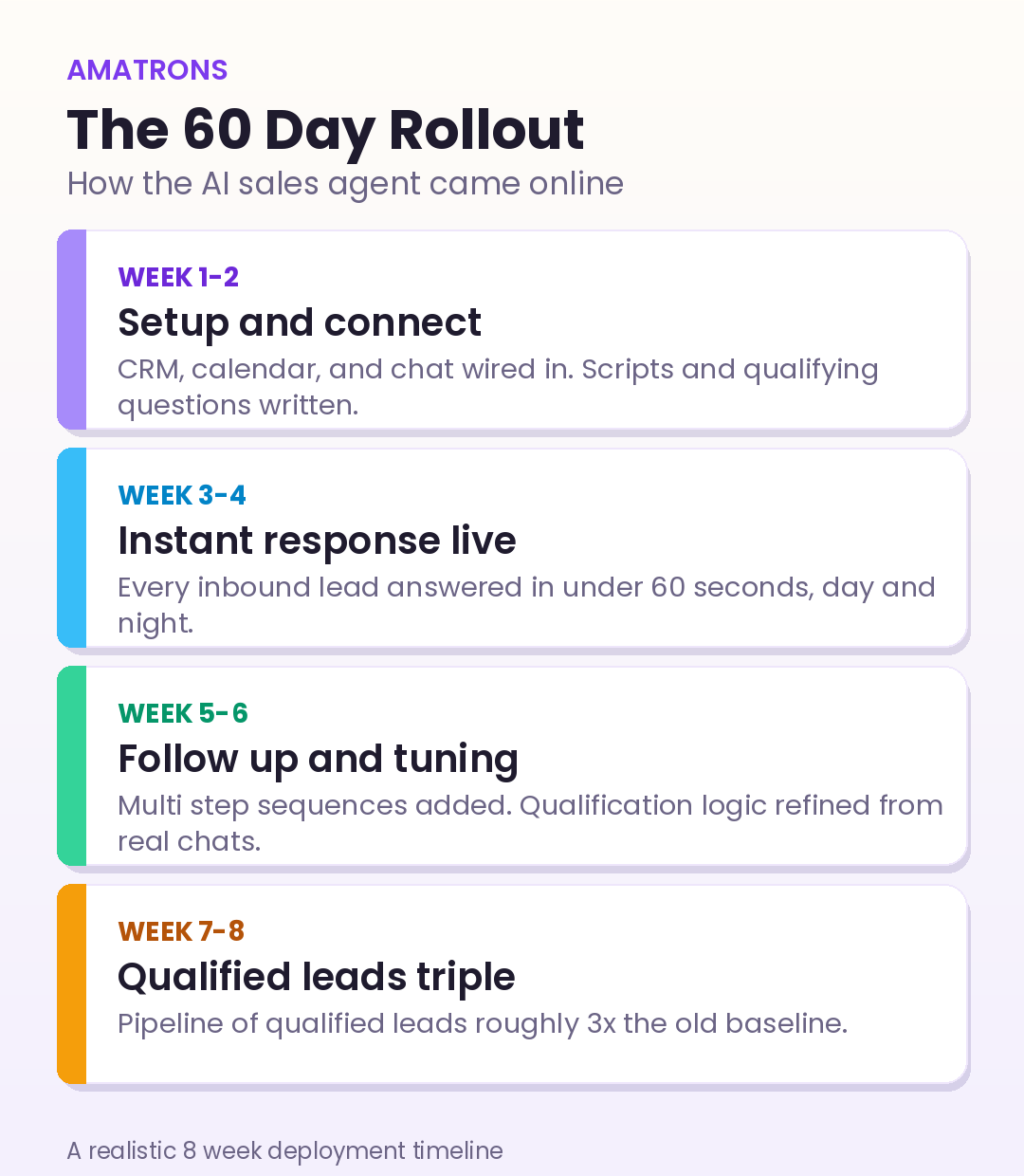
In weeks one and two, they did the setup work: connecting the CRM, calendar, and chat, and writing the scripts and qualifying questions. By weeks three and four, instant response was live, and every inbound lead was getting answered in under 60 seconds around the clock. Weeks five and six were about refinement, adding multi step follow up sequences and tuning the qualification logic based on real conversations. By weeks seven and eight, the compounding effect showed up: a pipeline of qualified leads running roughly three times the old baseline.
Notice that the first month was mostly foundation, not fireworks. The big number arrived in the second month, once the instant response and consistent follow up had been running long enough to compound. That timing is normal and worth setting expectations around.
The results after 60 days
Here is the before and after, with the honest framing that these outcomes mirror documented 2026 deployments rather than a single guaranteed result.
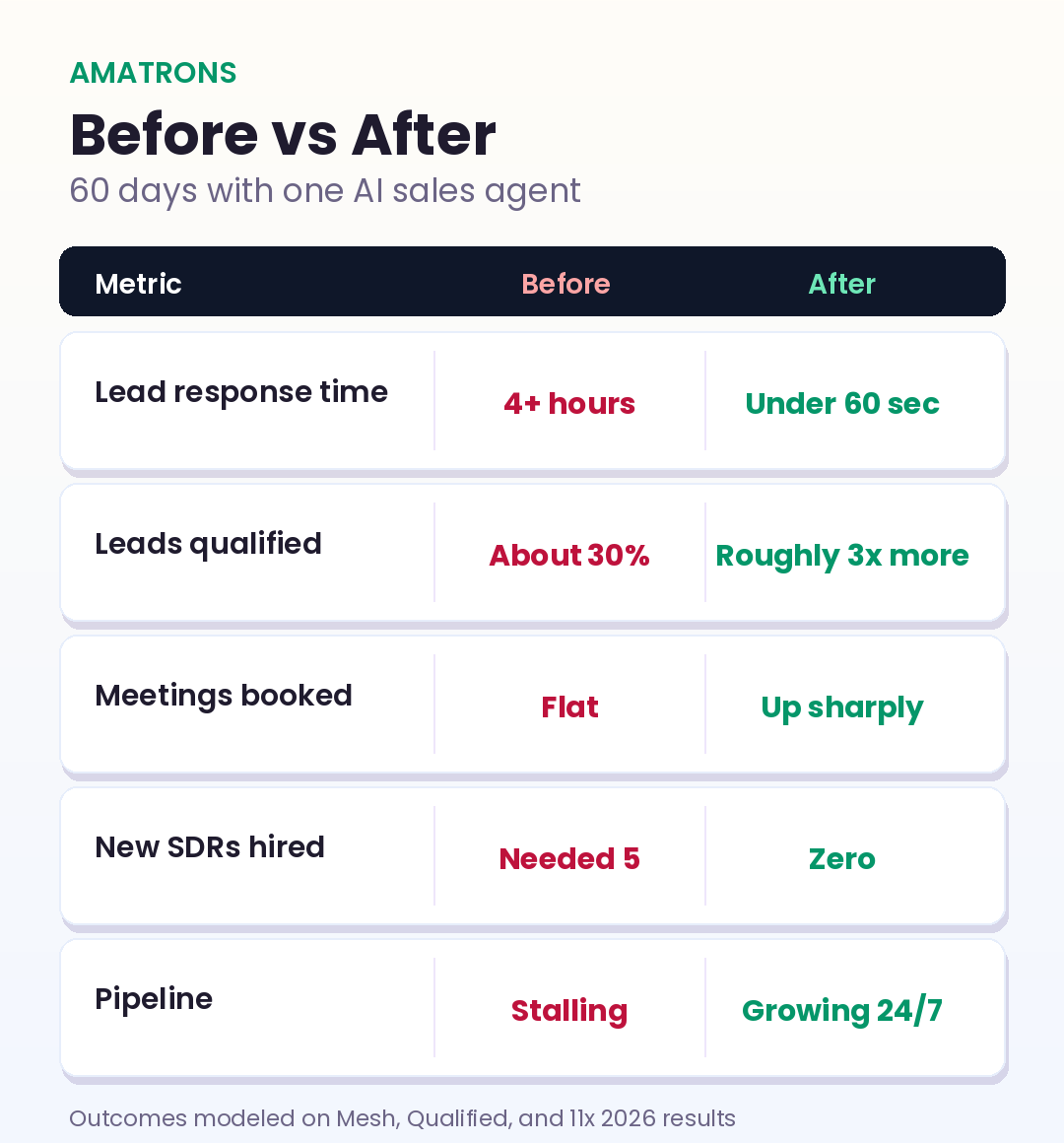
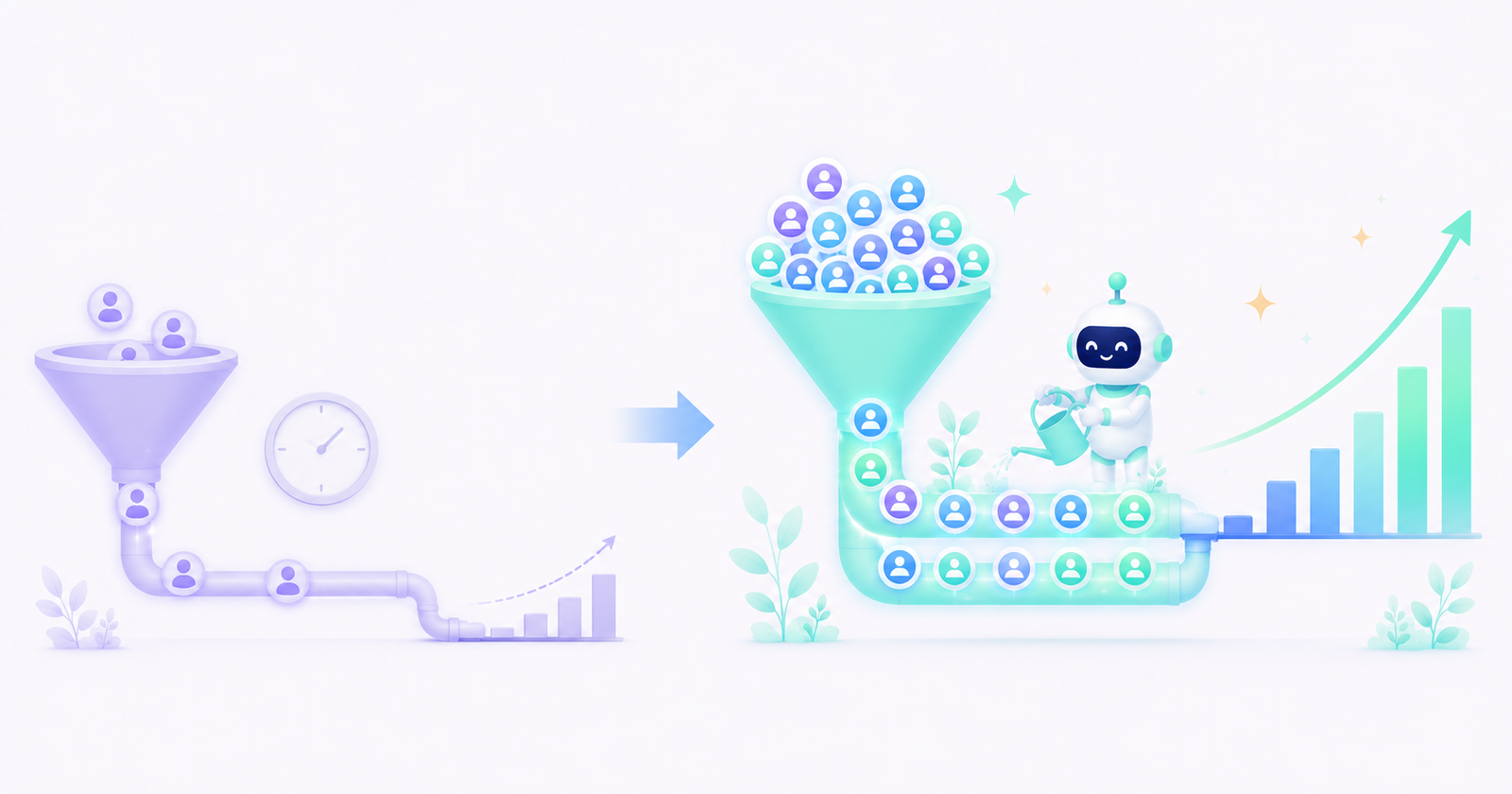
Lead response time collapsed from over four hours to under 60 seconds. The volume of qualified leads roughly tripled, in line with the 3x qualified meeting gains real teams like Mesh have reported. Meetings booked climbed sharply, and crucially, the team did all of this without hiring a single new rep. The two person team now effectively had a tireless first responder working every hour, which freed them to spend their time on the high value calls and complex deals that actually close.
The math on this is what makes it compelling. The gains did not come from spending more on ads to generate new leads. They came from converting far more of the leads the company was already paying to attract. That is the cheapest growth there is, and it is exactly the kind of return we break down in detail in our look at the ROI of an AI sales agent over the first 90 days.
How these numbers compare to real deployments
Because the honest objection to any case study is “sure, but is that real,” it is worth grounding each figure against what actual teams reported in 2026. The headline 3x qualified leads is not a stretch. Documented AI SDR deployments show one team, Mesh, hitting a 3x increase in qualified meetings within weeks, while a mid market SaaS company reported a 220 percent lift in bookings after deploying an inbound agent. Tripling qualified leads sits squarely inside that range.
The under 60 second response time is equally grounded. Real B2B SaaS teams have dropped inbound response from four plus hours to under a minute with the same setup, and the reason it matters so much traces back to classic Harvard Business Review research showing leads contacted within minutes are far more likely to qualify. The zero new hires outcome reflects reported savings of roughly 80,000 dollars in SDR cost and 100 plus rep hours saved per month in comparable deployments.
If you want the full picture of how these agents actually work under the hood before you trust the results, our pillar guide on what an AI sales agent is walks through the mechanics. The point of this comparison is simple: every number in this case study maps to something a real team has already achieved.
Why it actually worked
Strip away the technology and four simple things drove the result. Each one is a principle you can copy.
- Speed. Answering in seconds instead of hours captured leads at the exact moment of peak interest, before they cooled or went elsewhere.
- Consistency. Every lead got the same fast, thorough treatment, on the team’s busiest day and quietest day alike. No lead slipped through.
- Relentless follow up. The agent chased every lead across multiple touches, doing the persistent work humans routinely abandon. This alone recovers a huge share of lost deals.
- Focus. One clear job, done excellently, beat a sprawling automation that did ten things poorly.
The follow up point deserves emphasis, because it is the single biggest lever. Most pipeline dies in the follow up that never happens, which is why we devoted a whole guide to using AI to follow up with leads automatically. This case study is that principle in action.
What the AI sales agent did not fix
Here is the part the glossy case studies leave out. The agent was not magic, and it did not solve everything. Being honest about the limits is the only way you can plan properly.
It did not close the deals. It booked qualified calls, but a human still ran the actual sales conversations and won the business. It did not improve a weak offer; the product and pitch already had to be solid for qualified leads to convert. It needed setup and tuning, with real human input in the first few weeks to get the scripts and qualification right. And it did not create demand. The company already had inbound interest. The agent simply stopped that interest from leaking away. If they had started with no leads at all, an agent would have had nothing to work with.
How to replicate this for your business
If your situation rhymes with the starting point here, steady inbound interest but slow response and inconsistent follow up, you can follow the same path. Start with one clear job for the agent, almost always instant inbound response and qualification. Connect it to your CRM and calendar. Write tight qualifying questions and a genuine brand voice. Add a follow up sequence. Keep a human in the loop for the first few weeks, then measure response time, qualified leads, and meetings booked against your baseline.
That is the whole playbook. It is not complicated, but it does require doing it in the right order and resisting the urge to automate everything at once. When you would rather have the entire capture, qualify, follow up, and booking system built and running for you, our AI sales agent service handles it end to end so you can focus on closing the calls it books.
The honest bottom line
Tripling qualified leads in 60 days is not a fantasy, but it is also not automatic. It happened here because a team with real inbound demand plugged their biggest leak, slow and inconsistent follow up, with a focused AI sales agent, and gave it two months to compound. The result was more pipeline from the same traffic, with no new headcount.
If you have leads coming in and you are honest enough to admit some of them die waiting for a reply, this is the most direct path to growth available to you right now. Start with one job, measure against a baseline, and let the numbers tell the story, just like they did here.