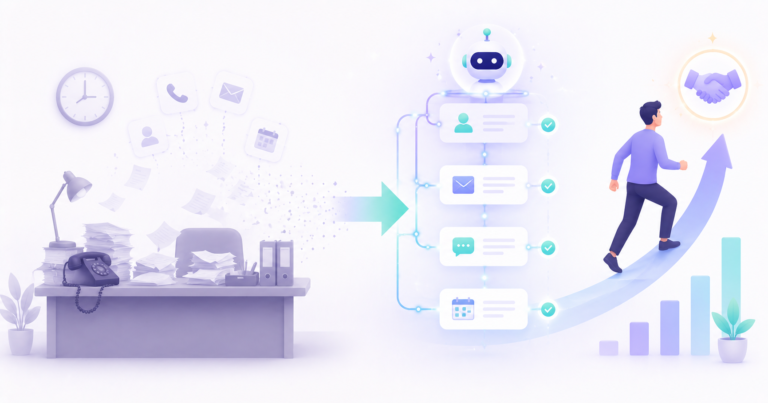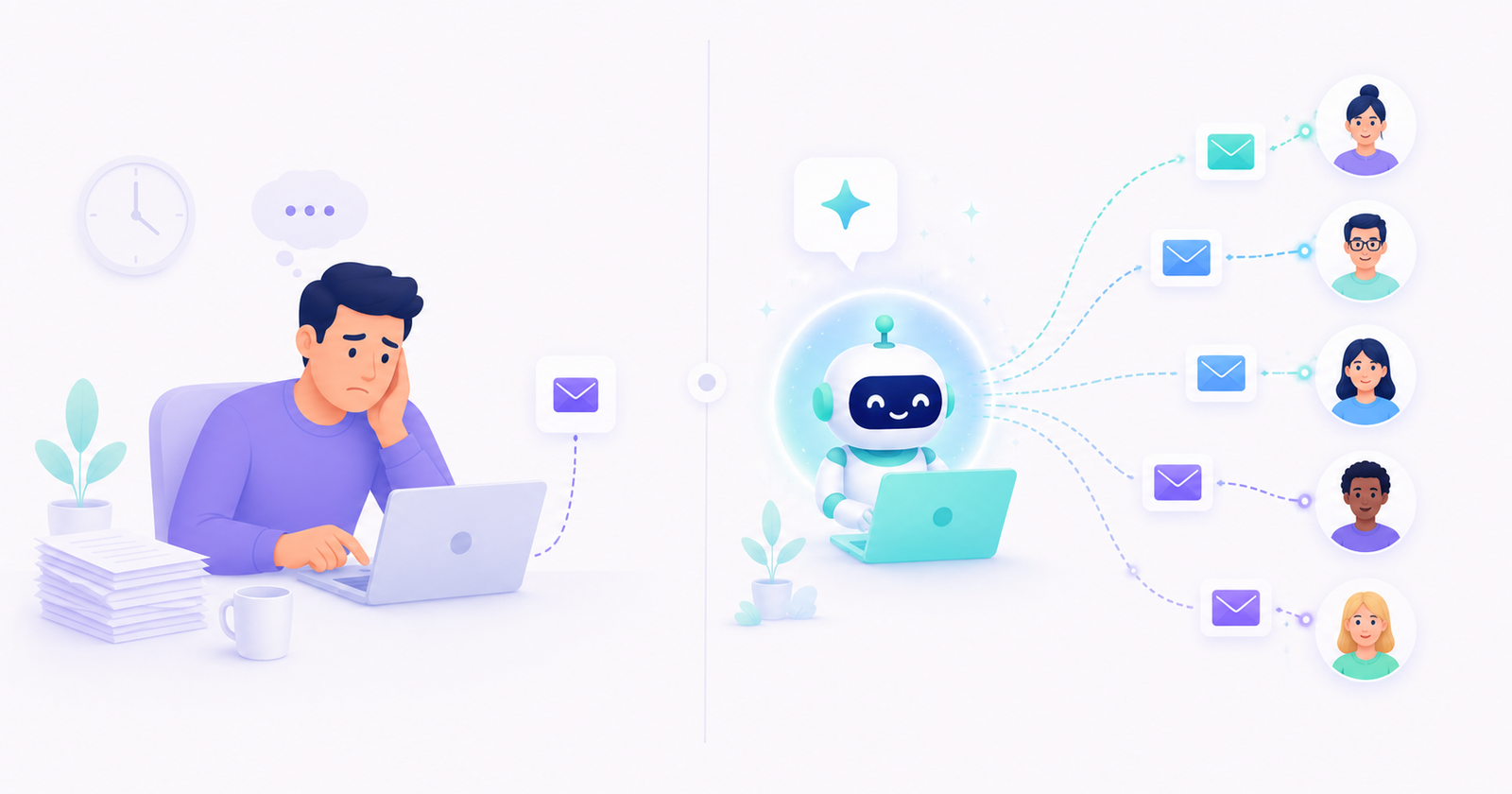
Let me start with a claim you will see everywhere, then tell you the truth behind it. The headlines say AI has crushed human cold outreach. That is half right and half marketing. Pure AI, left to spray generic emails, performs at or below average and gets ignored like everything else. What is actually happening in 2026 is more interesting and more useful to you: teams that use AI to do the heavy lifting are quietly outperforming teams that still do everything by hand.
That distinction matters because it changes what you should do. If you read the hype and bought a tool to blast 5,000 generic emails, you wasted your money. If you understand where AI genuinely beats a human and where it does not, you build outreach that books meetings while your competitors burn out their reps. This article gives you the real numbers and the model that wins.
The honest state of cold outreach in 2026
Cold email is harder than it used to be, not easier. Inboxes are flooded, sender rules tightened through 2024 and 2025, and buyers are tired. The average cold email reply rate now sits around 3.43 percent according to Instantly’s 2026 benchmark drawn from billions of emails. Put bluntly, about 19 out of every 20 cold emails get ignored.
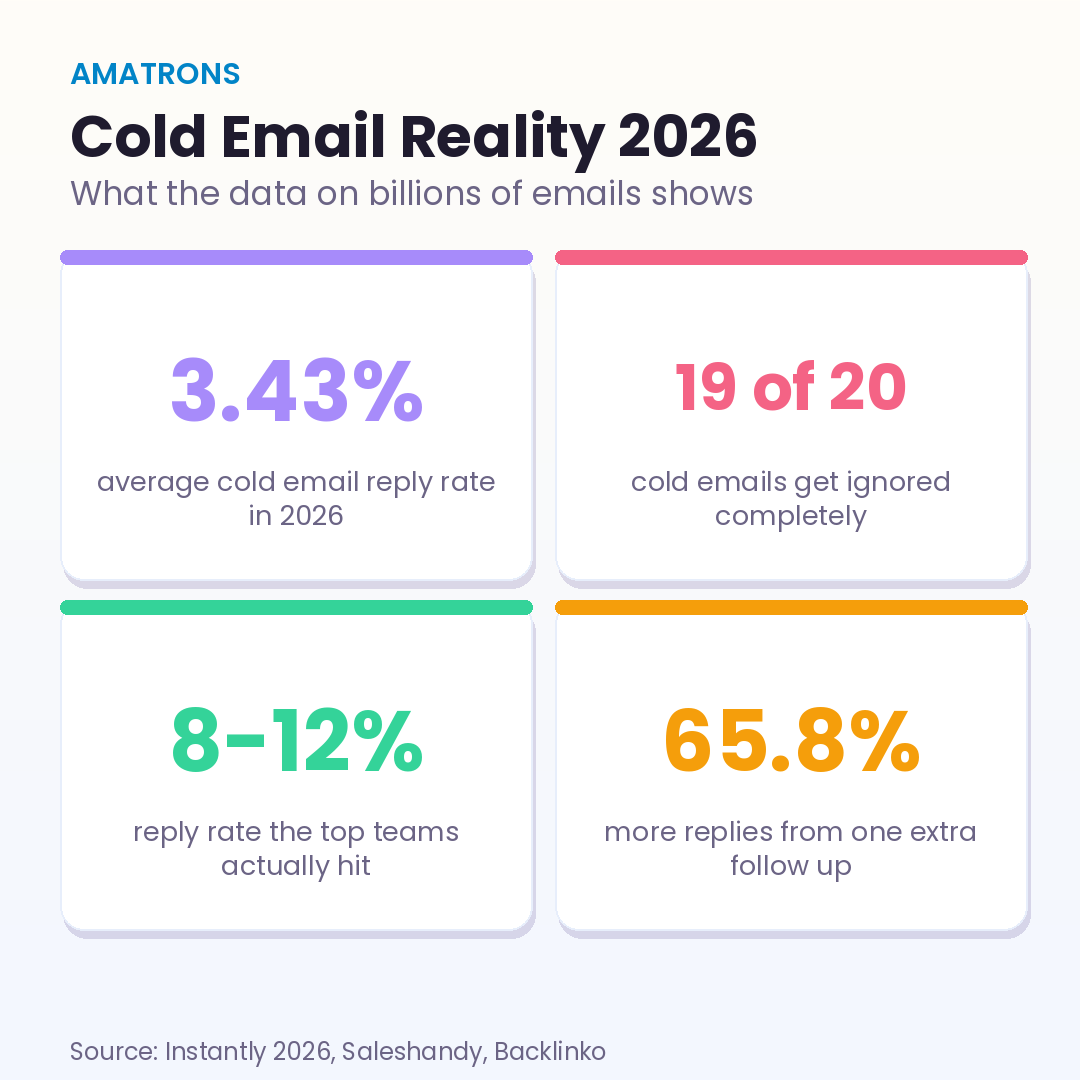
But look closer and the story splits in two. Top performing teams still hit 8 to 12 percent reply rates, more than three times the average. The gap between the best and worst is enormous, and it is not about clever copy. It is about data quality, targeting precision, and follow up discipline. That is exactly the work AI is built to do at scale, which is why the winners look so different from the losers.
Why AI driven teams are pulling ahead
A human can write a brilliant cold email. What a human cannot do is research 300 prospects properly, personalize every message, follow up five times on each one without fail, and send at the perfect moment, all at once, every day, forever. That is where AI wins, and it wins on leverage, not creativity.
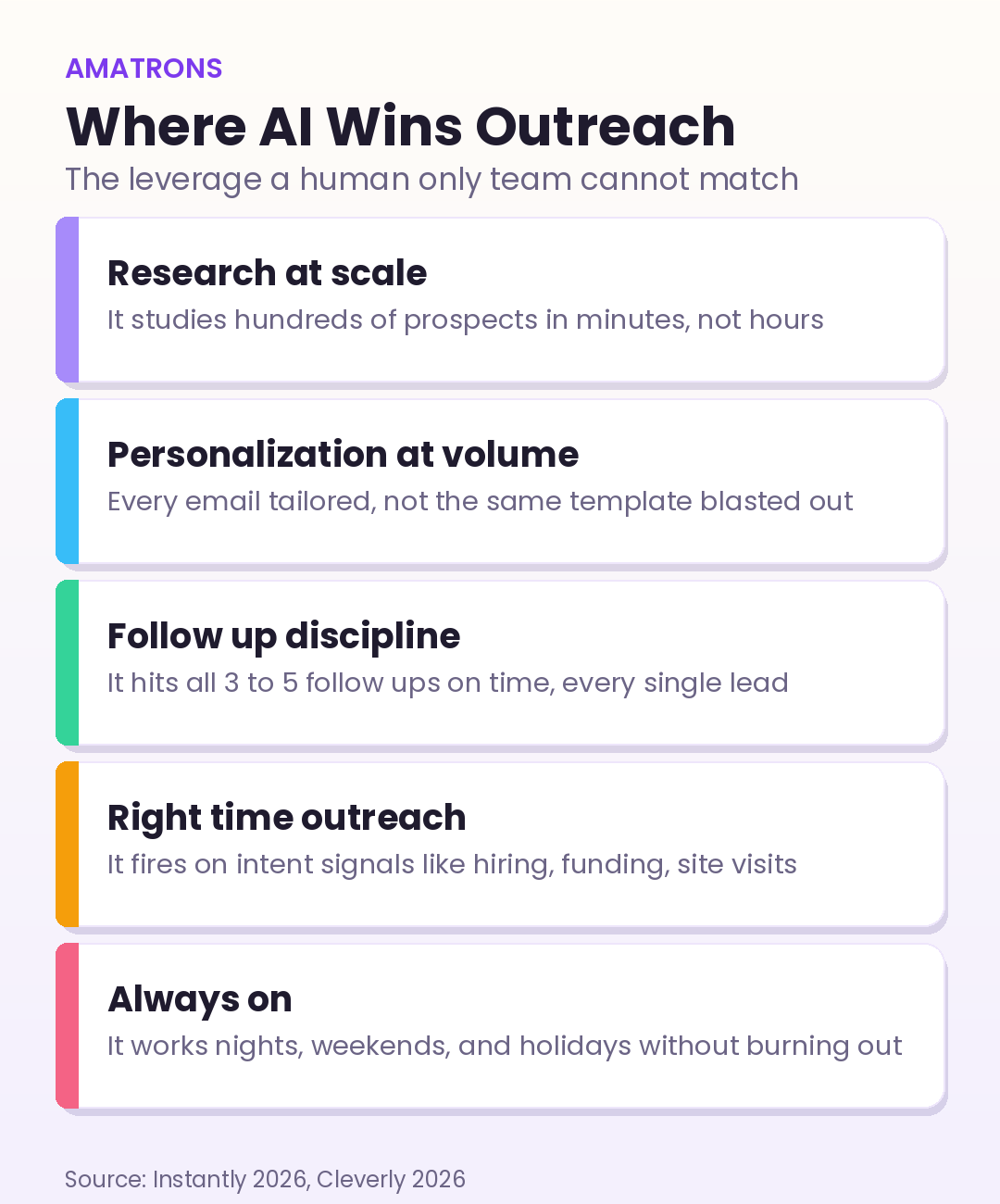
Take follow up alone. Saleshandy’s data shows campaigns with three to five follow up steps hit 8.3 percent reply rates, double the 4.1 percent for sequences with none. Backlinko’s study of 12 million emails found a single extra follow up brings 65.8 percent more replies. Humans forget, get busy, or give up after one try. AI never does. This is the same follow up discipline that powers a good AI sales agent, and it is the cheapest win in all of outreach.
Then there is timing. Elite teams in 2026 fire outreach on intent signals, like a prospect’s company hiring, raising funding, or visiting your site. AI watches for those signals across thousands of accounts and acts the moment they appear. A human cannot monitor that volume. This is why AI is replacing the grunt work of traditional SDRs, not the strategy, but the relentless mechanical execution underneath it.
The trap: why pure AI outreach fails
Here is the part the tool vendors will not put on the homepage. AI has also made outreach worse for the lazy. The moment everyone got an AI writer, inboxes filled with generic, obviously automated emails, and buyers learned to spot and delete them instantly. Research is clear that AI generated copy sent without human editing performs at or below average. The flood of bad AI outreach is part of why reply rates dropped.
So the question is not AI versus human. It is AI plus human versus human alone. And on that comparison, the augmented team wins almost every time.
The hybrid model that actually wins
The teams booking the most meetings in 2026 run a clear division of labor. AI handles the volume and the mechanics. Humans own the strategy and the relationships. According to Prospeo’s 2026 analysis, around 45 percent of high performing teams already work this way, and the number is climbing.
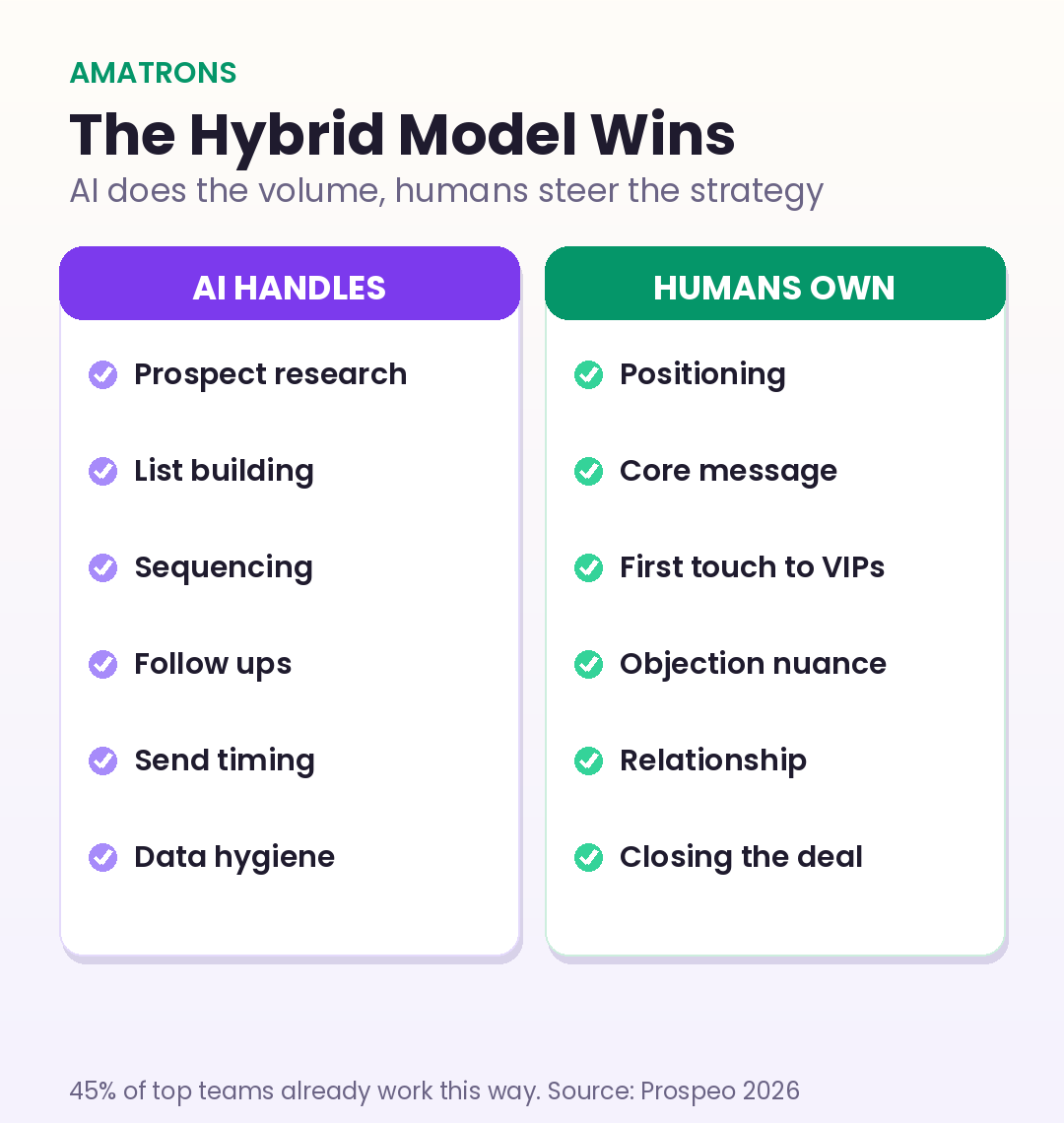
The split is simple. Let AI do the prospect research, list building, sequencing, follow ups, send timing, and data hygiene. Keep humans on the positioning, the core message, the first touch to your most valuable prospects, the tricky objections, the relationship, and the close. You get the scale of a machine and the judgment of a person. Wiring this together is mostly a workflow automation job, connecting your data source, your AI layer, your sending tool, and your CRM so the whole sequence runs without you babysitting it.
What this looks like in practice
- You define the offer and the angle. The one thing only you can do well. Who you help and the specific result you create.
- AI builds and enriches the list. It finds prospects matching your ideal customer profile and verifies their details so you are not emailing dead addresses.
- AI drafts personalized openers, you approve the message. It adapts your core message to each prospect. You set the voice and check the output.
- AI runs the full sequence and follow ups. Every step, on time, on every lead, until they reply or opt out.
- You step in when a real conversation starts. The human takes over the moment a prospect engages, which is where deals are actually won.
How to start without becoming the noise
If you want AI outreach that works rather than annoys, do these few things. Verify your list before you send, because bounce rates above a few percent wreck your sender reputation and drag every metric down. Keep your core message human and specific, not AI filler. Build in three to five follow ups from day one. And start narrow with one tight audience instead of blasting everyone.
This is the same discipline behind the broader shift to AI automation across a business: start small, measure what matters, and only scale what is proven. If outreach is meant to feed a sales agent that qualifies and books the replies, our guide to setting up an AI sales agent shows how to connect the two so a reply never sits unanswered.
The benchmarks worth bookmarking come from Instantly’s 2026 report on billions of cold emails, and Backlinko’s research on follow up volume is the clearest case for never stopping at one email.
Stop measuring the wrong thing
Most people judge cold outreach by open rates, and in 2026 that number is close to useless. Apple Mail Privacy Protection and bot scanning inflate opens to around 42 percent on average, a figure that tells you almost nothing about whether a human read or cared. Chasing it leads you to optimize subject lines while your pipeline stays empty.
Track what actually moves money instead. The only metrics worth your attention are positive reply rate, meetings booked, and pipeline created. A campaign with a modest open rate but a strong positive reply rate is winning. One with huge opens and no replies is a vanity exercise. When AI handles your sending and logging, these real numbers get tracked automatically, so you can finally manage outreach by outcomes rather than noise.
The data quality problem nobody wants to fix
Here is the uncomfortable truth behind the huge gap between top and bottom performers. It is rarely the copy. The best outbound teams book meetings at roughly 20 times the rate of the worst, and the difference comes down to data quality, targeting, and sending infrastructure. Bottom performers email unverified lists, bounce at 12 percent or more, destroy their sender reputation, and then wonder why nothing lands.
Top performers keep bounce rates under 1.5 percent because they verify every email before sending. This is unglamorous, tedious work, exactly the kind of thing humans skip and AI does perfectly. Verifying contacts, deduplicating records, and keeping your list clean is the highest leverage thing most outreach teams ignore. Fix your data and you fix most of your results, before you touch a single word of copy.
Targeting sits right next to it. A CTO at a busy software company gets dozens of cold emails a day, while a manager in a less saturated industry might get two. Same email, wildly different odds. AI helps you find and prioritize the less contested, better fit prospects instead of fighting everyone else for the most pitched inboxes.
Personalization is the real multiplier
If data quality is the floor, personalization is the ceiling. The single biggest lever on reply rate is how relevant the message feels to the person reading it. Generic blasts are dying. Advanced personalization can double cold email response rates, and teams using AI driven personalization tools report response rates as high as 35 percent in the right conditions, several times the cold email average.
The reason this is now possible at scale is AI. A human can deeply personalize maybe twenty emails before the day is gone. AI can reference each prospect’s role, company, recent news, and specific challenge across hundreds of contacts, then hand you drafts to approve. You keep the judgment, the machine removes the time cost. That is the whole game.
Layering channels compounds it further. Buyers respond when they see you in more than one place, so the strongest sequences blend email with a LinkedIn touch and, for higher value targets, a call. Combining outreach across channels has been shown to lift engagement sharply versus email alone. AI keeps every channel coordinated so the prospect gets a consistent story rather than three disconnected pitches.
The honest bottom line
AI is outperforming human sales teams at cold outreach, but not by replacing the human. It wins by erasing the manual work that humans do slowly and inconsistently, then handing the strategy and the conversation back to a person. The teams that lose are the ones at either extreme: all manual and unable to scale, or all AI and drowning in their own generic noise.
Pick the middle. Let AI carry the volume, keep yourself on the message and the relationships, and follow up like your pipeline depends on it, because it does. That is the outreach that books meetings in 2026 while everyone else complains that cold email is dead.