
How Optimized Business Systems Drive Better Decision-Making and Profitability
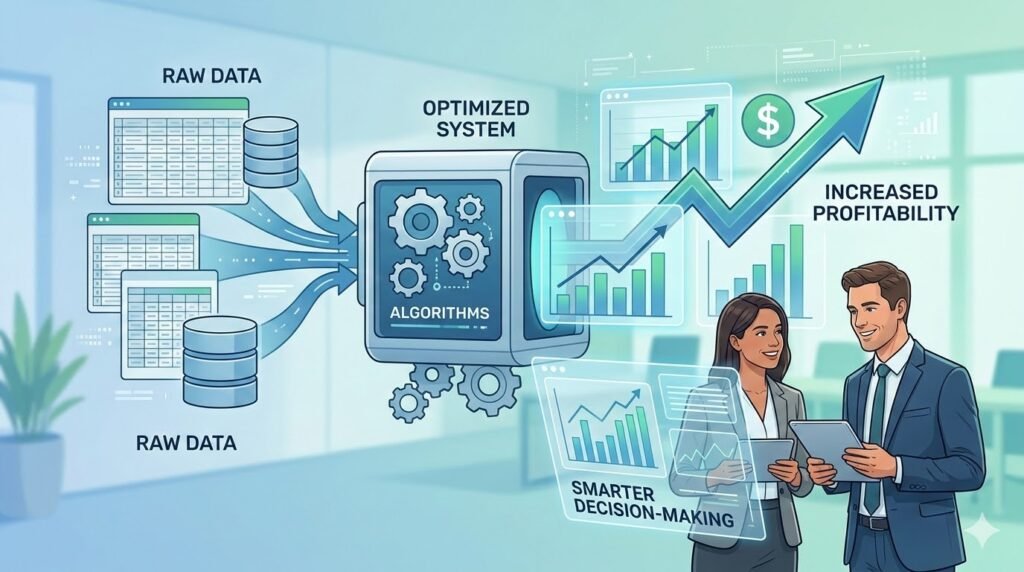
Introduction to Optimized Business Systems In today’s rapidly evolving business landscape, optimized business systems play a pivotal role in the success of organizations. These systems are designed to enhance efficiency and streamline processes by integrating technology with organizational workflows. At their core, optimized business systems facilitate the smooth flow of information, enabling companies to make informed decisions based on real-time data. The importance of these systems cannot be overstated. Modern businesses face an array of challenges, from increasing competition to shifting consumer preferences. In this context, the integration of optimized systems becomes essential. They provide a framework that supports not only the operational aspects of a company but also its strategic initiatives. By aligning technology with business goals, these systems foster a culture of efficiency where resources are utilized effectively. Furthermore, optimized business systems serve as the backbone for informed decision-making. When processes are streamlined and data is readily accessible, decision-makers can analyze trends and identify opportunities for growth quickly. This agility allows organizations to respond to market changes instantly, enhancing their competitive edge. The result is a more profitable business model that is not just reactive but proactive in addressing the challenges of the marketplace. In summary, the integration of optimized business systems is critical for any modern organization aiming to thrive in an increasingly complex environment. By ensuring that processes are efficient and that technology is effectively integrated, businesses can drive better decision-making and ultimately increase their profitability. Understanding Business Processes and Their Optimization Within any organization, business processes are the critical activities that transform inputs into outputs, leading to the delivery of products or services to customers. These processes can range across various functions, including sales, marketing, operations, finance, and human resources. Understanding these interconnected processes is vital as they dictate the efficiency and effectiveness of an organization. However, many businesses face challenges that hinder their performance. These may include inefficiencies due to manual operations, lack of standardization, or delays in communication. Optimization of business processes involves applying systematic methods to enhance performance. This may include techniques such as process mapping, where organizations visualize workflows to identify bottlenecks, redundancies, or areas of improvement. Lean management and Six Sigma are also methodologies employed to eliminate waste and reduce variability, thereby streamlining operations. Utilizing these techniques not only improves efficiency but also enhances the quality of products or services delivered. Moreover, technology plays a pivotal role in optimizing business processes. The adoption of automation tools and software solutions can lead to significant enhancements in productivity. Organizations are increasingly integrating data analytics to monitor workflows and performance metrics, enabling informed decision-making. The analysis of key performance indicators (KPIs) allows companies to measure the effectiveness of their processes, making it easier to spot trends and implement necessary changes promptly. Ultimately, the goal of optimizing business processes is to achieve greater productivity while also maximizing reliability and quality. By effectively addressing common challenges and implementing strategic optimizations, companies position themselves to respond swiftly to changes in market demands or operational hurdles, thus driving better decision-making and profitability. The Role of Data in Decision-Making In today’s highly competitive business environment, the role of data in decision-making is paramount. Optimized business systems leverage data as a critical asset for informing strategic choices and driving profitability. An effective approach to decision-making involves comprehensive data collection and thorough analysis, which allow businesses to understand market trends, customer preferences, and operational efficiencies. Data collection can come from various sources, including customer interactions, market research, and operational metrics. This information is instrumental in painting a holistic picture of the business landscape. With optimized systems in place, organizations can ensure that they capture relevant data across all touchpoints, which enhances accuracy and reliability in their analytics efforts. Furthermore, the importance of real-time data cannot be overstated. In an era where market conditions can shift rapidly, having access to up-to-date information enables businesses to respond quickly to emerging opportunities or threats. Real-time analytics facilitate timely interventions and adjustments in strategy, thereby maximizing operational effectiveness and maintaining a competitive edge. To harness the power of data, businesses can leverage advanced data analytics tools that provide in-depth insights into their operations. These tools can analyze large volumes of data efficiently, uncovering patterns and correlations that might not be visible through traditional methods. By employing data analytics, organizations can make informed decisions based on empirical evidence, which significantly reduces reliance on intuition or guesswork. In conclusion, the integration of robust data practices within optimized business systems is essential for effective decision-making. As organizations continue to evolve, prioritizing data-driven strategies will ensure that they not only enhance their decision-making processes but also increase profitability and sustainability in the long run. Benefits of Implementing Optimized Business Systems Implementing optimized business systems offers numerous advantages that significantly enhance the operational capabilities of any organization. One of the primary benefits is improved efficiency; business systems that are streamlined and tailored to specific needs allow organizations to operate more fluidly and minimize redundancies. For instance, a manufacturing company that integrates an optimized inventory management system can swiftly track materials, reducing delays and improving overall throughput. Another critical benefit is the reduction of operational costs. By automating routine tasks and eliminating errors, optimized business systems can lead to decreased labor costs and resource utilization. For example, a retail enterprise that adopts an optimized point-of-sale system can reduce the time employees spend managing transactions, thereby allowing them to focus on customer service, which is paramount in today’s competitive market. Enhanced customer satisfaction is also a significant outcome of implementing optimized business systems. When processes are efficient and well-organized, customers experience quicker response times and more accurate service delivery. A well-known tech company, for example, found that by using an optimized customer relationship management (CRM) system, they were able to analyze customer feedback in real-time and address concerns promptly, leading to an increase in customer loyalty. Finally, the implementation of optimized business systems creates opportunities for increased revenue streams. Businesses can analyze performance data more effectively and identify new market
Common Business System Challenges and How Optimization Solves Them
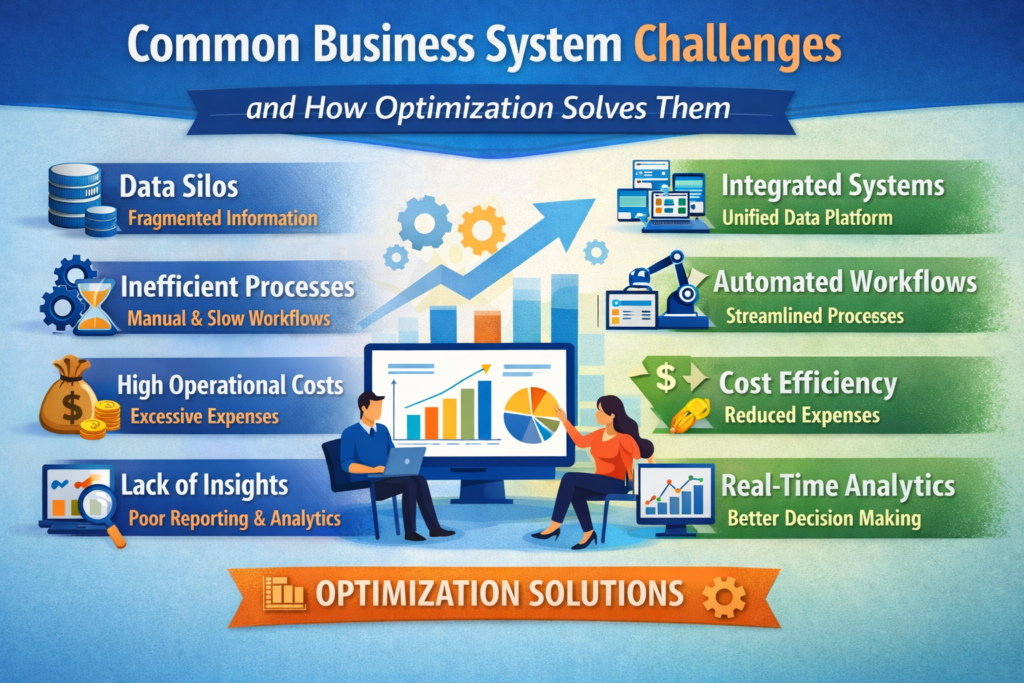
Introduction to Business System Challenges In today’s fast-paced business environment, organizations face a myriad of challenges that can inhibit their growth and efficiency. Business system challenges are obstacles that restrict a company’s ability to operate smoothly and effectively. These challenges can arise from various sources such as inefficiencies within workflows, communication breakdowns among teams, and reliance on outdated processes and technologies. Identifying these challenges is crucial for any organization seeking to improve its operations. Inefficiencies, for instance, often manifest in repetitive tasks or poorly integrated systems that waste valuable time and resources. As businesses grow, maintaining optimal performance becomes increasingly demanding, and these inefficiencies can significantly hinder productivity and employee morale. Communication breakdowns represent another common challenge; they can lead to misunderstandings, reduced collaboration, and poor decision-making. When teams operate in silos or lack clear communication channels, the overall alignment of business objectives suffers. This further complicates efforts to implement change and achieve strategic goals. Moreover, reliance on outdated processes can severely restrict an organization’s ability to adapt to new market conditions. Companies that do not regularly update their systems and protocols run the risk of falling behind competitors who embrace innovation and agility. This reluctance to change can stifle growth and limit the potential for new business opportunities. Recognizing and understanding these various business system challenges is the first step toward implementing effective solutions. By bringing attention to these issues, organizations can strategize and prioritize corrective actions necessary to enhance their operations. As companies navigate through these challenges, they open doors for optimization and improvements that ultimately lead to greater success in an ever-evolving marketplace. Identifying Common Business System Challenges In today’s fast-paced business environment, organizations frequently encounter a range of challenges that hinder the effectiveness of their systems. One significant issue is the presence of data silos. This occurs when information is trapped within disparate departments or systems, preventing a cohesive view of organizational data. For instance, a marketing department may utilize a customer relationship management (CRM) system that is not properly integrated with sales or finance platforms, leading to missed opportunities for cross-departmental collaboration. Another prevalent challenge is the lack of integration between various tools that companies employ. Organizations often adopt multiple software solutions tailored to specific functions, resulting in a fragmented ecosystem. For example, an enterprise may use separate applications for project management, communication, and human resources. Without proper integration, employees may experience difficulties in accessing and sharing information efficiently, which can ultimately hamper productivity. Employee resistance to change is another barrier that organizations face when attempting to optimize their business systems. Employees may be accustomed to existing workflows and hesitant to adopt new tools or processes that promise improvement. This resistance can stem from a lack of trust in new technologies or insufficient training provided during transition phases. A notable example is seen in companies that have introduced new software for inventory management, only to encounter pushback from staff who feel overwhelmed by the change. Finally, inadequacies in workflow or process management can further exacerbate challenges in business systems. Inefficient workflows can lead to bottlenecks, duplicated efforts, and frustration among team members. For example, if an organization relies on manual tracking of project tasks through emails or spreadsheets, the potential for errors and miscommunication is heightened. Therefore, understanding these common challenges is crucial for organizations aiming to succeed in optimizing their business systems and driving overall efficiency. The Consequences of Neglecting System Challenges Business system challenges, if left unaddressed, can lead to a myriad of negative consequences that significantly hinder operational efficiency and overall success. One of the most immediate impacts is a marked decrease in productivity. Employees may find themselves grappling with outdated processes or inadequate tools, leading to frustration and inefficiencies in their work. This disruption not only affects output but can also create a ripple effect throughout the organization. Moreover, the morale of the workforce is likely to suffer when system challenges are continuously overlooked. Employees may begin to feel undervalued and disheartened when they encounter systemic obstacles that prevent them from performing their jobs effectively. This dissatisfaction can escalate to higher rates of absenteeism and employee turnover, which further strains an organization’s resources and financial health. Customer dissatisfaction is another critical consequence of neglecting system challenges. Inefficiencies in business operations can lead to delays in service delivery, errors in product offerings, or inadequate customer support. As a result, clients may choose to take their business elsewhere, leading to a potential decline in revenue. According to a study by the Customer Service Institute, organizations that fail to prioritize efficiency often experience a 20-30% drop in customer retention rates, highlighting the vital link between system functionality and customer satisfaction. In addition to these challenges, businesses risk facing significant financial losses as a result of operational inefficiencies. Ineffective systems can lead to increased operational costs and a decrease in profitability. Organizations may find themselves spending more on resources to compensate for systemic failures, ultimately eroding their financial stability. A failure to address business system challenges, therefore, not only hampers day-to-day operations but also jeopardizes long-term sustainability and growth. Understanding Business Optimization Business optimization refers to the systematic process of refining an organization’s operations and systems to enhance efficiency, productivity, and overall performance. It plays a critical role in addressing the myriad challenges that businesses face in their quest for growth and sustainability. By implementing optimization strategies, organizations can streamline processes, reduce waste, and improve service delivery, thereby making significant strides in overcoming system-related challenges. There are several key strategies that enterprises can employ to drive optimization effectively. One prominent approach is process improvement, which focuses on identifying inefficiencies within existing workflows. By analyzing the current processes, organizations can pinpoint delays, redundancies, and bottlenecks that hinder performance. Techniques such as Lean management and Six Sigma provide structured methodologies that help businesses refine their processes, ultimately leading to both cost savings and enhanced quality. Another significant strategy is automation, which involves utilizing technology to automate repetitive tasks and processes. Automation not only minimizes the risk
Business and Management Consultancy Services: A Smart Investment for Scaling Brands
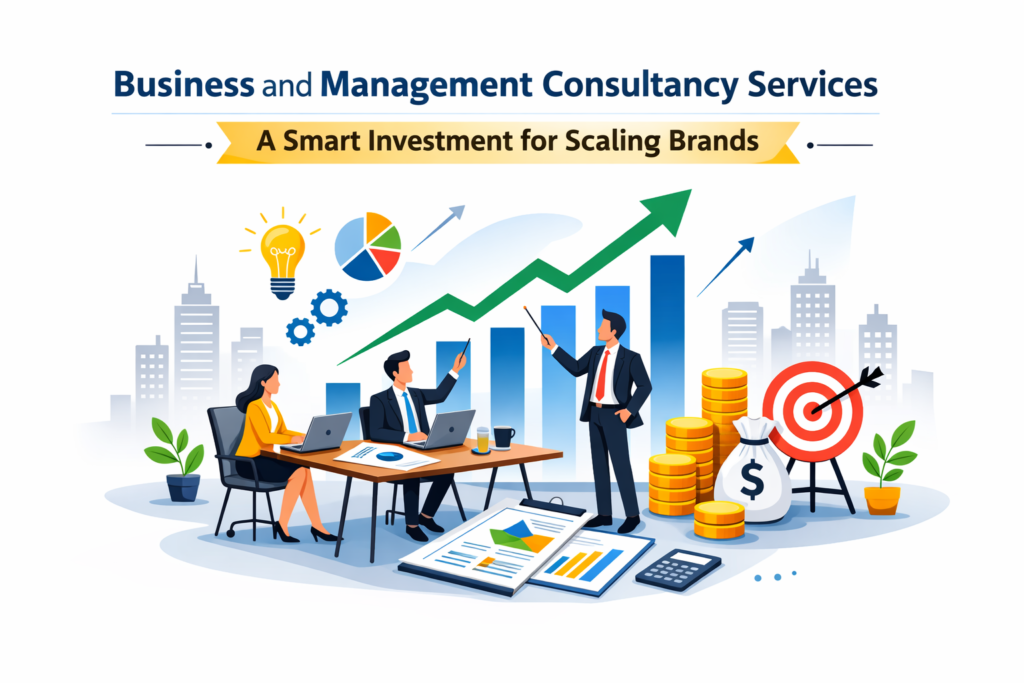
Introduction to Business and Management Consultancy Business and management consultancy refers to professional advisory services aimed at assisting organizations in improving their performance through the analysis of existing business problems and the development of plans for improvement. These services are typically provided by consulting firms or independent consultants who possess specialized knowledge and expertise in various areas of business management. The primary objective is to help businesses optimize their operations, enhance efficiency, and ultimately scale their brands effectively. At its core, consultancy involves a partnership between the consultant and the client, where the consultant utilizes their experience and analytical skills to evaluate the client’s business operations. This process often involves identifying inefficiencies, outlining strategic objectives, and formulating a comprehensive action plan tailored to the organization’s unique needs. It can encompass a wide range of services, including strategic planning, operational improvement, financial advisory, and human resources management. The significance of consultancy in the modern competitive business environment cannot be overstated. As companies face increasing pressure to remain agile and responsive to market changes, consultancy services provide valuable insights that facilitate informed decision-making. Consultants leverage industry knowledge and best practices to guide organizations in navigating challenges and capitalizing on opportunities. Furthermore, as businesses seek to scale, consultancy emerges as a crucial resource for identifying growth strategies, optimizing resource allocation, and ensuring sustainable development. In essence, the landscape of business and management consultancy is evolving, underscoring its role as a catalyst for change and growth. By engaging in consultancy, brands can not only address immediate challenges but also lay a solid foundation for long-term success in a dynamic marketplace. The Role of Consultancy in Brand Development In the contemporary business landscape, brand development has emerged as a pivotal aspect of ensuring competitive advantage. Consultants play a crucial role in shaping a brand’s identity, strategy, and vision. By leveraging their expertise, they assist organizations in articulating a coherent and compelling brand narrative that resonates with target audiences. This alignment is essential, as a well-defined brand story not only engages customers but also fosters loyalty and trust. Brand identity encompasses various elements, including visual design, messaging, and overall customer experience. Consultancy services help businesses assess their current brand perceptions and identify any gaps between how they are perceived and how they wish to be perceived. This process often involves conducting market research, analyzing customer feedback, and evaluating competitor positioning. Through these insights, consultants guide brands in refining their messages to ensure clarity and consistency across all platforms. Furthermore, consultants provide strategic recommendations that align with a brand’s long-term vision. They assist in defining the brand’s unique value proposition, which is critical for differentiating it in a crowded market. By applying frameworks and tools designed for brand strategy development, consultancy services enable businesses to navigate the complexities of brand positioning effectively. This includes determining the right audience, discovering market opportunities, and developing tailored marketing initiatives. Ultimately, consultancy in brand development is not just about creating a logo or a catchy slogan; it’s about crafting an enduring identity that resonates with consumers and prepares the brand for sustainable growth. The process emphasizes the importance of continuity in messaging and experience, which are fundamental for achieving consistent brand growth in a dynamic marketplace. Hiring a consultancy service for brand scaling can deliver numerous advantages that significantly contribute to a business’s growth trajectory. One of the primary benefits is access to specialized expertise. Consultants often possess a wealth of experience and specialized knowledge in various aspects of management and business operations. For instance, a company looking to expand its digital marketing efforts would benefit from hiring a consultancy with a track record in digital strategy, ensuring access to cutting-edge techniques and tools. Another key advantage is the objectivity and fresh perspectives that consultants bring to the table. Internal teams may develop biases or become entrenched in established practices, which can hinder innovation. A consultancy service can provide unbiased assessments and innovative solutions tailored to the brand’s unique challenges. An example of this can be seen in a retail company that engaged a consultancy to analyze consumer behavior. The consultancy identified emerging trends that the internal team had overlooked, enabling the company to pivot its strategy successfully. Cost-effectiveness is yet another vital benefit. While there is an upfront investment in hiring consultants, the long-term savings achieved through streamlined operations and enhanced strategies can outweigh initial costs. Furthermore, the time savings that consultants offer are invaluable. Rather than diverting internal resources to address strategic issues, businesses can leverage a consultancy’s expertise to tackle complex challenges swiftly. This allows teams to focus on core competencies, further driving productivity. Moreover, partnering with consultants can lead to improved operational efficiency. By implementing best practices and refined processes, businesses can optimize their operations, leading to increased profitability. For instance, a company that streamlined its supply chain management through consultancy services achieved significant reductions in costs and delivery times. Types of Consultancy Services That Facilitate Brand Scaling Business and management consultancy services encompass a variety of specialized areas, each contributing uniquely to the scaling of brands. Understanding these types can empower businesses to choose the right support for their specific growth needs. Management Consulting is one of the primary categories focused on improving organizational performance. Management consultants assess the current state of a business and identify opportunities for enhancement. By evaluating operational efficiency, they guide companies in aligning their strategies with market demands, ultimately aiding in brand scaling. These consultants often work on restructuring processes, creating better governance models, and implementing performance management systems that facilitate sustainable growth. Marketing Consulting addresses the crucial aspect of brand positioning and market reach. Marketing consultants specialize in developing targeted strategies to enhance brand visibility and customer engagement. They utilize market research and analysis to design marketing plans that resonate with the target audience, aiding businesses in expanding their market share. Effective marketing consulting can lead to increased brand loyalty and awareness, essential elements in a brand’s scaling journey. Operational Consulting focuses on optimizing the internal processes of a
The Importance of Business Process Management Consulting Services for Growing Companies

Introduction to Business Process Management (BPM) Business Process Management (BPM) is a systematic approach that organizations employ to make their workflows more effective, efficient, and adaptable to an ever-changing environment. At its core, BPM involves identifying, modeling, and optimizing a company’s business processes, which are the series of tasks that produce a specific output for customers. The primary objective of BPM is to enhance corporate performance by ensuring that each process contributes positively to business goals. One of the key aspects of BPM is process modeling, which entails creating a visual representation of workflows to better understand them and identify areas for improvement. By using BPM tools and methodologies, companies can dissect their processes into manageable components, making it easier to pinpoint inefficiencies or bottlenecks. Furthermore, modeling supports effective communication among stakeholders, ensuring everyone shares a common understanding of how processes function. Automation is another critical dimension of BPM. Organizations leverage technology to automate repetitive tasks within their processes, thus reducing human error and freeing up employee time for more strategic activities. The automation of workflows enhances speed and efficiency, aligning with the overarching goals of BPM to optimize resource utilization and improve service delivery. Measurement and analysis are crucial components of BPM, as they provide insights into the effectiveness of business processes. By implementing performance metrics and continuous monitoring, organizations can assess the impact of their BPM initiatives. This data-driven approach facilitates ongoing refinements and adaptations to processes, ensuring they remain aligned with organizational objectives and market demands. Overall, BPM stands as an essential practice for companies seeking sustainable growth and improved operational efficiency. The Need for BPM Consulting in Growing Companies As companies progress through various growth stages, they often encounter a range of challenges that can impede their expansion efforts. One such challenge is the emergence of inefficiencies within business operations. When a company scales, processes that were once effective can become strained, leading to delays and confusion. This is where Business Process Management (BPM) consulting comes into play, offering targeted solutions to streamline operations. Another significant issue faced by growing companies is miscommunication between different departments or teams. As organizations expand, the structure of workflows can become increasingly convoluted, resulting in a lack of clarity surrounding roles and responsibilities. By engaging BPM consultants, businesses can establish clearer communication channels, ensuring that team members are aligned with organizational goals and objectives. This alignment not only enhances productivity but also boosts employee morale. Additionally, the absence of structured workflows can stifle growth. In many cases, growing companies rely on informal processes that may have worked prior to scaling, yet fail to support the increased complexity of larger operations. BPM consultants can assist in mapping out and formalizing these workflows, establishing clear procedures that can be easily followed. This structured approach optimizes resource use, minimizes redundancies, and contributes to overall operational efficiency. Ultimately, BPM consulting services are essential for growing companies facing these common challenges. By addressing inefficiencies, improving communication, and implementing structured workflows, organizations are better positioned to manage growth effectively. The implementation of BPM strategies enables businesses to not only sustain their expansion efforts but also thrive in competitive markets. Key Benefits of Engaging BPM Consulting Services Business Process Management (BPM) consulting services play a critical role in enhancing organizational performance. One of the most significant benefits of engaging BPM consultants is the increased efficiency in operations. By analyzing existing processes, BPM consultants identify inefficiencies and bottlenecks that hinder productivity. This analysis enables companies to streamline processes, reduce redundancies, and ultimately achieve better resource allocation, leading to improved operational performance. Cost reduction is another key advantage associated with BPM consulting. Through the optimization of business processes, companies can minimize operational costs. Effective BPM allows organizations to allocate their resources more wisely, making better use of technology and manpower. Companies often discover that even small adjustments to workflows can result in significant savings, thereby enhancing profitability. Improving customer satisfaction is also a noteworthy benefit of BPM consulting. By refining processes, businesses can provide a smoother, more efficient experience for their customers. This may include faster response times, improved product delivery, and more responsive customer service. Satisfied customers are likely to become repeat clients and contribute to positive word-of-mouth marketing, which is invaluable for company growth. Furthermore, BPM consulting services equip organizations with the agility to adapt to market changes effectively. In today’s fast-paced business environment, companies face numerous challenges that can disrupt operations. Engaging BPM consultants enables organizations to develop processes that are flexible and responsive to changes in the market landscape. This adaptability ensures that organizations remain competitive and can pivot strategies as necessary. Examples of successful outcomes from BPM consulting abound. Many companies that have adopted BPM practices report increased efficiency ratios and reduced operational costs. Such transformations not only support short-term goals but also align with long-term strategic planning, confirming the value of hiring BPM consultants. BPM Consulting Services: What to Expect When engaging a Business Process Management (BPM) consulting firm, companies can anticipate a range of services tailored to enhance their operational efficiency. One of the primary offerings is process mapping. This service involves creating a visual representation of the current workflows within an organization. Through process mapping, BPM consultants identify inefficiencies and redundancies, enabling businesses to gain deeper insights into their operations. Another critical service provided by BPM consultants is gap analysis. This process involves evaluating the current operational state against desired outcomes or industry standards. By pinpointing discrepancies, consultants guide organizations in understanding what changes are necessary to reach their goals. Gap analysis typically serves as a foundational step before initiating further transformations. Furthermore, BPM consulting firms often offer process re-engineering services. This entails the redesign of existing processes to improve performance and efficiency. Consultants work collaboratively with stakeholders to innovate processes, ensuring that they align with the company’s strategic objectives and resonate with best practices in the industry. The goal is to streamline operations while simultaneously enhancing quality and customer satisfaction. Lastly, the implementation of BPM technologies is a critical
How Business Management Consulting Services Improve Operational Efficiency

Introduction to Business Management Consulting Business management consulting refers to the practice of providing professional guidance and expertise to organizations in order to solve complex operational challenges, improve efficiency, and enhance overall performance. These services encompass a wide range of disciplines including strategic planning, operational improvements, organizational restructuring, and human resources management. The primary objective of business management consultants is to identify underlying issues within a business and implement effective solutions tailored to meet its unique needs. Consultants are often engaged to analyze current business practices and workflows, pinpoint inefficiencies, and recommend actionable strategies for improvement. By leveraging their extensive knowledge and experience, they assist organizations in gaining objective insights that can lead to transformative outcomes. This process typically involves conducting in-depth assessments, market research, and data analysis to formulate strategies that align with the business’s goals. The role of consultants extends beyond merely providing recommendations; they also facilitate the implementation of these strategies. This often includes training staff, managing change initiatives, and monitoring progress to ensure that the desired outcomes are achieved. Moreover, consultants bring a fresh perspective, often helping businesses to see beyond internal biases and habitual practices, which can impede growth and adaptation in a rapidly evolving market. In addition to problem identification and solution implementation, business management consultants serve as valuable partners in fostering a culture of continuous improvement within organizations. By establishing systematic processes for measuring performance and outcomes, they enable businesses to adapt to changes and sustain operational efficiency over time. Ultimately, the contribution of management consulting services is crucial for organizations striving to enhance their business performance and maintain a competitive edge in their respective industries. Understanding Operational Efficiency Operational efficiency refers to the ability of an organization to deliver products or services to its customers in the most cost-effective manner while maintaining high quality. This concept is critical in today’s fast-paced business environment, where companies are continually seeking ways to optimize their processes and enhance their productivity. Achieving operational efficiency not only involves streamlining operations but also ensuring that all resources, including human, technological, and financial, are utilized effectively. The significance of operational efficiency cannot be understated. For businesses, it serves as a key performance indicator, driving the overall performance and sustainability of the organization. By improving operational efficiency, companies can reduce costs, minimize waste, and maximize resource utilization. This leads to significant cost savings, which can then be reinvested to foster innovation and growth. Moreover, enhanced operational efficiency can improve service delivery, leading to higher customer satisfaction and loyalty. Furthermore, operational efficiency is intrinsically linked to productivity. A business that operates efficiently can adapt more readily to changes in the market, respond quickly to customer needs, and capitalize on new opportunities. The better an organization’s processes are configured, the more likely it is to maintain a competitive edge. Organizations often measure operational efficiency through various metrics such as cycle time, throughput, and return on investment. Consequently, a comprehensive understanding of operational efficiency equips businesses with the insights needed to make informed decisions about improvement initiatives. The Role of Consultants in Analyzing Operations Business management consultants play a pivotal role in enhancing a company’s operational efficiency by meticulously analyzing existing processes and operations. Their primary objective is to identify inefficiencies that may hinder organizational performance. To achieve this, consultants employ a variety of analytical tools and methodologies, each tailored to the specific challenges faced by the business. One effective tool utilized by consultants is the SWOT analysis, which assesses a company’s Strengths, Weaknesses, Opportunities, and Threats. This strategic approach allows consultants to provide a comprehensive overview of the internal and external factors influencing operational effectiveness. By categorizing these elements, consultants can pinpoint specific weaknesses or threats that may contribute to inefficiencies. Additionally, process mapping is a crucial methodology employed to visually document workflows and processes. This technique enables consultants to scrutinize each step involved in a particular operation, highlighting redundancies and bottlenecks that could be contributing to delays or increased costs. Through detailed mapping, inefficiencies become more evident, allowing for more targeted interventions. Furthermore, consultants may also leverage data analytics to examine key performance indicators (KPIs) and operational metrics. By assessing quantitative data, they can identify patterns and trends that indicate areas for improvement. The integration of these insights facilitates a data-driven approach to operational enhancement, ensuring that recommendations are based on solid evidence rather than assumptions. In conclusion, the analytical role of business consultants is critical for identifying operational inefficiencies through various methods such as SWOT analysis and process mapping. By using these tools, consultants provide invaluable insights that inform strategic decisions aimed at improving overall operational effectiveness. Identifying Areas for Improvement In the realm of business management consulting, the process of enhancing operational efficiency begins with a detailed assessment of a company’s existing practices and processes. Consultants approach this critical task through multiple techniques that include data acquisition, stakeholder interviews, and benchmarking against industry standards. These methodologies enable consultants to pinpoint specific areas where businesses can improve their operational efficiency, ultimately driving better results. Data acquisition is one of the foremost steps in identifying potential inefficiencies. This involves collecting quantitative and qualitative data related to workflows, resource utilization, and performance metrics. By analyzing this information, consultants can gain insights into areas experiencing bottlenecks or underperformance. This data-driven approach means that the recommendations generated are backed by concrete evidence, allowing companies to make informed decisions. Equally significant is the role of engaging stakeholders through interviews. Consultants conduct discussions with various employees—ranging from management to entry-level staff—to gather diverse perspectives on operational challenges. These interviews reveal not only the pain points within processes but also highlight internal suggestions for improvement that may otherwise go unnoticed. Insights gathered from these interactions can uncover systemic issues that require addressing to improve overall efficiency. Finally, benchmarking against industry standards serves as a vital component in the evaluation process. By comparing a company’s performance to established best practices and metrics within its industry, consultants can discern where certain operations may be falling short. This comparative
How Integrated Digital Services Create Stronger, Smarter Businesses

Introduction to Integrated Digital Services Integrated digital services refer to a cohesive suite of digital solutions that work together seamlessly to enhance business operations and customer experiences. Unlike standalone services, which function independently and often lead to siloed information and ineffective workflows, integrated digital services unify various digital platforms and tools into a single, streamlined framework. This integration facilitates better data flow, more efficient processes, and improved communication across different business departments. The importance of integrated digital services has been magnified in today’s business landscape, where digital transformation is not merely a trend but a fundamental shift in the way companies operate. Businesses are increasingly required to adapt to rapid technological advancements and changing consumer behaviors. The rise of cloud computing, big data analytics, artificial intelligence, and the Internet of Things has made it imperative for organizations to embrace a holistic approach to their digital strategies. By adopting integrated digital services, companies can foster greater collaboration among teams, leading to more informed decision-making and enhanced innovation. This integration ensures that all business functions—from marketing and sales to customer service and supply chain management—are aligned and informed by the same data, thereby minimizing the risk of miscommunication or duplicated efforts. Moreover, as competition intensifies, organizations leveraging integrated digital services can respond more swiftly to market changes and customer demands, thus gaining a competitive edge. In a world where connectivity and real-time insights are paramount, businesses must recognize the need to move beyond isolated tools and platforms. Embracing an integrated approach to digital services positions companies not just to survive but to thrive in an increasingly complex marketplace. The Components of Integrated Digital Services Integrated digital services encompass a range of essential components that collaborate to enhance business functionality and efficiency. The first fundamental element is analytics, which involves collecting and analyzing data to glean actionable insights. Businesses utilize analytics tools to track performance metrics, understand customer behavior, and make data-driven decisions, ultimately leading to optimized outcomes. Another core component is cloud computing. This technology enables organizations to store and access data over the internet, facilitating flexibility and scalability. By leveraging cloud solutions, businesses can reduce infrastructure costs, improve collaboration, and enhance security through redundancy and backup features. As remote work becomes more prevalent, cloud computing has emerged as a pivotal element in integrated digital services. Digital marketing also plays a crucial role in connecting businesses with their target audiences. This component includes various strategies such as search engine optimization (SEO), content marketing, and social media outreach. Integrating these strategies allows businesses to increase their online presence, engage with customers more effectively, and ultimately drive sales. In a competitive marketplace, a well-executed digital marketing plan is vital to integrating services and fostering growth. Additionally, customer relationship management (CRM) systems are essential for maintaining and analyzing customer interactions and data throughout the customer lifecycle. Effective CRM systems allow businesses to enhance customer satisfaction, improve retention, and foster loyalty by delivering personalized experiences based on customer preferences and feedback. Lastly, enterprise resource planning (ERP) is crucial for unifying and automating business processes. An effective ERP system integrates various functions such as finance, human resources, and supply chain management into one cohesive framework. This holistic approach helps businesses streamline operations, improve productivity, and ensure real-time access to key performance indicators. Benefits of Integration for Businesses Integrated digital services provide numerous advantages for businesses aiming to enhance overall performance in today’s competitive landscape. One significant benefit is improved efficiency. By automating workflows and integrating systems, organizations can streamline processes, which reduces time spent on repetitive tasks. This efficiency enables employees to focus on higher-value activities, ultimately leading to increased productivity and a more engaged workforce. Additionally, businesses experience an enhanced customer experience through the utilization of integrated services. With customer data seamlessly flowing between platforms, companies can provide personalized communication and insights that cater to individual preferences. This creates a more cohesive and satisfying experience for customers, leading to higher retention rates and increased loyalty. For instance, a retail company that combines its point-of-sale system with its online platform can ensure that customers receive timely updates on inventory and personalized promotions, leading to improved customer satisfaction. Better data management is another crucial benefit that arises from the integration of digital services. With integrated systems, organizations can consolidate data from various departments and sources, which allows for more accurate reporting and analysis. This centralization enables businesses to make data-driven decisions swiftly and effectively. For example, a healthcare provider that integrates patient management systems can track patient outcomes and optimize treatment plans based on comprehensive health data. Moreover, increased agility is a noteworthy benefit of integrated digital services. Businesses can respond swiftly to market changes by having connected systems that facilitate quick decision-making. A technology firm that adopts an integrated approach to project management can swiftly allocate resources to urgent projects, ensuring they remain competitive and responsive to client needs. How Integrated Solutions Foster Collaboration In an era where teamwork and collaboration are paramount to success, integrated digital services play a crucial role in fostering communication among teams and departments. The advent of these integrated solutions enables seamless information sharing, allowing team members to access essential data and resources without barriers. By effectively breaking down silos within organizations, integrated services enhance cooperation, ultimately leading to improved efficiency and synergy. One of the most significant advantages of using integrated solutions is the facilitation of real-time communication. Digital tools such as collaborative platforms and project management software not only streamline focus areas but also allow for instantaneous feedback. Team members can share documents, track project progress, and engage in discussions, thus eliminating the delays often associated with traditional communication methods. This dynamic exchange of information ensures that everyone is on the same page, fostering a culture of transparency and accountability. Moreover, businesses can encourage collaboration through a variety of strategies that leverage integrated digital services. For instance, implementing regular virtual check-ins allows teams to align their goals and aspirations, giving members an opportunity to express ideas and concerns openly.