
AI Data Analysis: How Smart Businesses Turn Data Into Decisions
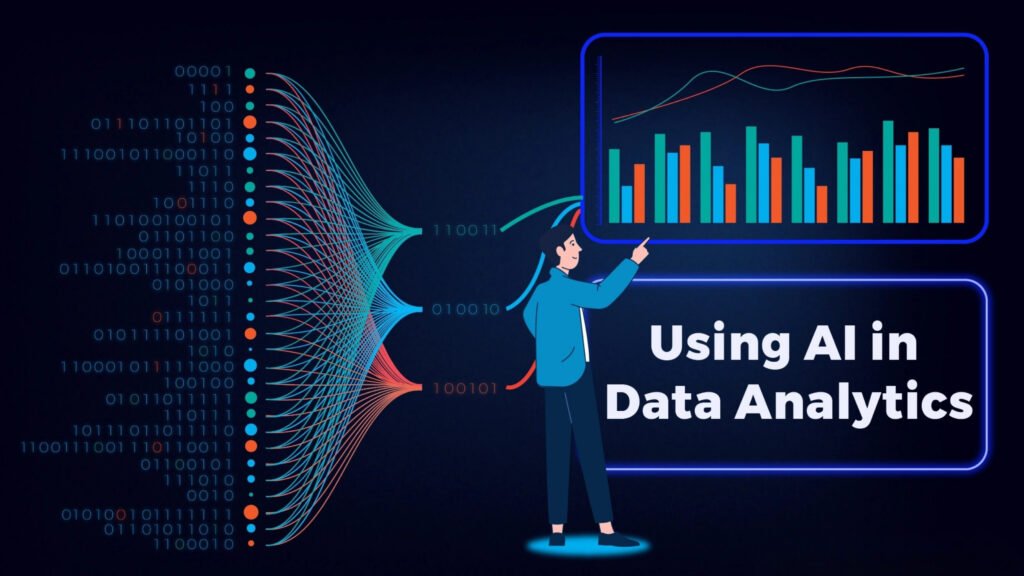
Introduction Every business leader today faces the same reality. There is more data coming in than any team can process manually. Customer behavior data. Sales reports. Supply chain signals. Market movements. Internal operations metrics. The volume keeps growing while decision making speed keeps shrinking. Leaders want clarity yet they often drown in complexity. What Is AI Data Analysis? This is where AI data analysis steps in. Not as a magic trick and not as an abstract future trend. AI analytics is becoming the practical engine that helps companies turn scattered information into meaningful decisions. What this really means is that leaders no longer need guesswork. They gain accuracy, speed and a clear view of what will happen next instead of being stuck reacting to what already happened. This blog breaks down the real business impact of AI for insights. No fluff. No abstract hype. Just a clear picture of how AI for big data creates value in the real world and how every business can move toward smarter decision making. The Data Problem That Most Businesses Face Every organization talks about being data driven. Very few leaders actually feel that way. Most companies deal with some combination of the following challenges. Data sits in too many places Sales teams use one tool. Marketing uses another. Finance uses something else. Operations works on spreadsheets. None of it talks to each other. Leaders end up with disconnected views that do not help them see the full picture. Teams cannot process data fast enough A weekly report feels outdated by the time it reaches the decision maker. Market conditions change faster than spreadsheets can update. This delay causes slow reactions and lost opportunities. Manual analysis is inconsistent Human analysts are smart and capable but manual work leaves room for errors. When teams deal with thousands or millions of data points, mistakes are inevitable. Predicting the future is difficult Traditional reports explain what happened in the past. They do not explain what will happen next. This puts leaders in a reactive mindset instead of an informed strategic one. These pain points create operational friction and slow down business growth. They also make it harder to scale because the information engine behind every decision is not strong enough. The good news is that AI data analysis solves these issues in a very direct and measurable way. How AI Data Analysis Works Here is the thing. AI analytics does not replace human intelligence. It amplifies it. It works like a high powered assistant that processes millions of inputs instantly and presents the insights that matter. AI brings clarity to big data AI for big data is built to handle volume. Instead of slowing down when information grows, the system becomes even more accurate. This suits large companies and fast growing startups that generate complex data. AI improves the quality of insights AI reads patterns humans usually miss. It catches small signals, unusual trends and hidden relationships inside the data. This brings leaders closer to the real truth behind performance. AI predicts outcomes with confidence Predictive analytics AI does not guess. It uses historical patterns and real time signals to project what is likely to happen next. Leaders can plan inventory, forecast sales and allocate resources with greater confidence. AI delivers insights instantly No more waiting for monthly or weekly reports. AI models refresh dashboards automatically. Leaders get immediate clarity whenever they need it. AI reduces human dependency Instead of relying on one analyst or one department, the intelligence becomes available to everyone. Decision making moves from personal interpretation to collective clarity. These changes build a stronger operational foundation. They reduce risk, increase speed and improve strategic planning across the company. Core Capabilities of AI Analytics That Matter to Businesses Automated data cleansing Data is never perfect. AI detects missing values, duplicates, incorrect entries and formatting issues. It corrects them at scale. Clean data produces accurate results. Pattern recognition AI identifies correlations that humans rarely catch in raw information. For exampleCustomer behavior patternsSeasonal sales variationsOperational bottlenecksHidden cost drivers This helps leaders understand why a situation is happening, not just what is happening. Natural language processing for reports Executives do not want technical dashboards. AI converts complex information into plain language insights that non technical leaders can understand instantly. Predictive analytics AI for real world forecasting AI models forecast likely outcomes in areas likeDemand planningRevenue projectionsRisk managementCustomer lifetime valueLead scoring These forecasts help leaders allocate resources in the right direction. Anomaly detection AI notices unusual spikes or drops in performance before they become serious. This protects revenue and safeguards operations. Table with Practical Data Points Below is a simple table showing how AI improves accuracy and speed. These numbers are hypothetical but realistic based on the performance of companies that adopt AI analytics. Metric Without AI With AI Data processing speed 20 thousand records per hour 5 million records per hour Forecast accuracy 60 percent 88 percent Reporting delay 3 days Instant Error rate 8 percent 1 percent Decision making speed Slow and reactive Fast and proactive These numbers show the difference AI brings to everyday work. Mini Case Study A mid sized ecommerce company was struggling with inconsistent sales forecasting. Their manual process depended entirely on spreadsheets created by two analysts. Errors were common. Stock outs were frequent. Customers complained. Revenue dipped. After implementing AI for insightsForecast accuracy rose to 90 percentCustomer complaints droppedInventory costs decreased because the company ordered smarterProfit margins improved within three months This small transformation saved the leadership team countless hours and thousands of dollars. More importantly, it restored confidence in their planning process. The Role of AI for Big Data in Enterprise Environments Enterprises deal with massive volumes of information. Customer transactions. Supply chain signals. Employee productivity data. Product usage data. Market inputs. AI analytics allows them to digest all of this without slowing down. Enterprise grade benefits include Faster reporting cyclesBetter compliance through accurate logsMore reliable forecastingHigher operational visibilityBetter coordination between departments These benefits create a competitive advantage. Leaders who
AI vs Machine Learning: Key Differences Explained
AI vs Machine Learning: Key Differences Explained In today’s fast-paced business world, leaders are hearing about Artificial Intelligence (AI) and Machine Learning (ML) almost every day. Yet, confusion remains around these terms. Many decision-makers ask: Are AI and ML the same? When should my business invest in AI versus Machine Learning? What real impact can these technologies have on operations, revenue, or customer experience? Understanding the difference between AI and ML is more than a technical exercise—it’s a strategic necessity. AI basics cover the broader concept of machines mimicking human intelligence, while ML explained focuses on teaching systems to learn patterns from data and improve automatically over time. Both can transform business processes, but using them effectively requires clarity about their capabilities and limitations. In this blog, we’ll break down AI vs ML, show real-world AI vs machine learning examples, and provide actionable insights for business leaders. By the end, you’ll have a clear picture of how each technology can create value, and how to make informed decisions when implementing AI or ML in your organization. Understanding the Basics: AI vs ML Before making strategic decisions, it’s essential to understand what AI and Machine Learning really are, how they differ, and how they overlap. Many businesses jump into technology adoption without this clarity, which can lead to wasted time, budget, and effort. Let’s break it down. What is Artificial Intelligence (AI)? Artificial Intelligence, or AI basics, refers to the broader concept of machines performing tasks that typically require human intelligence. This includes reasoning, problem-solving, understanding natural language, and even recognizing patterns in data. For business leaders, AI is not just about futuristic robots—it’s about improving decision-making, automating routine tasks, and enhancing customer experiences. Common AI applications include: Intelligent chatbots handling customer inquiries 24/7 Predictive analytics for sales or inventory management Autonomous systems like self-driving vehicles or warehouse robots AI acts as the umbrella technology under which various methods, including Machine Learning, operate. It is about building systems capable of thinking and adapting, not just following preset rules. What is Machine Learning (ML)? Machine Learning, or ML explained, is a subset of AI focused specifically on data-driven learning. Instead of programming every step manually, ML enables systems to identify patterns, make predictions, and improve over time based on data inputs. In practice, ML helps businesses make smarter decisions by uncovering insights hidden in large datasets. Examples include: Recommendation engines on e-commerce platforms Fraud detection in banking and finance Sales forecasting using historical trends Think of Machine Learning as the engine that powers intelligent AI applications. Without ML, AI systems would rely solely on static rules, limiting their adaptability and accuracy. AI vs ML: High-Level Comparison To make this even clearer, here’s a direct comparison for business leaders evaluating AI vs ML: Aspect AI ML Definition Systems performing tasks requiring human intelligence Systems that learn from data and improve performance over time Scope Broad, includes reasoning, perception, and decision-making Narrower, focused on learning patterns and predictions Learning Capability Can include pre-programmed logic or adaptive learning Fully data-driven and improves automatically with more data Examples Chatbots, autonomous vehicles, predictive analytics Recommendation engines, fraud detection, demand forecasting Business Use Cases Process automation, customer engagement, operational efficiency Data-driven decision-making, personalization, predictive insights This table illustrates why AI vs ML is more than semantics. Leaders need to understand where each fits in the strategy and which delivers tangible business outcomes. Common Confusions: AI vs Machine Learning Examples Even after understanding the basics, many business leaders still struggle with the question: How do AI and Machine Learning differ in practice? Let’s clarify this with real-world AI vs machine learning examples, showing how each can drive business value. Real-World AI Examples AI applications extend far beyond buzzwords. Here are a few concrete examples that illustrate AI basics in action: Intelligent Chatbots: AI-powered chatbots can handle customer queries 24/7, respond contextually, and escalate complex issues to human agents. This reduces support costs and improves customer satisfaction. Predictive Analytics: AI analyzes historical and real-time data to forecast sales, identify trends, and anticipate operational challenges. Companies using AI analytics report up to a 30% improvement in decision-making speed. Autonomous Systems: From warehouse robots to self-driving vehicles, AI enables machines to act intelligently, navigating environments, making decisions, and optimizing operations without human intervention. These examples highlight AI’s broad capabilities and its role as a strategic enabler for businesses. Real-World Machine Learning Examples Machine Learning is where AI gets smarter over time. Here are some practical ML explained examples that businesses are using today: Recommendation Engines: E-commerce platforms like Amazon or Netflix use ML to suggest products or content based on user behavior. Personalized recommendations can increase conversion rates by up to 20%. Fraud Detection: Banks and fintech companies use ML algorithms to detect unusual transactions, preventing fraud in real time. ML models improve automatically as they process more transaction data. Sales Forecasting: ML analyzes historical sales and market trends to provide accurate forecasts, helping businesses plan inventory and marketing strategies more efficiently. Unlike broader AI, Machine Learning relies heavily on data. Its strength lies in uncovering hidden patterns and optimizing decisions that would be impossible to program manually. Machine Learning vs AI in Business Strategy Understanding the distinction is critical for strategic planning: When to Use AI: Implement AI when your business needs systems that can mimic human reasoning or automate complex workflows. For example, deploying AI for predictive analytics or customer service automation. When to Use ML: Use ML when your goal is to analyze large datasets, detect patterns, and make predictions that improve over time. For example, ML-powered recommendation systems or predictive maintenance in manufacturing. Combined Approach: Many successful businesses use AI and ML together. For instance, an AI-driven customer service chatbot may use ML to learn from interactions, improving response quality over time. By clearly distinguishing AI vs ML, leaders can allocate resources effectively, prioritize initiatives, and avoid costly missteps. The Technical Perspective: How AI and ML Work For business leaders, understanding the technical workings of AI and
Top AI Content Tools 2025: Best Software for Smarter Content Creation
Introduction to Top AI Content Tools 2025 Content is no longer just a marketing asset in 2025. It has become the lifeblood of business growth, brand authority, and customer trust. Decision-makers today are under constant pressure to deliver high-quality, consistent content across websites, social media, email campaigns, and even internal communications. The problem is that traditional content production methods are too slow and too expensive to keep up with the pace of digital demand. This is where AI content tools have taken center stage. The best AI content software now allows businesses to create blogs, articles, reports, videos, and even full-scale campaigns with speed and precision. Leaders who once relied only on large creative teams are now discovering that AI writing tools, AI video creation software, and all-in-one AI content generator platforms are changing the way content is produced and consumed. For business leaders, this shift is not just about saving time. It is about staying competitive in a digital environment where customer attention is scarce. The companies that adopt the right mix of AI content software in 2025 are building stronger engagement, reaching wider audiences, and achieving measurable ROI in ways that were not possible just a few years ago. What this really means for executives and entrepreneurs is simple. If your organization is not exploring the best AI content tools available, you risk falling behind competitors who are scaling faster and connecting with customers more effectively. This blog will guide you through the most impactful tools on the market, explain how they are being used by businesses globally, and provide clear strategies to help you evaluate which solutions are right for your company. Content Creation Challenges Driving Top AI Content Tools 2025 Every leader knows that content has become the voice of business. In 2025, the demand for content is not just about volume, it is about consistency, personalization, and speed. Customers expect meaningful interaction on multiple platforms, and businesses are under pressure to deliver it without delay. The challenge is clear. Traditional content creation models struggle to match the scale required today. Producing a single blog, social post, or video can take days or weeks when handled manually. Multiply that by the dozens of channels businesses need to maintain, and the workload quickly becomes unmanageable. This is one of the main reasons companies are turning to AI content tools. The risk of ignoring this shift is significant. Competitors who adopt the best AI content software are not only producing more content, they are also delivering higher relevance. AI writing tools are helping brands publish blogs that resonate with niche audiences, while AI video creation tools are enabling teams to push out product explainers, social ads, and training modules in hours instead of weeks. Leaders who delay adoption risk watching their market share erode as faster, more agile players step ahead. Yet, there is another side to the challenge. While automation solves the issue of scale, businesses must also balance it with human creativity. AI content generator platforms can produce articles, visuals, and scripts, but without a strategic layer of human direction, content can feel generic. Decision-makers need to recognize that AI is not a replacement for creative thinking, but a force multiplier. The organizations that will win in 2025 are the ones that combine the efficiency of AI content software with the vision and insights of human leadership. In short, the content creation challenge in 2025 is not just about producing more. It is about producing smarter, faster, and in ways that connect directly with the audience. This is exactly where the best AI content tools are becoming indispensable. What Makes the Best AI Content Software Stand Out With dozens of options available in the market, leaders often face the challenge of separating hype from real value. Not every AI content tool delivers the quality or scalability that businesses need. The difference between an average tool and the best AI content software comes down to how well it supports both strategic and day-to-day content needs. Core Features Decision-Makers Should Prioritize Accuracy and Contextual RelevanceAI content tools must go beyond producing grammatically correct sentences. They should understand tone, brand voice, and context. For instance, a financial report and a lifestyle blog demand very different language styles. Multi-format SupportIn 2025, businesses need more than text. The best AI writing tools are paired with AI video creation and design automation capabilities. Leaders should look for platforms that can generate blog posts, ad copies, scripts, and visuals without requiring multiple disconnected apps. Ease of IntegrationThe best AI content software should fit seamlessly into existing workflows. Whether a company uses HubSpot, WordPress, or a custom CMS, integration matters. Tools that require extensive re-training or heavy technical support often slow down adoption. Scalability and Cost EfficiencyStartups and large enterprises both need scalable solutions. Pricing flexibility and the ability to handle growing content volumes without losing quality is a key differentiator. ROI and Performance TrackingLeadership needs to see measurable returns. Tools that come with in-depth analytics, such as engagement rates, conversion impact, and cost savings, make it easier to justify investments. Data Snapshot: Why Leaders Invest in AI Content Tools To understand what sets the best AI content software apart, let’s look at real adoption trends reported by global businesses between 2022 and 2025. Year Global Adoption of AI Content Tools (%) Average Cost Savings in Content Production (%) Reported Increase in Engagement (%) 2022 23 12 8 2023 36 18 14 2024 54 25 22 2025 71 32 31 Interpretation: By 2025, more than 70 percent of businesses worldwide are actively using AI writing tools, AI video creation platforms, or AI content generator solutions. On average, they are cutting content production costs by nearly one-third while improving engagement by over 30 percent. This demonstrates why evaluating the right software is no longer optional, it is essential for maintaining competitiveness. What this data shows is clear. Businesses that choose the best AI content software are not only saving money but also achieving higher
AI in Marketing: How Brands Use It to Improve ROI
Introduction: Why AI is Transforming Marketing Today Marketing has always been about understanding people and delivering the right message at the right time. Yet, in the fast-paced digital landscape, traditional methods are struggling to keep up. Brands face challenges in accurately predicting customer behavior, managing campaigns efficiently, and ensuring every marketing dollar drives measurable return. This is where AI in marketing has emerged as a game-changer. Artificial intelligence is no longer a futuristic concept; it is a practical tool businesses can leverage today to improve ROI, automate repetitive tasks, and generate actionable insights. From AI advertising that optimizes campaigns in real time to AI customer insights that reveal hidden trends in consumer behavior, AI marketing tools are helping brands make smarter decisions faster. Consider this: recent studies indicate that companies integrating AI in marketing see an average ROI increase of 30 to 50 percent within the first year. For decision-makers and business leaders, this is more than just efficiency, it is a competitive advantage. Marketing automation AI enables brands to nurture leads seamlessly, while predictive analytics ensures campaigns reach the right audience with the right message. In this article, we will explore the pain points of traditional marketing, examine how AI tools are transforming strategy, provide actionable implementation steps, and share real-world case studies. By the end, you will understand how AI in marketing can drive measurable growth and position your brand ahead of competitors in an increasingly data-driven world. Understanding the Pain Points in Traditional Marketing Even the most experienced marketing teams face limitations when relying on traditional methods. Despite years of expertise and strategic planning, businesses often struggle to convert leads efficiently, gain deep customer insights, and make timely decisions. Let’s break down the key pain points and understand why AI in marketing has become essential. Inefficient Campaign Management Manual campaign management consumes enormous time and resources. Marketers often rely on spreadsheets, static reports, and gut instinct to plan, execute, and optimize campaigns. This approach leads to overspending on underperforming ads, inconsistent targeting, and delayed adjustments. For example, a company running a multi-channel campaign manually might spend 20 hours per week optimizing ads without seeing significant ROI. By contrast, AI advertising tools automatically analyze real-time performance data and adjust targeting and bids, freeing teams to focus on strategy rather than manual optimization. Table 1: Comparison of Campaign ROI – Traditional vs AI-Powered Approach Metric Traditional Campaign AI-Powered Campaign Improvement Weekly Hours Spent 20 5 75% less time Cost per Lead $45 $30 33% lower Conversion Rate 2.5% 4% 60% higher ROI 1.2x 1.8x 50% increase Limited Customer Insights Understanding customer behavior is central to marketing success. Traditional methods, however, provide fragmented data. Surveys, CRM logs, and purchase history often fail to capture the full picture, resulting in generic campaigns that do not resonate with audiences. AI customer insights overcome this limitation by aggregating data from multiple sources, analyzing behavioral patterns, and predicting future actions. This allows brands to deliver personalized experiences that significantly increase engagement and conversion. Slow Decision-Making Manual data analysis slows down strategy adjustments, creating missed opportunities. Marketing teams may notice a drop in performance only after weeks of reporting, by which time competitors have already captured potential leads. Marketing automation AI addresses this problem by providing real-time dashboards, predictive alerts, and automated optimization. Decisions that once took days now happen in hours or even minutes, ensuring campaigns remain relevant and efficient. How AI Marketing Tools Revolutionize Business Strategies Brands that adopt AI in marketing are no longer guessing what will work. They have access to precise insights, automated workflows, and tools that continuously optimize campaigns for maximum ROI. Let’s explore how AI marketing tools are transforming business strategies. Marketing Automation AI Marketing automation AI refers to platforms and software that streamline repetitive marketing tasks while ensuring campaigns remain personalized and effective. These tools handle everything from lead nurturing to email sequencing and social media scheduling, saving teams hours each week. For example, a B2B software company using marketing automation AI can send targeted emails based on user behavior, track engagement in real time, and adjust messaging automatically. This not only improves efficiency but also increases lead conversion rates. Table 2: Impact of Marketing Automation AI Metric Before AI After AI Improvement Weekly Hours on Campaigns 25 8 68% reduction Lead Conversion Rate 12% 20% 67% increase Email Open Rate 18% 35% 94% increase Revenue per Campaign $15,000 $25,000 67% increase AI Customer Insights Customer understanding is no longer limited to demographics or purchase history. AI customer insights use machine learning and predictive analytics to identify patterns, forecast behavior, and segment audiences with incredible precision. A retail brand, for instance, might discover through AI analytics that a specific segment responds strongly to personalized discounts sent on Friday evenings. Using this insight, the brand can optimize campaigns to deliver the right offer at the right time, improving both engagement and revenue. AI Advertising AI advertising leverages machine learning to optimize digital ad campaigns across channels such as Google, Facebook, and programmatic platforms. Instead of relying on manual bid adjustments, marketers use AI algorithms that continuously evaluate performance and automatically adjust targeting, creatives, and bids. Consider an e-commerce brand running retargeting campaigns. By integrating AI advertising tools, the brand sees higher click-through rates and lower customer acquisition costs compared to traditional methods. Table 3: AI Advertising vs Traditional Advertising Metrics Metric Traditional AI-Powered Improvement Click-Through Rate 1.8% 3.2% 78% increase Cost per Acquisition $50 $32 36% lower Conversion Rate 2.2% 4.1% 86% higher ROI 1.1x 1.9x 73% increase AI marketing tools do more than automate tasks, they empower brands with actionable insights, personalized strategies, and measurable results. By combining marketing automation AI, AI customer insights, and AI advertising, businesses can drive higher ROI while reducing time and costs. Implementing AI in Marketing: Step-by-Step Guide Adopting AI in marketing is not just about buying tools—it is about integrating technology into strategy, data, and operations. For decision-makers, understanding how to implement AI effectively is crucial for achieving measurable ROI.
Chatbots vs AI Assistants: Which AI Customer Service Solution Is Right for Your Business?
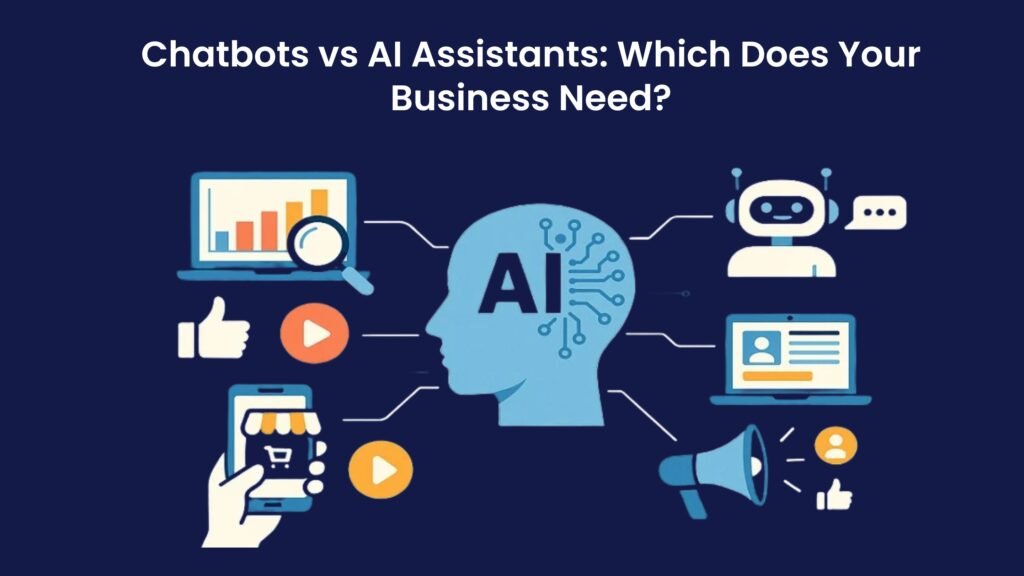
Introduction to Chatbots vs AI Assistants in Customer Service Customer expectations have shifted dramatically. People now want instant answers, personalized interactions, and consistent support across every channel. For business leaders, this pressure translates into a simple but challenging question: how do you deliver faster, smarter, and more efficient customer service without inflating costs? AI customer service has stepped in as a powerful solution. Businesses today are exploring two main approaches: AI chatbots and AI assistants. While both seem similar at first glance, they solve very different problems. The choice between a chatbot and a virtual assistant can shape how your company handles growth, scales customer support, and builds brand loyalty. Think about it this way. A customer has a basic question about their order status. A chatbot can handle that in seconds. But when a customer needs personalized recommendations, troubleshooting, or even scheduling help, that is where AI assistants take over. Understanding the difference is no longer a technical detail. It is a leadership decision that impacts customer satisfaction, operational costs, and ultimately revenue. This article will break down the chatbot vs virtual assistant debate, highlight where each technology fits, share real-world use cases, and give you a roadmap for implementation. By the end, you will have a clear picture of which solution your business really needs and how to measure its long-term impact. Understanding the Basics of AI Customer Service What Are Chatbots and How Do They Work? An AI chatbot is designed to simulate a conversation with customers, usually through a website, mobile app, or messaging platform. Its primary job is to answer repetitive questions, guide users through standard processes, and keep support queues clear for more complex issues. Most chatbot tools today rely on Natural Language Processing to understand customer queries and respond in real time. They work well in handling structured requests such as: Checking order status Providing store hours or policies Directing customers to relevant knowledge base articles Capturing lead details for sales teams Industries such as eCommerce, banking, healthcare, and travel have widely adopted AI chatbots. For example, an online store may use a chatbot to handle shipping queries or refund requests, reducing the burden on human agents. Banks deploy chatbots to answer account balance questions instantly without requiring a call center executive. The strength of chatbots lies in efficiency. They are quick, consistent, and available around the clock. However, they often struggle when faced with open-ended or complex queries that require judgment, memory of past interactions, or multi-step problem solving. What Are AI Assistants and How Are They Different from Chatbots? AI assistants, sometimes called virtual assistants, go beyond scripted interactions. They are designed to handle context-rich conversations and support decision-making tasks. Instead of simply answering a question, an AI assistant can understand intent, process multiple layers of information, and act on behalf of the user. An AI assistant does not just respond—it integrates with business systems like CRM, ERP, or scheduling tools to perform tasks such as: Offering personalized product or service recommendations Booking meetings and sending reminders Managing customer onboarding workflows Providing multilingual support in real time Assisting employees with data insights and task automation Unlike basic chatbots, AI assistants learn over time. They analyze patterns in customer behavior, adapt responses, and can even predict what a customer might ask next. For example, an airline’s AI assistant could not only confirm a booking but also proactively offer check-in services, baggage policies, and personalized travel upgrades. The key difference is that AI assistants function more like digital team members than automated response systems. They are capable of becoming strategic assets in customer service and business operations. Chatbot vs Virtual Assistant: Key Differences At first glance, AI chatbots and AI assistants may seem interchangeable. Both engage customers through digital channels, both use artificial intelligence to respond, and both reduce the load on human teams. But the reality is that their scope, capabilities, and impact on business operations are very different. Scope of Interaction AI chatbots are reactive. They wait for a customer to ask a question and then respond within a predefined framework. Their role is to keep the conversation moving quickly and efficiently. AI assistants are proactive. They can anticipate needs, personalize suggestions, and even start interactions without being prompted. Think of a chatbot as a helpful clerk at the information desk, while an AI assistant feels closer to a digital advisor who understands your preferences and history. Complexity of Tasks Chatbots are built for speed and volume. They excel at answering high-frequency, low-complexity questions such as “Where is my order?” or “What are your opening hours?” AI assistants are designed for multi-step processes. They can manage workflows such as helping a customer troubleshoot a device, booking follow-up appointments, or offering financial planning guidance. Customer Experience The chatbot experience is efficient, but it can feel transactional. A customer gets an answer quickly but may sense the interaction is limited and somewhat robotic. AI assistants, on the other hand, are capable of delivering personalized, human-like experiences. They can remember previous interactions, adjust tone and recommendations, and create continuity across customer touchpoints. This higher level of engagement often leads to stronger brand loyalty. Technology Under the Hood Modern chatbot tools use Natural Language Processing to understand and match queries to pre-defined responses. Their intelligence depends on the training data and the scripts they are built on. AI assistants leverage more advanced machine learning and contextual AI models. They can analyze historical conversations, integrate with enterprise systems, and continuously improve through feedback loops. This makes them more adaptable and capable of scaling with the business. In short, chatbots are ideal for handling large volumes of simple interactions at scale, while AI assistants serve as digital collaborators capable of managing complex, personalized, and evolving needs. Why Businesses Struggle with AI Adoption Adopting AI in customer service sounds exciting on paper, but many companies quickly realize it is not as simple as flipping a switch. Leaders often face a gap between expectations and reality. This gap
AI for Small Business: A Complete Beginner’s Guide to Adoption, Tools, and Growth in 2025
Introduction Why AI for Small Business Matters in 2025 Running a small business today is no easy feat. You’re juggling multiple roles—marketing, sales, operations, finance, all while trying to stay competitive in a rapidly evolving market. One of the biggest challenges is doing more with less: limited resources, tight budgets, and teams that are stretched thin. This is where AI for small businesses can be a game-changer. AI is no longer just a tool for tech giants. Startups and small businesses can now leverage AI tools to automate repetitive tasks, gain insights from data, and make smarter decisions faster. From chatbots handling customer inquiries to analytics tools predicting sales trends, AI adoption can save time, reduce costs, and even help you increase revenue. Consider this: according to a 2025 SMB AI adoption report, over 45% of small businesses that implemented AI tools reported a measurable increase in productivity within six months, and 38% saw higher revenue growth compared to competitors who hadn’t adopted AI. These aren’t just numbers, they are proof that using AI for business is no longer optional; it’s strategic. But here’s the thing: getting started can feel overwhelming. With so many AI tools for startups available, deciding where to begin is often the hardest part. That’s why this AI beginner business guide exists. It’s designed to walk you through practical steps for identifying opportunities, choosing the right tools, and implementing AI in a way that aligns with your business goals. By the end of this blog, you’ll not only understand why AI matters but also have a clear roadmap for how your small business can start using AI tools effectively. Whether you want to improve customer engagement, optimize operations, or make smarter data-driven decisions, these AI adoption tips will give you a structured path to success. Understanding AI and Its Relevance to Small Businesses Before diving into AI tools for startups, it is important to understand what AI really is and why it matters for small businesses. Many decision-makers assume AI is only for large corporations or requires a huge budget. That is no longer true. Small businesses can harness AI to solve real problems, improve efficiency, and gain a competitive edge. What AI Really Means for Small Business Artificial Intelligence refers to computer systems that can perform tasks that normally require human intelligence. These tasks include recognizing patterns, understanding language, making predictions, and learning from data over time. For small businesses, AI is not about replacing employees. It is about enhancing their capabilities and automating repetitive processes. Here are some practical examples of AI in small businesses: Customer Service: AI chatbots can handle frequently asked questions, freeing up your team for more complex queries. Marketing and Sales: AI can analyze customer behavior and suggest targeted campaigns to improve engagement and conversions. Operations: Inventory forecasting tools powered by AI help avoid stockouts or overstock situations. Finance: AI tools can automate invoice processing and detect anomalies to reduce errors. These are not futuristic scenarios. They are tools that small businesses are already using today to save time, reduce costs, and make smarter decisions. Common Myths About AI for Small Business Adoption Misunderstandings about AI often prevent small businesses from starting. Here are the three biggest myths and why they are not true: AI is too expensive: Many AI tools for startups are affordable and even subscription-based. You can start small and scale gradually. AI is only for tech-savvy businesses: Modern AI tools are designed to be user-friendly. Most require minimal technical knowledge. AI replaces humans: In reality, AI supports your team, enabling them to focus on higher-value tasks instead of repetitive work. Benefits of Using AI for Business The advantages of integrating AI into your small business are tangible. AI helps businesses streamline operations, increase revenue, and make informed decisions based on data. Here is a breakdown of key benefits with examples that can be easily tracked: Business Function AI Tool Example Potential Benefit Hypothetical Result (First 6 Months) Customer Service Chatbots, Virtual Assistants Faster response time, 24/7 support 30% increase in customer satisfaction Marketing and Sales Predictive Analytics, CRM AI Improved targeting, personalized campaigns 25% boost in lead conversion Operations Inventory Forecasting AI Reduce stockouts, optimize procurement 20% reduction in excess inventory Finance Automated Invoice Processing Reduce errors, save time 15 hours saved per month per employee Analytics and Reporting Business Intelligence AI Better data-driven decisions 10% faster decision-making These data points are realistic for small businesses just starting with AI adoption. You can represent this table in Excel to track improvements as you implement AI tools in different areas of your business. Why AI Matters Now Using AI for small business is no longer a future concept. Businesses that adopt AI today are better positioned to compete, respond to market changes, and deliver superior customer experiences. For decision-makers, understanding AI is not just about technology—it is about strategy. This AI beginner business guide is aimed at helping you identify practical applications that deliver measurable results without overwhelming your team or budget. Identifying AI Opportunities in Small Businesses Knowing that AI can help your business is one thing. Knowing where to start is another. Not every process in your business needs AI. The key is to identify areas where AI can solve real problems, save time, and deliver measurable results. This step is crucial for small businesses and startups with limited resources. Assessing Your Current Business Processes Start by analyzing your existing workflows. Look for tasks that are repetitive, time-consuming, or prone to errors. These are the areas where AI can provide the most immediate impact. Typical business functions where AI adds value include: Marketing: Lead scoring, campaign personalization, email automation. Sales: Predicting high-value prospects, automating follow-ups. Customer Support: Chatbots, automated ticket routing, FAQs. Operations: Inventory forecasting, supply chain optimization, scheduling. Finance: Invoice processing, expense tracking, fraud detection. For example, a small retail store may struggle with inventory management. Overstocking ties up cash, while stockouts frustrate customers. Implementing an AI-powered inventory forecasting tool can analyze past
AI in Business: 10 Real-World Examples Transforming Companies in 2025
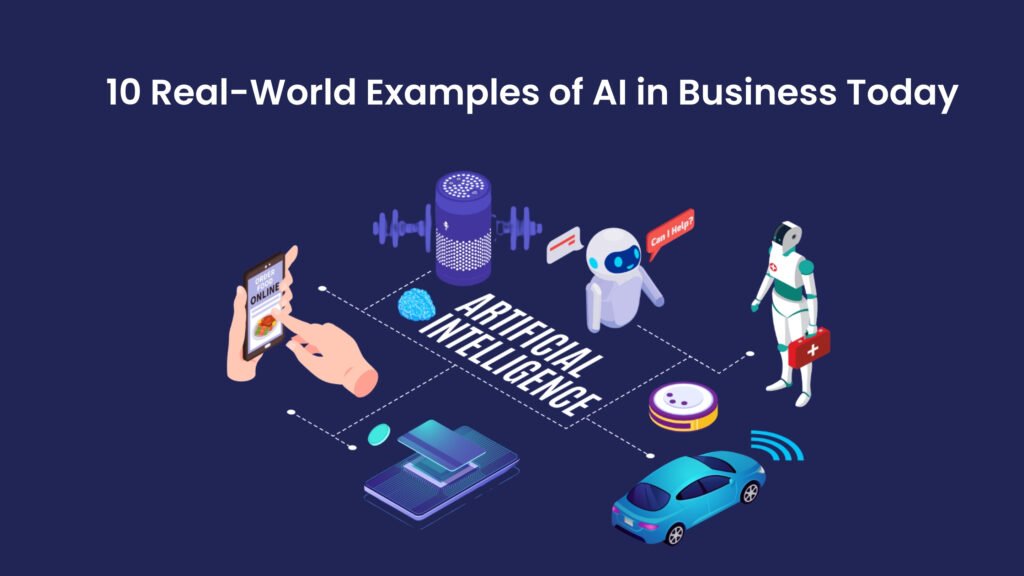
1. Introduction to AI in Business Artificial Intelligence is no longer something you only read about in science fiction. It has quietly moved into the heart of modern business, transforming how companies operate, make decisions, and serve customers. What once sounded like a distant future is now happening in real boardrooms, shop floors, hospitals, and customer service centers. When we talk about AI in business, we are not talking about experiments hidden inside research labs. We are talking about systems that millions of people interact with every day without even realizing it. Every time Netflix suggests a show you end up binge-watching, or your bank flags a suspicious transaction before you notice it, you are seeing AI at work. What makes this shift so powerful is not just the technology itself but the scale at which it is being applied. Businesses across industries have moved beyond pilot projects into full-scale adoption. They are using AI to cut costs, predict trends, discover insights, and create customer experiences that feel almost personalized to the individual. This article explores 10 real-world AI examples that are not just impressive demonstrations but practical case studies of companies already reaping measurable results. From retail giants fine-tuning your shopping cart to healthcare providers improving diagnoses, these AI use cases in 2025 show us how far we have come. By the end, you will see why AI is not a buzzword anymore but a foundational part of how businesses grow, compete, and survive. 2. AI in Business for Retail and E-commerce: Personalization at Scale Retail has always been about understanding what people want and delivering it better than anyone else. The problem is, in a world of millions of customers and billions of products, that kind of precision is impossible for humans alone. This is where AI has completely reshaped the game. Amazon and the Recommendation Engine Amazon is one of the most famous examples of AI in business. Its recommendation engine doesn’t just suggest products randomly. It studies your browsing history, purchase behavior, items you’ve clicked but not bought, and even what other people with similar habits purchased. This is why, after buying a phone, you instantly see cases, chargers, and screen protectors popping up in your feed. Amazon has reported that its recommendation system drives over 35% of its sales. That is not just a side feature. It is a core driver of revenue. Walmart and Supply Chain Optimization On the other end of retail, Walmart uses AI to manage one of the most complex supply chains in the world. Imagine millions of products moving across thousands of stores and warehouses. Even a tiny inefficiency at that scale means millions in losses. Walmart’s AI predicts demand more accurately, adjusts inventory in real time, and helps reduce waste. For instance, AI tools analyze weather data and social media chatter to anticipate spikes in sales. If there is a storm coming, Walmart’s system ensures shelves are stocked with essentials like flashlights and bottled water ahead of time. Personalized Shopping Experiences Another real-world AI example comes from companies like Sephora. Their AI-powered app allows customers to try makeup virtually using augmented reality and computer vision. Instead of guessing how a lipstick shade might look, shoppers can see it on their own face before buying. This doesn’t just improve customer experience; it reduces return rates and boosts confidence in online purchases. Why It Matters What these AI case studies show us is that retail is no longer about selling to the masses. It’s about tailoring every single experience. In 2025, companies using AI in retail are not only surviving but leading the industry. AI helps them understand demand, manage inventory, and make shopping more personal than ever. 3. AI in Business for Healthcare: Smarter Decisions, Better Patient Outcomes Few industries have more at stake than healthcare. A single decision can change or save a life, and the sheer amount of data doctors and hospitals deal with is overwhelming. AI has stepped in as a partner, not a replacement, helping healthcare providers make faster and more accurate choices. IBM Watson Health and Mayo Clinic IBM Watson Health was one of the first large-scale attempts to bring AI into real-world medicine. At the Mayo Clinic, Watson was used to match cancer patients with the most suitable clinical trials. Normally, this process takes doctors weeks of cross-checking records and trial requirements. Watson could analyze patient data and clinical trial information in minutes, giving doctors a shortlist of matches. While Watson had its limitations, it sparked a movement where AI became a core tool in clinical research and patient care. DeepMind and the NHS In the UK, Google’s DeepMind partnered with the National Health Service to tackle a problem that affects thousands of patients: kidney disease. Their AI model could predict acute kidney injury up to 48 hours before it became life-threatening. Doctors received alerts early enough to intervene, preventing complications and saving lives. This is a clear real-world AI example where algorithms literally made the difference between life and death. AI in Diagnostics AI is also transforming diagnostics. PathAI, for example, uses machine learning to assist pathologists in analyzing tissue samples. Studies show that AI systems can identify certain cancers with equal or better accuracy than human specialists. Radiology has also seen a breakthrough. AI tools help scan X-rays and MRIs, flagging anomalies faster than traditional processes. Instead of waiting days, patients can sometimes get results in hours. Predictive Analytics and Preventive Care Hospitals like Mount Sinai in New York have deployed AI systems that track patient data in real time. By analyzing heart rate, blood pressure, and lab results, AI predicts who might develop sepsis or other critical conditions before symptoms become obvious. Early action means fewer complications and better patient outcomes. Why It Matters These AI case studies prove that healthcare is not just about treating illness anymore. It is about predicting and preventing problems before they happen. In 2025, companies using AI in healthcare are setting a new standard