
How Optimized Business Systems Drive Better Decision-Making and Profitability

Introduction to Optimized Business Systems In today’s rapidly evolving business landscape, optimized business systems play a pivotal role in the success of organizations. These systems are designed to enhance efficiency and streamline processes by integrating technology with organizational workflows. At their core, optimized business systems facilitate the smooth flow of information, enabling companies to make informed decisions based on real-time data. The importance of these systems cannot be overstated. Modern businesses face an array of challenges, from increasing competition to shifting consumer preferences. In this context, the integration of optimized systems becomes essential. They provide a framework that supports not only the operational aspects of a company but also its strategic initiatives. By aligning technology with business goals, these systems foster a culture of efficiency where resources are utilized effectively. Furthermore, optimized business systems serve as the backbone for informed decision-making. When processes are streamlined and data is readily accessible, decision-makers can analyze trends and identify opportunities for growth quickly. This agility allows organizations to respond to market changes instantly, enhancing their competitive edge. The result is a more profitable business model that is not just reactive but proactive in addressing the challenges of the marketplace. In summary, the integration of optimized business systems is critical for any modern organization aiming to thrive in an increasingly complex environment. By ensuring that processes are efficient and that technology is effectively integrated, businesses can drive better decision-making and ultimately increase their profitability. Understanding Business Processes and Their Optimization Within any organization, business processes are the critical activities that transform inputs into outputs, leading to the delivery of products or services to customers. These processes can range across various functions, including sales, marketing, operations, finance, and human resources. Understanding these interconnected processes is vital as they dictate the efficiency and effectiveness of an organization. However, many businesses face challenges that hinder their performance. These may include inefficiencies due to manual operations, lack of standardization, or delays in communication. Optimization of business processes involves applying systematic methods to enhance performance. This may include techniques such as process mapping, where organizations visualize workflows to identify bottlenecks, redundancies, or areas of improvement. Lean management and Six Sigma are also methodologies employed to eliminate waste and reduce variability, thereby streamlining operations. Utilizing these techniques not only improves efficiency but also enhances the quality of products or services delivered. Moreover, technology plays a pivotal role in optimizing business processes. The adoption of automation tools and software solutions can lead to significant enhancements in productivity. Organizations are increasingly integrating data analytics to monitor workflows and performance metrics, enabling informed decision-making. The analysis of key performance indicators (KPIs) allows companies to measure the effectiveness of their processes, making it easier to spot trends and implement necessary changes promptly. Ultimately, the goal of optimizing business processes is to achieve greater productivity while also maximizing reliability and quality. By effectively addressing common challenges and implementing strategic optimizations, companies position themselves to respond swiftly to changes in market demands or operational hurdles, thus driving better decision-making and profitability. The Role of Data in Decision-Making In today’s highly competitive business environment, the role of data in decision-making is paramount. Optimized business systems leverage data as a critical asset for informing strategic choices and driving profitability. An effective approach to decision-making involves comprehensive data collection and thorough analysis, which allow businesses to understand market trends, customer preferences, and operational efficiencies. Data collection can come from various sources, including customer interactions, market research, and operational metrics. This information is instrumental in painting a holistic picture of the business landscape. With optimized systems in place, organizations can ensure that they capture relevant data across all touchpoints, which enhances accuracy and reliability in their analytics efforts. Furthermore, the importance of real-time data cannot be overstated. In an era where market conditions can shift rapidly, having access to up-to-date information enables businesses to respond quickly to emerging opportunities or threats. Real-time analytics facilitate timely interventions and adjustments in strategy, thereby maximizing operational effectiveness and maintaining a competitive edge. To harness the power of data, businesses can leverage advanced data analytics tools that provide in-depth insights into their operations. These tools can analyze large volumes of data efficiently, uncovering patterns and correlations that might not be visible through traditional methods. By employing data analytics, organizations can make informed decisions based on empirical evidence, which significantly reduces reliance on intuition or guesswork. In conclusion, the integration of robust data practices within optimized business systems is essential for effective decision-making. As organizations continue to evolve, prioritizing data-driven strategies will ensure that they not only enhance their decision-making processes but also increase profitability and sustainability in the long run. Benefits of Implementing Optimized Business Systems Implementing optimized business systems offers numerous advantages that significantly enhance the operational capabilities of any organization. One of the primary benefits is improved efficiency; business systems that are streamlined and tailored to specific needs allow organizations to operate more fluidly and minimize redundancies. For instance, a manufacturing company that integrates an optimized inventory management system can swiftly track materials, reducing delays and improving overall throughput. Another critical benefit is the reduction of operational costs. By automating routine tasks and eliminating errors, optimized business systems can lead to decreased labor costs and resource utilization. For example, a retail enterprise that adopts an optimized point-of-sale system can reduce the time employees spend managing transactions, thereby allowing them to focus on customer service, which is paramount in today’s competitive market. Enhanced customer satisfaction is also a significant outcome of implementing optimized business systems. When processes are efficient and well-organized, customers experience quicker response times and more accurate service delivery. A well-known tech company, for example, found that by using an optimized customer relationship management (CRM) system, they were able to analyze customer feedback in real-time and address concerns promptly, leading to an increase in customer loyalty. Finally, the implementation of optimized business systems creates opportunities for increased revenue streams. Businesses can analyze performance data more effectively and identify new market
Common Business System Challenges and How Optimization Solves Them
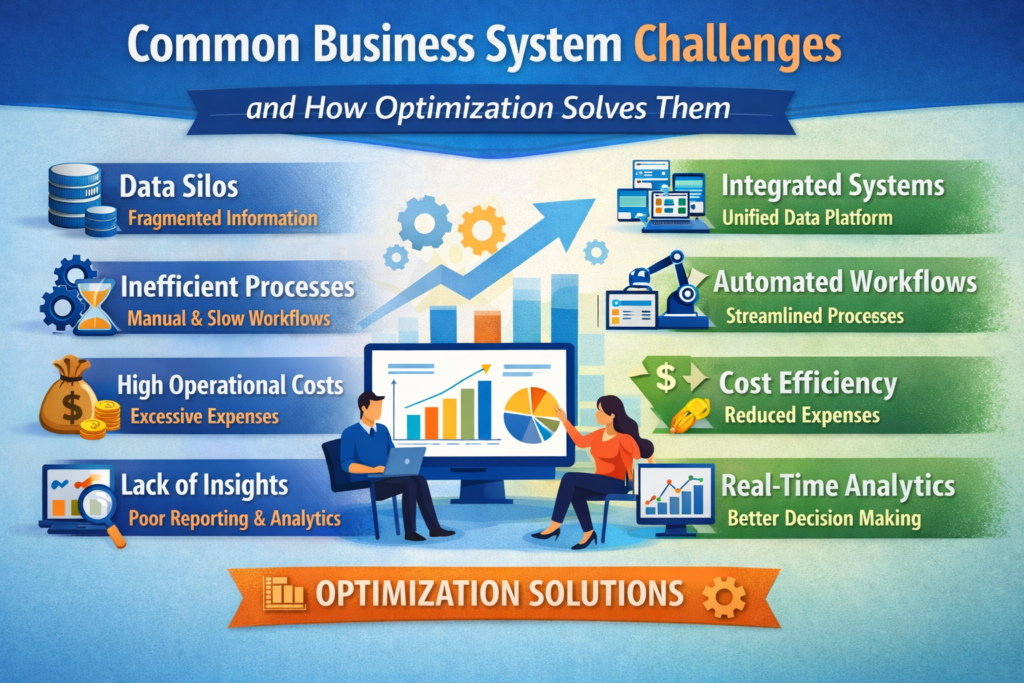
Introduction to Business System Challenges In today’s fast-paced business environment, organizations face a myriad of challenges that can inhibit their growth and efficiency. Business system challenges are obstacles that restrict a company’s ability to operate smoothly and effectively. These challenges can arise from various sources such as inefficiencies within workflows, communication breakdowns among teams, and reliance on outdated processes and technologies. Identifying these challenges is crucial for any organization seeking to improve its operations. Inefficiencies, for instance, often manifest in repetitive tasks or poorly integrated systems that waste valuable time and resources. As businesses grow, maintaining optimal performance becomes increasingly demanding, and these inefficiencies can significantly hinder productivity and employee morale. Communication breakdowns represent another common challenge; they can lead to misunderstandings, reduced collaboration, and poor decision-making. When teams operate in silos or lack clear communication channels, the overall alignment of business objectives suffers. This further complicates efforts to implement change and achieve strategic goals. Moreover, reliance on outdated processes can severely restrict an organization’s ability to adapt to new market conditions. Companies that do not regularly update their systems and protocols run the risk of falling behind competitors who embrace innovation and agility. This reluctance to change can stifle growth and limit the potential for new business opportunities. Recognizing and understanding these various business system challenges is the first step toward implementing effective solutions. By bringing attention to these issues, organizations can strategize and prioritize corrective actions necessary to enhance their operations. As companies navigate through these challenges, they open doors for optimization and improvements that ultimately lead to greater success in an ever-evolving marketplace. Identifying Common Business System Challenges In today’s fast-paced business environment, organizations frequently encounter a range of challenges that hinder the effectiveness of their systems. One significant issue is the presence of data silos. This occurs when information is trapped within disparate departments or systems, preventing a cohesive view of organizational data. For instance, a marketing department may utilize a customer relationship management (CRM) system that is not properly integrated with sales or finance platforms, leading to missed opportunities for cross-departmental collaboration. Another prevalent challenge is the lack of integration between various tools that companies employ. Organizations often adopt multiple software solutions tailored to specific functions, resulting in a fragmented ecosystem. For example, an enterprise may use separate applications for project management, communication, and human resources. Without proper integration, employees may experience difficulties in accessing and sharing information efficiently, which can ultimately hamper productivity. Employee resistance to change is another barrier that organizations face when attempting to optimize their business systems. Employees may be accustomed to existing workflows and hesitant to adopt new tools or processes that promise improvement. This resistance can stem from a lack of trust in new technologies or insufficient training provided during transition phases. A notable example is seen in companies that have introduced new software for inventory management, only to encounter pushback from staff who feel overwhelmed by the change. Finally, inadequacies in workflow or process management can further exacerbate challenges in business systems. Inefficient workflows can lead to bottlenecks, duplicated efforts, and frustration among team members. For example, if an organization relies on manual tracking of project tasks through emails or spreadsheets, the potential for errors and miscommunication is heightened. Therefore, understanding these common challenges is crucial for organizations aiming to succeed in optimizing their business systems and driving overall efficiency. The Consequences of Neglecting System Challenges Business system challenges, if left unaddressed, can lead to a myriad of negative consequences that significantly hinder operational efficiency and overall success. One of the most immediate impacts is a marked decrease in productivity. Employees may find themselves grappling with outdated processes or inadequate tools, leading to frustration and inefficiencies in their work. This disruption not only affects output but can also create a ripple effect throughout the organization. Moreover, the morale of the workforce is likely to suffer when system challenges are continuously overlooked. Employees may begin to feel undervalued and disheartened when they encounter systemic obstacles that prevent them from performing their jobs effectively. This dissatisfaction can escalate to higher rates of absenteeism and employee turnover, which further strains an organization’s resources and financial health. Customer dissatisfaction is another critical consequence of neglecting system challenges. Inefficiencies in business operations can lead to delays in service delivery, errors in product offerings, or inadequate customer support. As a result, clients may choose to take their business elsewhere, leading to a potential decline in revenue. According to a study by the Customer Service Institute, organizations that fail to prioritize efficiency often experience a 20-30% drop in customer retention rates, highlighting the vital link between system functionality and customer satisfaction. In addition to these challenges, businesses risk facing significant financial losses as a result of operational inefficiencies. Ineffective systems can lead to increased operational costs and a decrease in profitability. Organizations may find themselves spending more on resources to compensate for systemic failures, ultimately eroding their financial stability. A failure to address business system challenges, therefore, not only hampers day-to-day operations but also jeopardizes long-term sustainability and growth. Understanding Business Optimization Business optimization refers to the systematic process of refining an organization’s operations and systems to enhance efficiency, productivity, and overall performance. It plays a critical role in addressing the myriad challenges that businesses face in their quest for growth and sustainability. By implementing optimization strategies, organizations can streamline processes, reduce waste, and improve service delivery, thereby making significant strides in overcoming system-related challenges. There are several key strategies that enterprises can employ to drive optimization effectively. One prominent approach is process improvement, which focuses on identifying inefficiencies within existing workflows. By analyzing the current processes, organizations can pinpoint delays, redundancies, and bottlenecks that hinder performance. Techniques such as Lean management and Six Sigma provide structured methodologies that help businesses refine their processes, ultimately leading to both cost savings and enhanced quality. Another significant strategy is automation, which involves utilizing technology to automate repetitive tasks and processes. Automation not only minimizes the risk
Business and Management Consultancy Services: A Smart Investment for Scaling Brands

Introduction to Business and Management Consultancy Business and management consultancy refers to professional advisory services aimed at assisting organizations in improving their performance through the analysis of existing business problems and the development of plans for improvement. These services are typically provided by consulting firms or independent consultants who possess specialized knowledge and expertise in various areas of business management. The primary objective is to help businesses optimize their operations, enhance efficiency, and ultimately scale their brands effectively. At its core, consultancy involves a partnership between the consultant and the client, where the consultant utilizes their experience and analytical skills to evaluate the client’s business operations. This process often involves identifying inefficiencies, outlining strategic objectives, and formulating a comprehensive action plan tailored to the organization’s unique needs. It can encompass a wide range of services, including strategic planning, operational improvement, financial advisory, and human resources management. The significance of consultancy in the modern competitive business environment cannot be overstated. As companies face increasing pressure to remain agile and responsive to market changes, consultancy services provide valuable insights that facilitate informed decision-making. Consultants leverage industry knowledge and best practices to guide organizations in navigating challenges and capitalizing on opportunities. Furthermore, as businesses seek to scale, consultancy emerges as a crucial resource for identifying growth strategies, optimizing resource allocation, and ensuring sustainable development. In essence, the landscape of business and management consultancy is evolving, underscoring its role as a catalyst for change and growth. By engaging in consultancy, brands can not only address immediate challenges but also lay a solid foundation for long-term success in a dynamic marketplace. The Role of Consultancy in Brand Development In the contemporary business landscape, brand development has emerged as a pivotal aspect of ensuring competitive advantage. Consultants play a crucial role in shaping a brand’s identity, strategy, and vision. By leveraging their expertise, they assist organizations in articulating a coherent and compelling brand narrative that resonates with target audiences. This alignment is essential, as a well-defined brand story not only engages customers but also fosters loyalty and trust. Brand identity encompasses various elements, including visual design, messaging, and overall customer experience. Consultancy services help businesses assess their current brand perceptions and identify any gaps between how they are perceived and how they wish to be perceived. This process often involves conducting market research, analyzing customer feedback, and evaluating competitor positioning. Through these insights, consultants guide brands in refining their messages to ensure clarity and consistency across all platforms. Furthermore, consultants provide strategic recommendations that align with a brand’s long-term vision. They assist in defining the brand’s unique value proposition, which is critical for differentiating it in a crowded market. By applying frameworks and tools designed for brand strategy development, consultancy services enable businesses to navigate the complexities of brand positioning effectively. This includes determining the right audience, discovering market opportunities, and developing tailored marketing initiatives. Ultimately, consultancy in brand development is not just about creating a logo or a catchy slogan; it’s about crafting an enduring identity that resonates with consumers and prepares the brand for sustainable growth. The process emphasizes the importance of continuity in messaging and experience, which are fundamental for achieving consistent brand growth in a dynamic marketplace. Hiring a consultancy service for brand scaling can deliver numerous advantages that significantly contribute to a business’s growth trajectory. One of the primary benefits is access to specialized expertise. Consultants often possess a wealth of experience and specialized knowledge in various aspects of management and business operations. For instance, a company looking to expand its digital marketing efforts would benefit from hiring a consultancy with a track record in digital strategy, ensuring access to cutting-edge techniques and tools. Another key advantage is the objectivity and fresh perspectives that consultants bring to the table. Internal teams may develop biases or become entrenched in established practices, which can hinder innovation. A consultancy service can provide unbiased assessments and innovative solutions tailored to the brand’s unique challenges. An example of this can be seen in a retail company that engaged a consultancy to analyze consumer behavior. The consultancy identified emerging trends that the internal team had overlooked, enabling the company to pivot its strategy successfully. Cost-effectiveness is yet another vital benefit. While there is an upfront investment in hiring consultants, the long-term savings achieved through streamlined operations and enhanced strategies can outweigh initial costs. Furthermore, the time savings that consultants offer are invaluable. Rather than diverting internal resources to address strategic issues, businesses can leverage a consultancy’s expertise to tackle complex challenges swiftly. This allows teams to focus on core competencies, further driving productivity. Moreover, partnering with consultants can lead to improved operational efficiency. By implementing best practices and refined processes, businesses can optimize their operations, leading to increased profitability. For instance, a company that streamlined its supply chain management through consultancy services achieved significant reductions in costs and delivery times. Types of Consultancy Services That Facilitate Brand Scaling Business and management consultancy services encompass a variety of specialized areas, each contributing uniquely to the scaling of brands. Understanding these types can empower businesses to choose the right support for their specific growth needs. Management Consulting is one of the primary categories focused on improving organizational performance. Management consultants assess the current state of a business and identify opportunities for enhancement. By evaluating operational efficiency, they guide companies in aligning their strategies with market demands, ultimately aiding in brand scaling. These consultants often work on restructuring processes, creating better governance models, and implementing performance management systems that facilitate sustainable growth. Marketing Consulting addresses the crucial aspect of brand positioning and market reach. Marketing consultants specialize in developing targeted strategies to enhance brand visibility and customer engagement. They utilize market research and analysis to design marketing plans that resonate with the target audience, aiding businesses in expanding their market share. Effective marketing consulting can lead to increased brand loyalty and awareness, essential elements in a brand’s scaling journey. Operational Consulting focuses on optimizing the internal processes of a
Website Management Services vs In-House Teams: What Works Better?
Introduction to Website Management In the ever-evolving digital landscape, effective website management is essential for businesses striving to maintain a competitive edge. Website management refers to the continuous process of monitoring, updating, and optimizing a website to ensure it functions smoothly, remains secure, and delivers a positive user experience. This encompasses various activities, including content creation, website maintenance, performance analysis, and search engine optimization (SEO). Efficient website management is crucial as it can significantly impact a company’s visibility and engagement in the online space. Organizations often have two primary approaches to website management: opting for dedicated website management services or relying on in-house teams. Website management services typically involve outsourcing tasks to specialized firms that provide expertise in web development, design, and analytics. These services can be beneficial for organizations that may lack the resources or technical skills necessary for comprehensive website oversight. By leveraging professional services, businesses can benefit from industry best practices and the latest technologies without the overhead of hiring full-time staff. In contrast, in-house teams focus on managing the website operations within the organization. This approach allows for greater control and direct communication between team members. In-house teams can be more attuned to a company’s specific needs, culture, and brand identity, potentially leading to quicker decision-making and tailored solutions. However, maintaining an in-house team requires ongoing investment in training and resources to keep up with the fast-paced changes in technology and online standards. By understanding the fundamental aspects of website management, companies can better evaluate the advantages and disadvantages of each approach. This understanding is crucial as businesses seek to enhance their online presence and adapt to user expectations in a digital-first world. The Case for Website Management Services Outsourcing website management services has increasingly become a strategic choice for organizations seeking to optimize their online presence. One of the most compelling advantages of these services is their cost-effectiveness. By engaging third-party providers, businesses can significantly reduce expenses associated with hiring full-time in-house teams, such as salaries, benefits, and training costs. This financial flexibility allows companies to allocate resources toward other crucial areas of their operations. Moreover, website management services offer access to a wide array of expertise that might not be readily available within an in-house team. Professional service providers often comprise specialized personnel proficient in various aspects of website management, including web development, SEO, content creation, and cybersecurity. This diverse skill set can enhance the overall quality of a website, leading to better user experiences and improved search engine rankings. Another notable advantage is the scalability that website management services provide. As business needs evolve, these services can be adjusted accordingly. Companies can scale up or down their service agreements based on traffic fluctuations, seasonal changes, or strategic shifts, ensuring that they are not overcommitting resources during quieter times or under-resourced during peaks. Additionally, service providers are typically well-versed in the latest trends and technologies in web management. This continuous adaptation ensures that businesses maintain a competitive edge, as service providers often adopt the latest tools, industry standards, and frameworks promptly. By utilizing these up-to-date strategies, companies can enhance their online presence while focusing on their core competencies. The Benefits of In-House Website Management Teams Implementing an in-house team for website management offers numerous benefits that can significantly enhance a company’s online presence and operational effectiveness. One of the primary advantages is the direct control a business has over its website operations. With an internal team, adjustments can be made swiftly in response to emerging trends or issues, ensuring that the website remains aligned with the organization’s evolving goals and audience needs. This level of oversight fosters a proactive approach, allowing for immediate responses to problems that may arise, which is often challenging with outsourced services. Enhanced communication is another critical benefit of in-house website management teams. When the web development, design, and content teams work within the same organization, ideas can be shared openly and quickly. This collaboration not only streamlines workflows but also helps cultivate a cohesive brand strategy as team members have a thorough understanding of the company culture and mission. Improved communication leads to increased efficiency, clearer expectations, and a unified approach toward achieving website goals. Moreover, in-house teams have the capacity to craft customized strategies that are closely aligned with the company’s objectives. These tailored approaches enable businesses to implement specific functionalities, design elements, and content nuances that resonate with their target audience. Having a team that is entrenched in the company’s everyday operations allows for greater creativity and innovation in web management, as they can closely monitor user feedback and site analytics, making adjustments that fit the brand’s requirements. In summary, maintaining an in-house website management team results in direct control, improved communication, and the ability to develop customized strategies. These factors contribute to a more efficient and responsive online presence, enabling businesses to achieve their digital marketing goals effectively. Cost Analysis: Website Management Services vs. In-House Teams The financial implications of choosing between website management services and in-house teams can significantly influence a company’s operational strategy. Initially, the appeal of hiring an external service typically lies in lower upfront costs. Organizations may find it more financially viable to outsource website management to specialized firms that have the expertise and infrastructure already in place. These services allow businesses to avoid the immediate expenses associated with hiring, training, and equipping a full-time, in-house team. For instance, a report by the National Association of Software Developers highlights that businesses can save as much as 30% on operational costs by utilizing website management services rather than maintaining a permanent team. This is particularly relevant for small to medium-sized enterprises (SMEs) which often operate on tighter budgets and seek efficiency and scalability in their investments. Moreover, with external services, companies usually only pay for what they use, which can lead to significant long-term financial savings. On the other hand, establishing an in-house team involves considerable upfront investment. Salaries, benefits, training, and the necessary technology infrastructure can escalate costs quickly. Additionally, the
Signs Your Business Needs Ongoing Website Management Support
Introduction: The Importance of Website Management In today’s digital era, a well-managed website serves as a cornerstone for businesses of all sizes. It is not merely a virtual presence but a powerful tool that drives engagement, generates leads, and maintains a positive brand image. Ongoing website management support is essential to ensure that a company’s website remains current, functional, and aligned with its strategic goals. Studies indicate that first impressions are formed within milliseconds of visiting a website. Consequently, users are likely to leave a site that is slow, outdated, or difficult to navigate. Hence, businesses must invest in effective website management practices to prevent these issues from arising and negatively impacting potential customer interactions. This investment includes regular updates, proactive monitoring, and responsive customer service, all integral to sustaining user engagement. Furthermore, website management is critical for SEO purposes. Search engine algorithms favor websites that are regularly updated with fresh content and technical improvements. A well-optimized site can significantly enhance a business’s online visibility, drawing more web traffic and ultimately leading to improved conversion rates. Therefore, the role of ongoing management cannot be overstated; it plays a pivotal role in achieving and exceeding business objectives. In summary, ongoing website management support is not just an operational necessity; it is a strategic advantage. By recognizing the importance of timely updates, active content management, and robust technical support, businesses can better position themselves in increasingly competitive markets. This foundation will foster trust among users, encourage repeat visits, and contribute to the overall success of the brand’s digital presence. Frequent Website Downtime Frequent website downtime poses a significant threat to business operations and can severely undermine customer trust. In today’s digital age, a business’s online presence is often the first point of contact for customers. An unreliable website can lead to missed sales opportunities and tarnished reputations. When customers encounter a site that is frequently inaccessible, they are likely to experience frustration and disappointment, potentially choosing to take their business elsewhere. Signs that indicate a company is facing frequent website downtimes can include a surge in customer complaints regarding accessibility, negative reviews highlighting website issues, and decreased traffic analytics or sales figures. These problems often suggest that users cannot reliably access the platform, directly impacting conversion rates and overall revenue. Additionally, if a business must frequently apologize to customers or implement workarounds due to a website that is continually down, it paints a picture of unreliability. This negative perception can become ingrained, resulting in long-term damage to the brand’s image. Ongoing website management support offers the solution to mitigate these effects systematically. By implementing regular monitoring processes and preventive maintenance, businesses that employ such strategies can effectively reduce instances of downtime. Furthermore, a dedicated website management team can promptly address technical issues, ensuring that any problems are resolved swiftly. This proactive approach not only enhances system stability but also fosters trust among customers. With consistent oversight, businesses can reassure their clients that they prioritize reliability and quality service. Ultimately, investing in ongoing website management support can safeguard operations against the detrimental impacts of frequent downtimes, allowing for smoother business continuity and improved customer relationships. Inconsistent Website Performance In today’s digital landscape, a website’s performance serves as a crucial determinant of user experience and overall business success. If your website exhibits slow loading times or inconsistent performance, you may be inadvertently driving potential customers away. Users often expect a seamless experience; therefore, any delay can lead to frustration and ultimately result in increased bounce rates. Monitoring website speed is essential to ensure optimal performance. Consider the fact that a study by Google found that 53% of mobile users abandon sites that take longer than three seconds to load. This statistic underscores the importance of maintaining swift loading times. Websites that load slowly not only provide a poor user experience but can also adversely affect search engine rankings, making it more challenging for potential customers to find your services. Moreover, responsiveness plays a critical role in user engagement. In an era where users access websites from various devices—be it desktops, tablets, or smartphones—ensuring your website is responsive across all platforms is non-negotiable. An unresponsive website can lead to users struggling to navigate through content, ultimately detracting from their overall experience. On-going website management support is invaluable for addressing these performance issues. Regular monitoring and updates can significantly enhance website speed and make the user interface more responsive. Support teams typically utilize various tools and techniques to assess and optimize both loading times and overall functionality. By investing in ongoing maintenance, businesses can foster greater user engagement, enhance customer satisfaction, and, importantly, lead to higher conversion rates. Outdated Content and Design In the digital landscape, the aesthetics and information relayed through a website are critical to its success. When a business website features outdated content and design, it can leave potential customers with a negative first impression. An unpolished appearance or stale information can signal to visitors that the company is not professionally managed or is not keeping up with industry standards. This can result in a loss of credibility and trust, leading to missed opportunities and potential revenue loss. Moreover, outdated content can severely affect a website’s search engine optimization (SEO) performance. Search engines favor websites that provide fresh and relevant content to users. If a website is not regularly updated, its ranking in search results may decline, making it less visible to prospective clients. Furthermore, technology and design trends evolve rapidly, and a website that does not adapt may appear untrustworthy or irrelevant to users who expect modernized interfaces and current information. Ongoing website management support plays a vital role in keeping content fresh and design modern. Regular reviews and updates ensure that information reflects the latest offerings, industry insights, and customer testimonials, reinforcing the business’s authority in its field. Additionally, implementing contemporary design trends can enhance user experience, ensuring the website is engaging, functional, and visually appealing. Such proactive measures not only attract visitors but also encourage them to stay longer
How Website Management Improves Performance, Security, and SEO
Introduction to Website Management Website management encompasses a variety of tasks aimed at ensuring an online platform operates efficiently, securely, and effectively within the digital landscape. It involves several critical components, including content updates, performance monitoring, security measures, and search engine optimization (SEO) practices. Successfully managing a website is essential for any business that communicates through an online medium, as it directly influences user experience and interactions. One of the primary objectives of website management is to enhance performance. This includes monitoring website speed, uptime, and responsiveness to ensure users encounter minimal disruptions. An efficiently managed website not only retains visitors but also encourages them to engage more actively, impacting overall business success. Security is another vital aspect of website management. With the increasing frequency of cyber threats, protecting sensitive data and maintaining customer trust is paramount. Implementing robust security protocols, regular updates, and monitoring systems are necessary components of an effective management strategy. Organizations that prioritize security through proactive website management can mitigate risks and safeguard their online presence. Furthermore, effective website management plays a crucial role in improving SEO. Search engines prioritize optimized, well-maintained websites, making it imperative for businesses to adopt practices that strengthen their online visibility. Regularly updating content, optimizing site structure, and ensuring fast load times are just a few techniques that can bolster a website’s ranking on search engine results pages. In essence, understanding the fundamentals of website management is vital for any business aiming to maximize its online potential. By recognizing its components and implications, organizations can better appreciate the significance of proactive management in enhancing performance, security, and SEO outcomes. The Significance of Website Performance Website performance is a critical component of any online presence, directly impacting user experience, engagement, and ultimately, conversions. Effective website management contributes significantly to enhanced performance through several key metrics such as loading speed, uptime, and responsiveness. Each of these elements plays a vital role in determining how users perceive and interact with a website. Loading speed is particularly crucial; studies indicate that users expect web pages to load within two seconds. If a site takes longer to load, users are more likely to abandon it, resulting in increased bounce rates and lost opportunities. Regularly monitoring loading times allows website managers to identify bottlenecks and implement optimization strategies, such as image compression, caching mechanisms, and minimizing HTTP requests. By ensuring that a website loads quickly, organizations can enhance the overall user experience and maintain visitor engagement. Uptime, or the amount of time a website is operational and available for users, is another essential factor. A reliable website should aim for at least 99.9% uptime. Downtime can stem from server issues, poor coding practices, or inadequate hosting resources, all of which can deter users and affect search engine rankings. Effective website management involves monitoring server health and performance, as well as implementing redundancies to minimize the risk of downtime. Responsiveness, defined as how well a website adapts to various devices and screen sizes, is also vital in today’s multi-device world. A mobile-friendly website fosters positive user interactions, leading to better retention and engagement. By utilizing responsive design techniques, website managers ensure that their site delivers a consistent experience across devices. Regular performance assessments, including responsiveness testing, contribute to maintaining a website that meets user expectations and supports business objectives. Enhancing Website Security through Management Website management is integral to enhancing security, as it addresses a range of potential vulnerabilities that can threaten the integrity of online platforms. Cybersecurity threats have become increasingly sophisticated, with malware, phishing attacks, and hacking attempts being prevalent issues faced by website owners. Effective management strategies can mitigate these risks and bolster the defenses of a website. One key aspect of securing a website is the implementation of regular updates. This includes updating content management systems, plugins, and themes to mitigate vulnerabilities that could be exploited by cybercriminals. Keeping software up-to-date is essential not only for functionality but also for security. Software developers frequently release patches to fix known security issues, and neglecting these updates can leave a website exposed to attacks. In addition to updates, conducting regular security audits is crucial. These audits help identify weaknesses in the website’s security framework and assess the effectiveness of existing measures. A comprehensive audit can reveal outdated software, misconfigurations, and other potential entry points for intruders. By addressing these vulnerabilities, website owners can significantly improve their security posture. The deployment of specialized security tools is another best practice for website management. Firewalls, intrusion detection systems, and malware scanning tools play a vital role in safeguarding websites from attacks. Additionally, utilizing SSL certificates ensures that data transmitted between users and the website is encrypted, thus protecting sensitive information from interception. Ultimately, a proactive approach to website management is essential in creating a secure online environment. By staying vigilant and implementing best practices, website owners can effectively combat threats and maintain trust with their users. A robust security strategy is a cornerstone of responsible website management, aiming to protect both the website and its visitors from potentially devastating consequences. The Intersection of Website Management and SEO Website management plays a pivotal role in shaping the effectiveness of search engine optimization (SEO) efforts. One of the essential components influencing SEO is site structure. A well-organized website enables search engines to crawl and index pages efficiently, contributing to better visibility in search engine results pages (SERPs). Proper management ensures that all links are functional and the hierarchy is logical, increasing the likelihood of higher rankings for targeted keywords. Another critical aspect of website management that affects SEO is mobile-friendliness. With the growing prevalence of mobile device usage, search engines have shifted their focus towards prioritizing websites that offer an optimal mobile experience. Regularly updating and maintaining a responsive design is indicative of effective website management. Mobile-friendly websites not only enhance user experience but also gain favor from search engines, potentially improving search rankings. Website speed, an equally significant factor in SEO, is directly impacted by effective management strategies. Websites
Benefits of Professional Website Management Services in USA
Introduction to Website Management Services In the modern digital landscape, having a robust online presence is vital for businesses looking to thrive. This is where website management services come into play, offering a comprehensive suite of solutions tailored to meet the needs of organizations. Essentially, these services encompass a variety of tasks aimed at ensuring that a website remains functional, secure, and optimized for user engagement. Website management services might include regular updates to content, management of hosting services, security enhancements, search engine optimization (SEO), and analytics monitoring. Each of these components plays a crucial role in maintaining a website’s performance and ensuring that it aligns with current digital trends. For instance, frequent content updates can improve a website’s ranking in search results, while effective SEO strategies enhance visibility and attract potential customers. Moreover, with cyber threats becoming increasingly sophisticated, website management is critical for safeguarding a company’s online assets. Regular security audits and updates help to mitigate risks associated with data breaches and hacking incidents. Consequently, businesses can focus on their core operations without the constant worry of technical issues arising from their digital platforms. In addition to operational security, effective website management also contributes to the overall user experience. A well-maintained website that loads quickly, displays correctly across devices, and functions smoothly can significantly improve customer satisfaction and engagement. As a result, businesses are better positioned to convert visitors into loyal customers, ultimately driving growth and profitability. In conclusion, website management services are a necessary investment for businesses of all sizes in today’s digital environment. By leveraging these services, organizations can ensure that their websites not only remain relevant but also serve as powerful tools in achieving their business objectives. Importance of a Professional Online Presence In today’s digital age, the significance of a professional online presence cannot be overstated. Businesses are increasingly recognizing that a well-designed website serves as a virtual storefront where potential customers first interact with their brand. A polished, user-friendly, and responsive website establishes credibility and builds trust with visitors, setting the foundation for successful customer relationships. Website management services play a vital role in creating this impactful online presence. These services ensure that a business’s website is not only visually appealing but also functions seamlessly across various devices, including smartphones and tablets. A responsive design guarantees that customers have a consistent and satisfying experience, regardless of how they access the site. When a website is optimized for usability, it increases the likelihood of visitor retention and encourages actions such as purchases or inquiries. Moreover, a professional online presence significantly influences customer perceptions. In a saturated market, users often assess a company’s reliability based on the quality of its website. A well-maintained site that reflects professionalism and attention to detail can differentiate a business from its competitors. By utilizing website management services, companies can implement crucial updates, enhance security measures, and improve overall performance, aligning with the evolving expectations of their target audience. Furthermore, businesses benefit from the expertise provided by website management professionals, who stay informed about the latest trends and technologies. This knowledge enables them to tailor websites that not only attract visitors but also convert them into loyal customers. Ultimately, investing in professional website management services is essential for any business aiming to establish a credible online presence and effectively engage its customer base. Time and Resource Savings In today’s fast-paced business environment, organizations are constantly seeking ways to enhance efficiency and productivity. One key area where companies can make significant improvements is through the use of professional website management services. By outsourcing website management, businesses can save valuable time and resources, allowing their internal teams to concentrate on core activities and strategic objectives. Managing a website encompasses various tasks including content updates, security monitoring, performance optimization, and technical support. For many organizations, juggling these responsibilities alongside other pressing business needs can lead to inefficiencies and distract from more critical functions. When businesses choose to utilize professional website management services, they are essentially delegating these time-consuming tasks to experts, thereby freeing up their internal resources. This shift allows teams to redirect their focus towards strategic initiatives that drive growth and innovation. For instance, marketing teams can concentrate on developing campaigns and engaging with customers, while product development teams can dedicate more time to refining and enhancing offerings. As a result, organizations experience an overall boost in productivity and a greater ability to adapt to market changes. Furthermore, investing in professional website management services can also lead to cost savings. By employing a dedicated team for website oversight, companies avoid the expenses associated with hiring, training, and managing in-house staff. This strategy not only streamlines operations but also enables organizations to scale their online presence without the overhead costs usually associated with web management. In essence, engaging professional website management services presents a viable solution for businesses looking to conserve resources and enhance time efficiency. By allowing internal teams to focus on their primary roles, companies can foster a more dynamic work environment and ultimately, drive their success. Expertise and Technical Proficiency In today’s digital landscape, the necessity for professional website management services is increasingly evident, particularly in the United States. These services encompass a range of technical expertise that ensures a website operates smoothly and securely. Professionals in this field possess deep knowledge in various areas, including web design, search engine optimization (SEO), security measures, and website analytics. Such expertise significantly contributes to enhancing site performance. Web design is the foundation of any effective online presence. Professionals understand the principles of user-centered design, enabling them to create visually appealing and intuitive websites. They are equipped with the latest tools and technologies, which help in crafting responsive layouts that function effectively across different devices. By ensuring a positive user experience, they can increase visitor retention and conversion rates. SEO is another critical component of website management. Experts utilize advanced techniques and strategies to optimize a website for search engines. This includes keyword optimization, content creation, and link-building tactics. By improving a
The Difference Between Posting Content and Real Social Media Growth
Introduction to Social Media Strategy In today’s digital landscape, social media has emerged as an essential component for businesses and individuals striving to establish a robust online presence. A well-defined social media strategy is pivotal, as it serves as a roadmap for effectively engaging audiences and fostering meaningful connections. This strategy transcends the mere act of content posting, directing focus towards the overarching goals of growth and interaction. Successful social media strategies prioritize the quality of the interactions rather than the quantity of posts. This distinction is crucial, as sporadic posting without a coherent strategy can lead to minimal engagement and hinder growth. Differentiating between simple content generation and strategic engagement can significantly impact a brand’s social media outcomes. This is where the significance of targeting audience needs and preferences through thoughtful content planning becomes evident. Furthermore, an effective social media strategy encompasses understanding the dynamics of various platforms, as each has its unique audience and style of interaction. By tailoring content to fit these unique contexts and employing techniques such as analytics-based adjustments, individuals and businesses can cultivate a more engaged audience. This proactive approach promotes not just follower counts but enhances overall brand loyalty, community, and conversions. Ultimately, recognizing the distinction between merely posting content and achieving tangible social media growth relies profoundly on having a well-outlined strategy. It involves setting clear objectives, identifying the target audience, choosing appropriate channels, and regularly monitoring performance. Such an approach ensures that social media efforts yield substantial rewards, elevating both online visibility and audience loyalty in an increasingly competitive marketplace. The Basics of Content Posting Content posting on social media platforms involves sharing various types of information, visuals, or interactive elements aimed at engaging an audience. This broad category can include text posts, images, videos, stories, polls, and live broadcasts. Each type serves a distinct purpose, allowing brands and individuals to convey messages creatively and directly to their followers. The frequency of posts is a critical aspect of content sharing. Regular updates can help maintain visibility among followers and enhance overall engagement. However, it is advisable to strike a balance; excessive posting may lead to audience fatigue, while infrequent updates could result in diminished presence and interaction. Common practices suggest that businesses and influencers should aim for consistency over sheer volume, opting for quality, relevant content that resonates with their target audience. Despite the frequency and variety of content types, simply posting frequently does not equate to achieving substantial engagement or growth on social media. Engagement metrics, such as likes, shares, and comments, reflect audience interaction and responsiveness, which often come from deeper strategies beyond mere posting. Content that is engaging and relevant promotes interaction while content that fails to captivate might go unnoticed, underscoring the importance of thoughtful content creation. Furthermore, merely having a content posting strategy without a clear understanding of audience preferences can lead to unfruitful results. To foster growth, it is essential to tailor content according to the interests and behaviors of the target demographic. Without this alignment, social media efforts may fall short of producing meaningful relationships and effective community building. Thus, understanding both the capabilities and limitations of content posting lays the foundation for achieving genuine social media growth, rather than focusing solely on the act of posting itself. Understanding Social Media Growth In the realm of social media, growth transcends mere numbers and encompasses a multifaceted approach to building a presence and an engaging community. Social media growth can be quantified through various metrics, most notably follower count, engagement rates, and brand awareness. However, these numbers alone do not paint a complete picture; they must be understood in the context of the relationships you are fostering with your audience. Follower count is often the first metric people examine when gauging social media growth. While a high follower count can signal a popular account, it is vital to consider the quality of those followers. A strong social media presence is not solely defined by quantity, but rather by the relevance and activity of your followers. Engaging with your audience fosters loyalty, encourages interaction, and facilitates meaningful conversations that contribute to growth. Engagement rates, another crucial metric, reveal how active and involved your audience is with your content. This includes likes, shares, comments, and other interactions. Higher engagement rates often indicate that the content resonates well with the audience, ultimately leading to organic growth. Implementing strategies that encourage interaction and feedback can significantly enhance engagement and contribute to establishing a loyal community. Brand awareness also plays a critical role in social media growth. This metric reflects how well your target audience recognizes and remembers your brand. Building brand awareness involves consistent messaging and visuals that resonate with your audience, which not only attracts new followers but reinforces your brand’s identity. Ultimately, true social media growth lies in cultivating a passionate community rather than focusing solely on numbers. By prioritizing meaningful engagement and brand awareness, social media efforts can lead to sustainable growth that benefits both the brand and its audience. The Role of Engagement in Social Media Growth Engagement is a pivotal element in the realm of social media growth, distinguishing it from merely posting content. While simply sharing posts can generate visibility, authentic engagement shapes a more profound connection between a brand and its audience. Elements such as comments, shares, and direct interactions contribute significantly to the relationship-building process that is essential for sustainable growth. Comments serve as a direct line of communication between users and content creators. They provide opportunities for discussions, feedback, and validation, reflecting the audience’s interest and investment in the content. Responses to comments can further deepen these connections, showcasing a commitment to community engagement. When brands actively respond to comments, it cultivates a sense of belonging and encourages more users to participate, enhancing the overall engagement metrics. Shares are another critical component of authentic engagement. When users choose to share content with their network, they are essentially endorsing it to their peers, which amplifies the original message beyond the
How Social Media Marketing Drives Brand Awareness and Sales
Introduction to Social Media Marketing Social media marketing refers to the process of promoting products, brands, or services through social media platforms to engage with customers and drive sales. In today’s rapidly advancing digital landscape, it serves as a pivotal tool for marketers aiming to reach their target audience effectively. The rise of platforms like Facebook, Instagram, Twitter, and LinkedIn has transformed the way companies communicate with consumers, shifting the dynamics of marketing from traditional methods to more interactive and customer-focused approaches. The significance of social media marketing cannot be overstated; businesses now have the opportunity to connect with consumers in real-time, fostering a two-way communication channel that was previously unavailable. This interactivity allows brands to not only disseminate information but also to gather feedback, respond to customer inquiries, and build lasting relationships that enhance customer loyalty. The numerous demographic insights social media platforms provide further empower businesses to tailor their marketing strategies to specific audience segments, enhancing the relevance and effectiveness of their campaigns. Moreover, the impact of social media extends beyond mere communication; it has evolved into a critical component of branding and sales strategies. By leveraging visually appealing content, engaging posts, and interactive advertising, brands can elevate their visibility, attract new customers, and ultimately drive sales. The accessibility and widespread use of social media mean that even small businesses can compete with larger enterprises, leveling the playing field in a crowded marketplace. The Role of Brand Awareness in Marketing Strategy Brand awareness is a critical component in the overarching marketing strategy of any business. It encompasses the extent to which consumers recognize, recall, or feel familiar with a brand. High brand awareness not only indicates a strong presence in the market but also significantly influences consumer purchasing decisions. When customers are aware of a brand, they tend to see it as a credible option, boosting their confidence when choosing products or services. The importance of brand awareness cannot be overstated. It serves as the foundation for customer loyalty, which is paramount in maintaining a sustainable business model. Customers are more likely to return to a brand they recognize and associate with positive experiences. This loyalty translates into repeat sales, reducing customer acquisition costs over time and fostering a dedicated customer base that contributes to the long-term profitability of a company. To measure brand awareness effectively, marketers utilize various metrics. These include unaided and aided brand recall, brand recognition surveys, social media engagement levels, and website traffic analytics. Metrics such as these help businesses assess how well their branding efforts resonate with their target audience, enabling them to make informed adjustments to their marketing strategies. Brands that engage comprehensively with their consumers through channels, including social media, can increase their visibility and foster deeper connections. Strong brand awareness ultimately drives business success. As consumers become more aware of a brand, they demonstrate a propensity to engage, purchase, and advocate for it. Companies focusing their marketing strategies on enhancing brand awareness create a virtuous cycle where heightened visibility leads to increased sales, reinforcing the brand’s market position and longevity. How Social Media Enhances Brand Awareness Social media platforms have become an integral component in cultivating brand awareness due to their vast reach and ability to engage audiences. With billions of users active on various platforms, brands are presented with unprecedented opportunities to connect with potential customers. One method through which social media amplifies brand awareness is content sharing. High-quality, engaging content encourages users to share posts, thereby expanding the brand’s visibility to a wider audience. When content resonates with users, it generates organic traffic and fosters a sense of community around the brand. Another significant factor is user-generated content (UGC). When customers share their thoughts, experiences, or creative expressions linked to a brand, it builds authenticity and fosters trust. UGC acts as a powerful endorsement, as personal recommendations are generally seen as more credible than traditional advertising. Brands that actively encourage and showcase UGC see an increase in engagement and a strengthened connection with their audience. Influencer partnerships also play a crucial role in enhancing brand awareness. Collaborating with influencers who align with a brand’s values can create highly-targeted campaigns that reach specific demographics. These influencers have established trust with their followers, and their endorsement can significantly impact brand perception and awareness. For example, a beauty brand collaborating with a beauty blogger can effectively reach a highly engaged audience more efficiently than through traditional advertising methods. Additionally, the phenomenon of viral marketing serves as a testament to the power of social media in creating brand awareness. Viral content can quickly capture attention and be shared across numerous platforms, significantly increasing brand reach. Successful campaigns often harness trends, humor, or shocking visuals to encourage sharing, resulting in exponential growth of brand visibility. Incorporating these strategies into a cohesive social media marketing plan can significantly enhance brand awareness, leading to increased recognition and, ultimately, sales. Social Media Marketing Tactics to Boost Brand Recognition In today’s digital landscape, leveraging social media marketing is essential for enhancing brand visibility and recognition. Effective tactics can significantly contribute to brand awareness, fostering a connection with target audiences. One key approach is maintaining consistency in branding across all social media platforms. This includes the use of uniform logos, color schemes, and voice. A cohesive brand presence cultivates trust and aids in audience recall, making it easier for potential customers to identify and engage with the brand. Another important tactic involves creating engaging content that resonates with users. High-quality visuals, interactive posts, and compelling narratives can captivate followers and encourage them to share content, amplifying reach. Brands should also consider utilizing various formats such as videos, stories, and infographics, which tend to be more shareable and retain audience attention for longer periods. Additionally, targeted advertisements play a critical role in social media marketing strategies. Platforms like Facebook, Instagram, and LinkedIn offer robust targeting options that allow brands to reach specific demographics based on interests, behaviors, and location. This precision ensures that marketing efforts are directed towards
Social Media Marketing Trends Businesses Can’t Ignore This Year
Introduction to Social Media Marketing Trends In the rapidly evolving digital landscape, social media marketing trends play a crucial role in shaping the way businesses engage with their target audiences. As consumers increasingly turn to social media platforms for information, entertainment, and connections, it becomes imperative for brands to stay informed about emerging trends. This awareness not only enhances brand visibility but also drives customer engagement, forming a cornerstone for successful marketing strategies in the contemporary era. Social media platforms are continuously updating their algorithms and features, which can profoundly impact how content is disseminated and consumed. For businesses, adapting to these changes is essential for maintaining relevance in a competitive market. Ignoring the latest trends can lead to missed opportunities for connection and engagement, ultimately affecting a brand’s market position. Therefore, understanding and analyzing social media trends is necessary for crafting effective marketing initiatives. Moreover, integrating current social media marketing trends into strategies allows brands to resonate more effectively with their audience. By adopting innovative practices, such as influencer collaborations or leveraging user-generated content, companies can create a more authentic and relatable brand presence. This not only empowers customers but also instills loyalty, as consumers are more likely to engage with brands that reflect their values and interests. Thus, staying abreast of social media marketing trends is not merely advantageous; it is essential for businesses looking to thrive in the digital age. The insights gleaned from these trends can serve as a guiding framework, enhancing overall marketing efforts and ensuring that brands remain at the forefront of customer engagement initiatives. Rise of Short-Form Video Content In recent years, short-form video content has surged in popularity, particularly with the rise of platforms such as TikTok and Instagram Reels. These platforms, known for their succinct and engaging format, have transformed the way audiences consume content, leading to greater demand for bite-sized videos that deliver powerful messages quickly. Businesses are increasingly recognizing the potential of this trend, which not only allows for creative storytelling but also provides a unique way to engage with a broad audience. The appeal of short-form videos lies in their ability to capture attention efficiently. With an average attention span decreasing, viewers are more likely to engage with content that is quick, easily digestible, and visually stimulating. Consequently, brands can leverage short-form videos to showcase products, share company stories, or highlight customer testimonials. This form of content encourages creativity and innovation, allowing businesses to present essential information in an entertaining manner. Moreover, short-form video content has proven effective in encouraging user-generated content, which is invaluable for businesses looking to enhance their online presence. When users are motivated to create their own videos, featuring a brand’s product or service, it amplifies brand visibility and credibility. Initiatives such as challenges or hashtags can effectively prompt users to participate, generating a wealth of content that further promotes the brand while fostering a sense of community. In summary, embracing the short-form video trend can provide businesses with a substantial opportunity to engage audiences creatively and meaningfully. By incorporating dynamic visual storytelling into their social media strategies, companies can not only enhance user engagement but also cultivate a loyal customer base that resonates with their brand identity. Emphasis on Authentic and Raw Content In recent years, there has been a notable shift in social media marketing, with a growing focus on authenticity. Consumers are increasingly drawn to content that feels real and relatable, which has made raw and unedited posts highly appealing. This trend stems from a desire for transparency and authenticity, as audiences seek connections with brands that resonate with their own experiences. As a result, businesses are adapting their content strategies to align with this movement. Instead of polished and overly curated images, brands are opting for more genuine portrayals of their products and services. This includes sharing behind-the-scenes moments, customer testimonials, and user-generated content that highlights real experiences. Such approaches not only enhance engagement but also foster trust between the brand and its audience. Furthermore, the authenticity trend has led to a rise in platforms that emphasize casual interactions. For example, Stories on Instagram and TikTok allow users to share moments in real-time, providing a space for unfiltered content. Marketers can leverage this by showcasing their brand narrative in a more spontaneous manner. This could involve showcasing the development of a product, the everyday lives of employees, or even snippets of customer interactions, thereby humanizing the brand. Adopting raw content not only appeals to consumers’ desire for authenticity but also distinguishes brands in a saturated digital landscape. As businesses navigate this trend, it is crucial to strike a balance between professional branding and genuine storytelling. Emphasizing authenticity facilitates deeper connections with audiences, ultimately leading to greater loyalty and advocacy. Influencer Marketing Evolution In recent years, the landscape of influencer marketing has undergone significant transformation. Enterprises are increasingly recognizing the power of influencers in shaping brand perception and driving consumer behavior. The trend has shifted from the reliance on macro-influencers, who often boast millions of followers, to a growing emphasis on micro-influencers and niche influencers. These individuals, while they may have smaller audiences, tend to foster more authentic connections with their followers, resulting in higher engagement rates and greater trust. Micro-influencers, typically defined as those with follower counts ranging from 1,000 to 100,000, possess the ability to engage with specific target demographics. Their followers often feel a sense of connection and loyalty, which enhances the effectiveness of promotional content. Consequently, brands are increasingly leveraging the reach of these influencers as they are perceived as more relatable and credible. This shift signifies a crucial evolution in influencer marketing, emphasizing quality over quantity and tailoring strategies to resonate with specific consumer segments. Niche influencers are gaining prominence as well, as they specialize in particular areas or interests, attracting an audience that is deeply invested in their subject matter. Businesses are shifting their focus to these niche creators who authentically represent their brand values, creating a foundation of trust that can enhance brand