Introduction to App Development Frameworks
In the rapidly evolving field of technology, app development frameworks play a crucial role in enhancing the efficiency and effectiveness of software development. These frameworks consist of pre-designed structures and coding practices that guide developers in building applications more rapidly and with greater consistency. They serve as a foundation upon which developers can create robust applications with reduced coding complexities, allowing them to focus on the unique features and functionalities that set their apps apart.
One of the primary advantages of utilizing app development frameworks is the acceleration of the development process. By providing a plethora of built-in functionalities and coding tools, frameworks reduce the time required for coding from scratch. This efficiency not only saves resources but also allows developers to concentrate on optimization and user experience, ultimately leading to the creation of high-quality applications that meet market demands.
Moreover, app development frameworks encapsulate best practices and coding standards, ensuring consistency across different projects. This standardization is particularly beneficial when teams are involved, as it facilitates collaboration and integration of various components developed by different programmers. As a result, frameworks help maintain a systematic approach to app development, which is essential for large-scale applications.
In addition to improving development speed and coding practices, these frameworks often incorporate tools for debugging and testing, which further enhances the quality of the final product. By integrating these functionalities, frameworks help developers identify and rectify issues early in the development lifecycle, leading to more stable and reliable applications upon release. Overall, app development frameworks are indispensable tools that streamline the software development process, ultimately contributing to the creation of impactful and high-quality mobile applications.
The Evolution of App Development Frameworks
The landscape of app development frameworks has undergone significant transformation since the inception of programming languages. In the early days of computing, developers relied on low-level programming languages such as Assembly and C, which required extensive coding knowledge and understanding of hardware. As technology evolved, so did the need for more accessible tools, leading to the emergence of higher-level languages and the first frameworks, which simplified the development process by offering reusable code components.

The introduction of Object-Oriented Programming (OOP) in the 1980s further revolutionized app development. This paradigm allowed developers to create modular code, which enhanced maintainability and scalability. With the arrival of the internet and the subsequent boom in web applications in the 1990s, frameworks became essential for managing complex web infrastructures. Technologies such as PHP and Ruby on Rails gained traction, exemplifying the need for frameworks to streamline development while enhancing user experience.
As consumer preferences shifted towards mobile and responsive designs in the late 2000s, frameworks continued to evolve. The rise of smartphones ushered in frameworks specifically designed for mobile app development, such as React Native and Flutter, which allow developers to create applications across multiple platforms using a single codebase. Furthermore, the increasing integration of cloud computing has facilitated the development of frameworks that support robust back-end services, simplifying the process for developers. In light of ongoing advancements in artificial intelligence and machine learning, the future of app development frameworks appears poised for further innovation, with an emphasis on enhancing user interactivity and personalized experiences.
The continuous interplay between technological advancements and shifting consumer needs has laid the groundwork for what app development frameworks will look like in 2025. As developers seek efficient and effective ways to build engaging applications, understanding this evolutionary context is paramount for anticipating future trends.
Key Features to Look for in 2025 Frameworks
As the landscape of app development continues to evolve, selecting the right framework in 2025 will hinge upon several critical features. One of the foremost attributes to consider is cross-platform capability. In a world increasingly dependent on diverse devices, frameworks that facilitate seamless development across various operating systems—such as iOS, Android, and web platforms—are invaluable. This not only reduces development time and costs but also ensures a wider reach for end-user applications.
Furthermore, performance efficiency stands out as a critical feature. A framework’s ability to deliver a fast and responsive user experience can significantly impact user satisfaction and retention. Efficient memory management, optimized processing speeds, and minimal load times are essential factors that developers should evaluate when choosing a framework.
Community support also plays a pivotal role in the sustainability of a development framework. Strong community backing can provide robust resources, including libraries, plugins, and troubleshooting assistance. A vibrant community means developers can collaborate, share insights, and gain access to timely updates—how critical this is for adapting to new technologies and challenges that may arise.
Ease of integration into existing systems is another essential feature developers should prioritize. Frameworks that offer straightforward API integrations simplify the process of incorporating new functionalities, making it easier to enhance applications with third-party services and emerging technologies. This becomes particularly vital as integration with IoT devices and artificial intelligence becomes more prevalent in app development.
Lastly, compatibility with emerging technologies cannot be overlooked. As industries increasingly adopt AI and IoT, frameworks that are designed to support these innovations will allow developers to stay ahead of the curve. By considering these key features, developers can make informed decisions that will enhance productivity and ensure the success of their applications in 2025 and beyond.
Top Frameworks Predicted for 2025
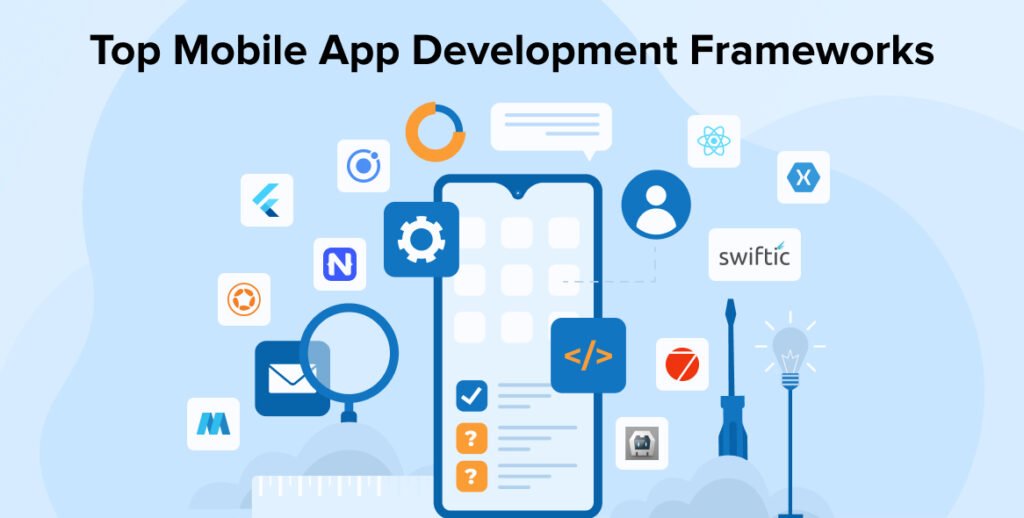
As we look ahead to 2025, several app development frameworks are poised to capture significant attention in the industry. Among these, React Native, Flutter, and Xamarin stand out due to their unique features and extensive user bases.
React Native, developed by Facebook, continues to be a leading choice among developers for cross-platform mobile application development. Its ability to facilitate the creation of native-like applications using JavaScript has made it immensely popular. One of its key advantages is the hot-reloading feature, allowing developers to see the results of their changes immediately. With a strong community backing and extensive library support, React Native is expected to remain a primary framework for mobile app development enthusiasts in 2025.
Flutter, Google’s open-source UI toolkit, is also making waves in the app development community. Its capability to create natively compiled applications for mobile, web, and desktop from a single codebase is a significant advantage. Flutter’s rich set of widgets and highly customizable interfaces appeal to developers seeking high-performance applications. Furthermore, its growing popularity among startups and established firms will likely position it as a top framework by 2025.
Xamarin, a Microsoft product, provides a robust framework for developing applications across various platforms, primarily focusing on .NET development. With its capability to share a substantial amount of code across different platforms, along with access to native APIs, Xamarin is favored by enterprises looking for efficient cross-platform solutions. Its integration with Visual Studio further facilitates a seamless development process, making it an attractive option for many developers.
Other notable frameworks include Ionic and Apache Cordova, which provide unique functionalities and target different developer audiences. As the app development landscape continues to evolve, monitoring these frameworks will be essential to understanding the future trajectory of mobile application development.
Industry-Specific Framework Recommendations
In the rapidly evolving landscape of app development, selecting the appropriate framework is crucial for addressing the unique requirements of various industries. By aligning the chosen framework with the specific needs of sectors such as e-commerce, healthcare, education, and gaming, developers can enhance both functionality and user experience.
For the e-commerce sector, frameworks like Shopify and React Native stand out. Shopify offers an all-in-one solution that includes numerous plugins for payment processing, inventory management, and customer engagement. In contrast, React Native allows for cross-platform development, ensuring a seamless shopping experience across devices while optimizing performance and load times.
In the realm of healthcare, the focus shifts towards frameworks that prioritize security and data management. Subsequently, Django and Flutter are recommended. Django is known for its high-level security features, making it ideal for handling sensitive patient data, while Flutter offers fast performance and an aesthetically pleasing interface, enhancing the usability of healthcare applications. Additionally, the capability to build web and mobile applications from a single codebase simplifies development.
When it comes to education, frameworks like Moodle and Angular are noteworthy. Moodle supports custom course creation and facilitates interactive learning environments, which is essential for modern educational platforms. Angular, on the other hand, provides a robust structure for building dynamic single-page applications, which are increasingly popular in the educational sector.
Lastly, for the gaming industry, Unity and Unreal Engine are top-tier choices. Unity is renowned for its ease of use and extensive asset library, making it ideal for indie developers. In comparison, Unreal Engine is favored for high-fidelity graphics and complex game design, catering to more experienced developers looking to create immersive gaming experiences.
The Role of Community and Support in Framework Selection
When selecting an app development framework, the role of community and support cannot be overstated. A robust and active community surrounding a framework often signifies its reliability and longevity. Developers benefit immensely from the resources and knowledge shared within these communities, making it a crucial factor during the selection process. An engaged community can offer invaluable assistance, often providing tutorials, forums for troubleshooting, and comprehensive documentation that facilitate smoother development experiences.
One of the primary advantages of a strong community is the accessibility of troubleshooting advice. When developers encounter issues, a community-driven platform offers numerous perspectives and solutions that can expedite the resolution process. Instead of searching through scattered resources, developers can rely on the collective knowledge base, which may include FAQs, staging environments, and interactive discussions. These interactions not only mitigate problems but also foster a sense of belonging among developers, encouraging collaboration and shared learning.
Moreover, the community often contributes a variety of plugins or libraries that enhance the functionality of the framework. These real-world tools expand what developers can achieve, frequently leading to increased productivity and streamlined project timelines. These enhancements can reduce the amount of time spent on building features from scratch, allowing developers to focus on creative aspects and innovations. The consistent updates and input from the user community can also ensure that the framework evolves and adapts to current technological trends.
In addition to providing technical support and resources, a vibrant community can attract experienced developers who contribute to the framework’s improvement and sustainability. As the community of a framework grows, it typically results in enhanced credibility, driving further migration toward that framework. Proactively evaluating community support and resources thus plays a pivotal role in the selection of a suitable app development framework for current and future projects.
Pros and Cons of Popular Frameworks
The landscape of app development frameworks is continually evolving, and selecting the right one can significantly impact the project’s success. Each framework comes with its set of advantages and disadvantages. Understanding these can help developers make informed decisions tailored to their specific needs.
One prominent framework is React Native. Its primary advantage lies in its ability to foster cross-platform development, enabling developers to write code once and deploy it on both iOS and Android platforms. This not only accelerates the development process but also reduces costs. However, React Native does have a steep learning curve, especially for developers unfamiliar with JavaScript and its nuances.
Another widely utilized framework is Flutter, which has gained traction for its rich UI components and fast performance. It is particularly noted for providing a smooth experience, making it easier to create visually appealing applications. Nevertheless, one potential drawback is the relatively smaller community and library support compared to more established frameworks like React Native and Angular.
Angular, maintained by Google, is another prevalent choice due to its powerful features and extensive documentation. This framework is particularly advantageous for creating complex, high-performance web applications. However, it may be less suited for smaller projects, as its complexity can lead to a longer development cycle.
Finally, Xamarin stands out for developers working within the Microsoft ecosystem. It allows for the creation of native apps for various platforms using C#. While this integration can be advantageous, it can also lead to performance inconsistencies in certain scenarios. Additionally, Xamarin’s reliance on the .NET framework may deter developers who prefer other programming environments.
In examining these popular frameworks, it becomes evident that each choice involves trade-offs. Developers must evaluate their project requirements and long-term goals to find a suitable framework that balances performance, ease of use, and scalability.
Future Trends in App Development Frameworks
The landscape of app development is evolving rapidly, and by 2025, several trends are anticipated to reshape the existing frameworks significantly. One of the most notable advancements is the integration of artificial intelligence (AI) into app development processes. As AI technologies continue to mature, developers are expected to leverage machine learning models and intelligent data analytics to create apps that not only offer personalized experiences but also automate various backend processes. This shift will streamline app development and potentially lead to higher quality applications with faster deployment times.
Another trend that is gaining traction is the rise of no-code and low-code platforms. These platforms empower individuals, regardless of their technical skill set, to develop applications using visual interfaces and pre-built components. As businesses strive for agility in development, the demand for such frameworks is expected to grow, enabling faster prototyping and iteration. Moreover, leveraging these platforms can significantly reduce the barriers to entry for smaller enterprises and startups, allowing them to innovate without the need for extensive coding knowledge.
Additionally, user experience (UX) design is predicted to become increasingly pivotal in app development frameworks. Companies are recognizing that seamless and intuitive user interfaces are essential for customer retention and satisfaction. Thus, focus on UX/UI design principles will be heightened, with developers integrating user feedback into their frameworks right from the initial design stages to final deployment. As a result, frameworks that prioritize flexible design capabilities and responsiveness will likely stand out in this competitive market.
In summary, as we look towards 2025, the convergence of AI, the proliferation of no-code and low-code solutions, and the emphasis on user experience design are set to redefine app development frameworks, creating opportunities for innovation and greater efficiency in the development process.
Conclusion and Final Thoughts
As we approach 2025, the landscape of app development continues to evolve rapidly, necessitating a strategic approach to selecting the appropriate framework for your projects. Throughout this discussion, several key frameworks such as React Native, Flutter, and Xamarin have been highlighted as pivotal tools that developers should consider integrating into their workflows. Each of these frameworks offers distinct advantages, including cross-platform compatibility, high performance, and a strong community support system. This diversity is essential, as it allows developers to choose a framework that aligns with their specific project requirements, user expectations, and organizational goals.
Moreover, staying informed about the latest trends in app development will empower developers to make educated decisions and adapt their strategies accordingly. Technologies such as Artificial Intelligence, Augmented Reality, and the Internet of Things are increasingly becoming intertwined with mobile applications, creating new opportunities for innovation. Hence, selecting an app development framework not only involves evaluating current capabilities but also anticipating future needs and trends.
In the fast-paced and competitive world of technology, being adaptable and responsive to change is crucial. An informed decision regarding the choice of a framework can significantly influence an app’s success. Developers should take the time to evaluate each framework’s features, community, and environment, ensuring that they are equipped for the demands that lie ahead. By fostering an adaptive mindset and maintaining a continuous learning approach, developers can effectively navigate the complexities of app development in 2025 and beyond.